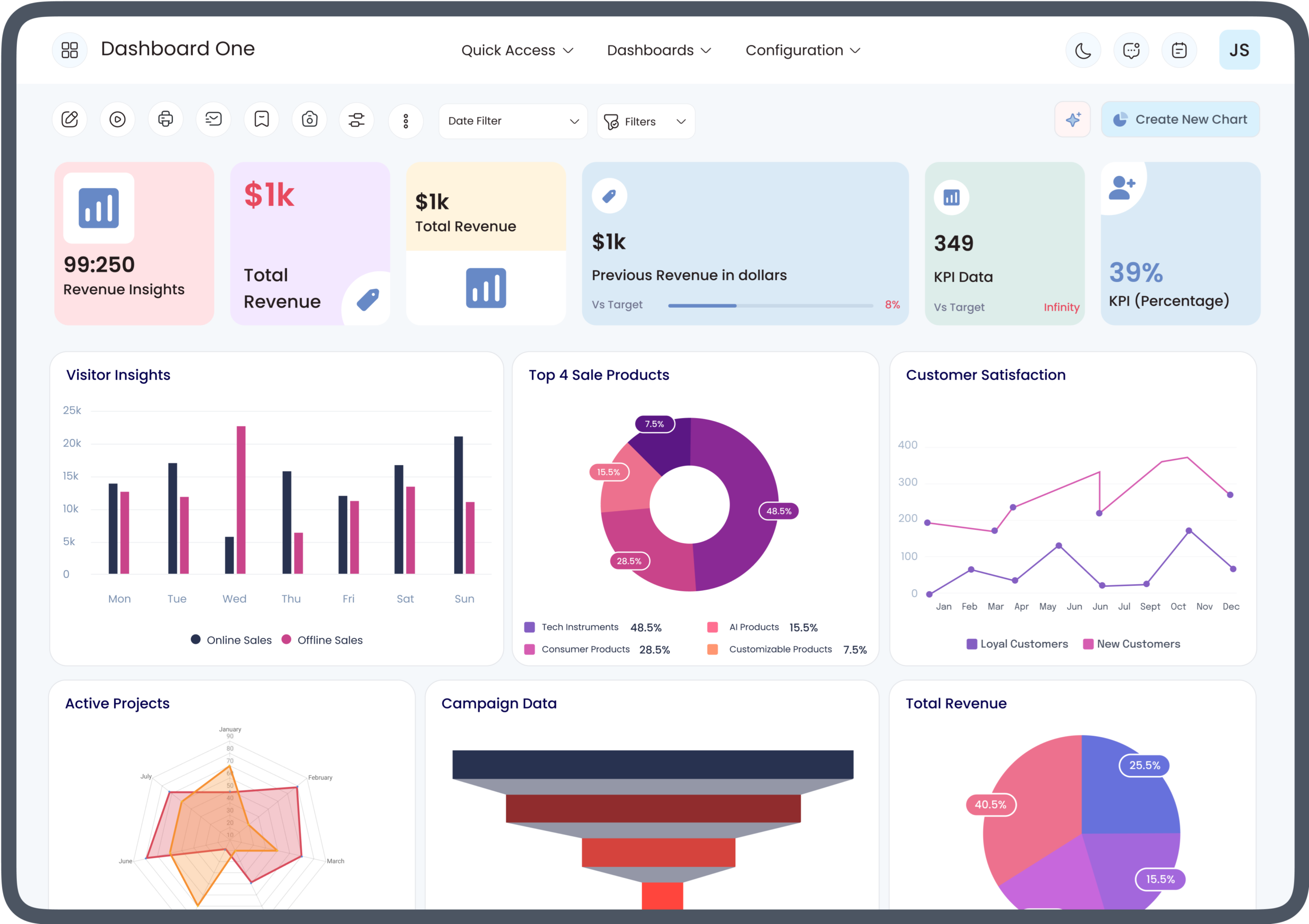
Organizations collect, process, and store large amounts of business and customer data every day. As privacy regulations continue to evolve, businesses need better visibility into how data is managed across departments. This is where an Odoo dashboard overview becomes valuable. It provides a centralized view of business operations while helping administrators monitor activities that support an effective Odoo privacy policy.
A well-configured dashboard allows decision-makers to identify potential privacy risks, track user activity, and ensure that employees follow internal data handling policies. By combining real-time reporting with privacy-focused workflows, businesses can strengthen compliance while improving operational efficiency.
Understanding Odoo Dashboard Overview
An Odoo dashboard overview is a centralized interface that displays key business metrics, operational reports, and system activities in one place. Instead of switching between multiple modules, users can access important information through customizable dashboards.
Depending on business needs, dashboards may include:
- Sales performance
- Customer records
- Financial reports
- Inventory updates
- Employee activities
- User access logs
- System notifications
- Workflow status
These dashboards improve decision-making while allowing managers to monitor data usage across departments.
What Is an Odoo Privacy Policy?
An Odoo privacy policy defines how an organization collects, stores, processes, shares, and protects personal and business data within the Odoo environment. It establishes rules that employees and administrators must follow when handling sensitive information.
A strong privacy policy generally covers:
- Data collection practices
- User permissions
- Data retention periods
- Access control procedures
- Record deletion policies
- Backup and recovery standards
- Third-party integrations
- Employee responsibilities
When these policies are clearly defined, organizations reduce the risk of unauthorized access and improve accountability.
Why Privacy Policy Compliance Matters
Businesses handle confidential customer information every day, including contact details, invoices, financial records, employee information, and purchase history. Without proper oversight, data can be exposed through accidental sharing or unauthorized access.
Privacy policy compliance helps organizations:
- Protect customer trust
- Reduce security risks
- Improve internal governance
- Maintain accurate records
- Support audit readiness
- Standardize data management
Compliance is not only about following regulations but also about creating secure business processes.
How Odoo Dashboard Overview Supports Privacy Policy Compliance
An Odoo dashboard overview provides the visibility organizations need to monitor privacy-related activities in real time. Rather than relying on manual checks, administrators can identify issues quickly and take corrective action.
The dashboard supports compliance in several important ways.
Centralized Data Visibility
One of the biggest advantages of an Odoo dashboard is centralized reporting. Managers can view information from multiple modules without opening each application individually.
This visibility helps organizations:
- Detect unusual activities
- Review sensitive records
- Monitor departmental performance
- Verify workflow completion
A centralized view makes privacy management more efficient.
User Access Monitoring
User permissions are a critical part of every Odoo privacy policy. Dashboards help administrators review user roles and identify accounts with unnecessary privileges.
Monitoring user access allows organizations to:
- Limit unauthorized viewing
- Detect inactive accounts
- Review permission changes
- Maintain role-based access
Regular monitoring reduces the possibility of internal data exposure.
Activity Tracking
Many organizations need to understand who performed specific actions within the system. Dashboard reports can display operational activities that support internal accountability.
Examples include:
- Record updates
- Invoice approvals
- Customer information changes
- Workflow completion
- Inventory adjustments
Activity tracking simplifies internal investigations when questions arise.
Data Accuracy Monitoring
Privacy compliance also depends on maintaining accurate information. Dashboards help identify incomplete records, duplicate entries, and inconsistent data.
Improved data quality supports:
- Better reporting
- Reliable customer records
- Reduced processing errors
- More effective business decisions
Accurate information strengthens overall compliance efforts.
Permission Review Reports
Permission reports allow administrators to regularly evaluate employee access.
Dashboard widgets can display:
- Active users
- Permission groups
- Administrator accounts
- Recently modified permissions
These reports help organizations maintain proper access control.
Monitoring Sensitive Business Modules
Certain Odoo modules contain highly confidential information, including accounting, payroll, HR, and customer management.
A customized Odoo dashboard overview allows managers to monitor these areas more carefully while maintaining visibility into sensitive operations.
Custom Dashboards Improve Compliance
Every organization has unique privacy requirements. Odoo dashboards can be customized to display the information that matters most.
Custom widgets may include:
- User login reports
- Failed login attempts
- Permission changes
- Customer data updates
- Employee activity summaries
- Audit indicators
- Security notifications
Customized dashboards help administrators respond more quickly to potential issues.
Role-Based Dashboard Access
Not every employee needs access to every report.
Organizations can configure dashboards according to job responsibilities.
For example:
- Executives view business performance.
- HR managers access employee reports.
- Finance teams review accounting information.
- Sales managers monitor customer activities.
- IT administrators oversee system security.
This approach supports the principles outlined in an effective Odoo privacy policy by restricting access to authorized users.
Supporting Internal Audits
Internal audits become much easier when dashboards organize important operational data.
Administrators can quickly review:
- User activities
- System changes
- Access permissions
- Data modification history
- Department performance
Well-designed dashboards reduce the time required for audit preparation.
Improving Data Governance
Data governance focuses on managing business information responsibly throughout its lifecycle.
An Odoo dashboard overview contributes to better governance by providing visibility into:
- Data ownership
- Workflow completion
- Permission management
- Operational consistency
- Reporting accuracy
Improved governance leads to stronger privacy compliance across the organization.
Best Practices for Using Odoo Dashboards With Privacy Policies
Organizations can maximize the benefits of dashboards by following several best practices.
Regularly Review User Permissions
Schedule periodic permission reviews to ensure employees only have access to the information required for their roles.
Limit Administrative Access
Reduce the number of administrator accounts whenever possible to minimize security risks.
Monitor Dashboard Reports Frequently
Review dashboard metrics regularly to identify unusual activities before they become larger issues.
Keep Privacy Policies Updated
An Odoo privacy policy should evolve alongside changing business processes and organizational requirements.
Train Employees
Employees should understand both dashboard usage and company privacy expectations. Regular training helps reduce accidental mistakes.
Use Custom Alerts
Configure dashboard notifications for unusual login activity, permission changes, or workflow exceptions.
Common Mistakes to Avoid
Businesses sometimes reduce the effectiveness of their privacy efforts by making avoidable mistakes.
Common issues include:
- Providing excessive user permissions
- Ignoring dashboard alerts
- Failing to update privacy policies
- Using outdated reports
- Skipping regular audits
- Not reviewing user activity logs
Avoiding these mistakes improves long-term compliance.
Future of Privacy Management in Odoo
As organizations collect more digital information, privacy management will become increasingly data-driven. Future dashboard enhancements may include more intelligent monitoring, automated compliance reporting, predictive risk analysis, and stronger integration with security tools.
Businesses that invest in dashboard visibility today will be better prepared to manage future privacy requirements.
Conclusion
An effective Odoo dashboard overview gives organizations the visibility needed to manage business operations while supporting privacy compliance. By centralizing reports, monitoring user access, tracking activities, and improving data governance, dashboards help businesses implement and maintain a stronger Odoo privacy policy.
When combined with clear internal procedures, employee training, and regular permission reviews, Odoo dashboards become an important tool for protecting sensitive information and maintaining responsible data management across the organization.