
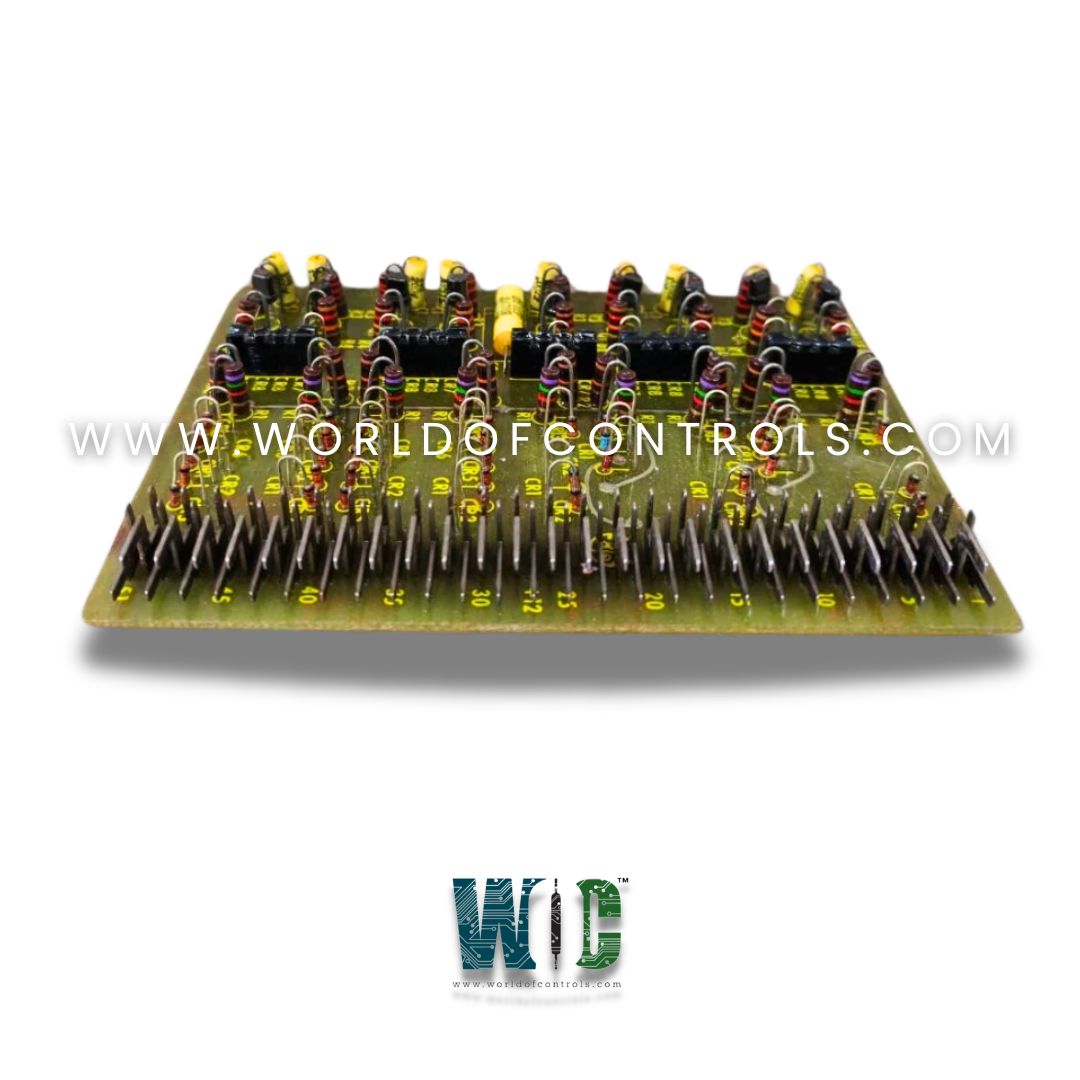
Introduction: The Role of Control Electronics in Modern Turbine Operations
In the turbine industry, reliable control systems are essential for maintaining safe, efficient, and uninterrupted power generation. Gas turbines and industrial turbine systems depend on advanced electronic components to monitor operating conditions, process signals, and execute precise control commands.
Among these critical components, logic inverter circuit boards play an important role in turbine automation and control. These boards help process digital signals, support communication between control modules, and ensure that turbine systems respond accurately to changing operational conditions. By improving signal reliability and system coordination, logic inverter circuit boards contribute to enhanced turbine performance and reduced unplanned downtime.
Understanding Logic Inverter Circuit Boards in Turbine Systems
A logic inverter circuit board is an electronic control component designed to process and modify digital signals within industrial control systems. In turbine applications, these boards act as an essential link between sensors, controllers, and operational equipment.
Turbine control systems continuously receive information from multiple sources, including temperature sensors, pressure monitoring devices, speed sensors, and protective systems. Logic inverter circuit boards help manage these signals by converting, inverting, and coordinating digital inputs to ensure accurate communication throughout the control network.
In GE turbine control environments, these circuit boards are commonly used as part of sophisticated automation systems that support turbine monitoring, sequencing, and protection functions. Their ability to maintain accurate signal processing makes them valuable for improving overall system stability.
How Logic Inverter Circuit Boards Support Turbine Control Reliability
1. Enhancing Signal Processing Accuracy
Turbines operate under constantly changing conditions, requiring precise control responses. Logic inverter circuit boards improve the accuracy of signal transmission between different control components, helping prevent errors caused by incorrect or unstable communication.
Reliable signal processing allows turbine controllers to make better decisions regarding fuel management, speed regulation, load adjustments, and system protection.
2. Improving Turbine System Stability
A turbine control system depends on smooth interaction between hardware components. Logic inverter circuit boards help maintain consistent communication between control modules, reducing disruptions that could affect turbine operation.
Stable signal exchange supports continuous monitoring and enables control systems to maintain optimal turbine performance during normal and changing operating conditions.
3. Reducing Downtime and Maintenance Challenges
Unexpected control system failures can lead to turbine shutdowns, production losses, and increased maintenance costs. Reliable circuit boards help minimize these risks by supporting dependable electronic communication within the turbine control architecture.
When properly maintained and replaced with compatible components when necessary, logic inverter circuit boards can extend control system service life and improve operational availability.
The Importance of Logic Inverter Boards in Turbine Automation
Modern turbine systems rely heavily on automation to achieve higher efficiency and improved safety. Logic inverter circuit boards support automated control processes by ensuring that commands from turbine controllers are accurately delivered to connected systems.
These boards contribute to several important turbine functions, including:
- Digital signal conversion and processing
- Communication between control modules
- Monitoring of turbine operating conditions
- Support for protective shutdown functions
- Improved coordination between electronic control systems
Through these functions, logic inverter circuit boards help turbine operators maintain better control over complex industrial equipment.
Maintenance Best Practices for Turbine Control Circuit Boards
Like other electronic components, logic inverter circuit boards require proper maintenance to ensure long-term reliability. Exposure to heat, vibration, dust, and electrical stress can affect circuit board performance over time.
Recommended maintenance practices include:
- Conducting regular inspections for physical damage or wear
- Checking electrical connections and communication signals
- Monitoring system alarms and unusual control behavior
- Replacing aging or faulty boards with reliable compatible units
- Following manufacturer-recommended maintenance procedures
A proactive maintenance approach helps prevent unexpected failures and supports continuous turbine operation.
Conclusion: Strengthening Turbine Performance Through Reliable Control Components
Logic inverter circuit boards are essential elements in modern turbine control systems, providing accurate signal processing, improved automation, and dependable communication between critical components. Their contribution to system reliability helps power generation facilities achieve improved efficiency, reduced downtime, and safer turbine operation.
As turbine technology continues to advance, the demand for high-performance control components will remain important. Reliable logic inverter circuit boards will continue to serve as key building blocks in maintaining efficient and resilient turbine control systems.