Hair thinning can gradually affect confidence, especially when the hairline changes or the scalp becomes more visible. PRP Hair Treatment in Abu Dhabi is a procedure that uses a person’s own platelet-rich plasma to support the scalp and encourage activity in hair follicles. It is generally considered for certain forms of hair thinning, though suitability and results vary from person to person.
Understanding PRP Hair Treatment
PRP stands for platelet-rich plasma. Platelets are components of blood that contain signaling proteins involved in the body’s repair processes. In this treatment, a small blood sample is processed to separate a concentrated portion of plasma containing platelets. That prepared plasma is then placed into selected areas of the scalp.
The aim is to deliver platelet-derived signals near follicles that are still present but may be producing finer or shorter hairs. PRP does not create new follicles where none remain. Instead, it may help support the function of existing follicles in appropriate candidates.
How PRP Targets Hair Loss
Supporting weakened follicles
Hair follicles move through growth and resting phases. In some types of hair loss, the growth phase becomes shorter, and individual strands may gradually become finer. PRP is intended to provide signals that may support follicle activity and the surrounding scalp environment.
This process is gradual. A person should not expect immediate coverage or a sudden change in hair density after one session. Any improvement, when it occurs, tends to develop over time as hair cycles progress.
Focusing treatment on thinning areas
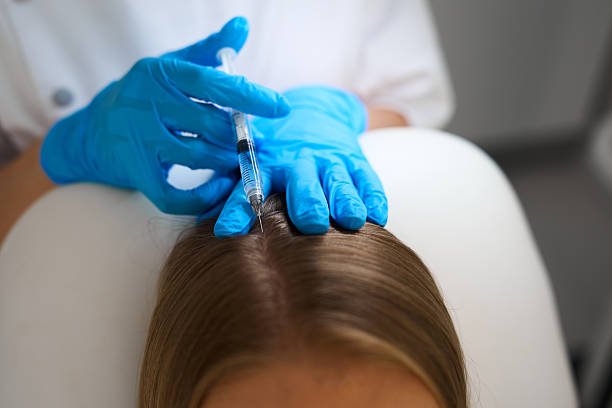
A qualified practitioner assesses the pattern and extent of thinning before identifying areas for treatment. The prepared plasma is placed into those selected parts of the scalp. The approach can be adjusted to the individual’s hair-loss pattern rather than applied in exactly the same way for everyone.
The goal is to address areas where follicles may still be active. A careful assessment helps distinguish thinning that might respond from hair loss that needs a different evaluation or approach.
Using the person’s own plasma
Because PRP is prepared from the person’s own blood, it uses the person’s own platelets rather than donor plasma. The sample is processed before being applied to the scalp. Preparation methods and treatment protocols can differ, so the details should be explained during a consultation.
What Happens During a Session?
Assessment and preparation
The process usually begins with a discussion of hair changes, health history, and treatment goals. The scalp and hair-loss pattern are reviewed, and the practitioner considers whether PRP is appropriate. The person may also be asked when the thinning began and whether it has changed over time.
A blood sample is then collected and processed to separate the platelet-rich portion. The scalp is prepared, and the plasma is applied to the selected areas using small injections. The session length and number of applications can vary according to the treatment plan.
A gradual treatment course
PRP is commonly planned as a series of sessions rather than a single visit. The spacing and total number depend on the individual assessment and the protocol being used. Follow-up reviews may help track changes and determine whether the plan should continue or be adjusted.
Photographs taken under consistent conditions can make it easier to compare hair density over time. Day-to-day impressions may be less reliable because hair appearance can change with styling, lighting, and length.
Who May Be Considered?
PRP may be considered for people with certain patterns of early or moderate thinning, particularly when follicles remain in the affected areas. It is not suitable for every cause of hair loss. Sudden shedding, patchy loss, scalp conditions, or thinning linked to an underlying health issue may require further evaluation before any procedure is considered.
A consultation can clarify the likely cause of hair loss and whether PRP fits the person’s needs. The practitioner should discuss realistic expectations, possible limitations, and other appropriate options without promising a particular result.
What Results Can Be Expected?
Results differ based on the cause and duration of hair loss, the condition of the follicles, overall health, and the treatment approach. Some people may notice reduced shedding or thicker-looking strands, while others may see little visible change. Improvement is not guaranteed, and PRP may not stop every form of hair loss.
Hair growth takes time, so changes are usually assessed over several months rather than days. Maintenance sessions may be discussed if an initial response occurs, but the need for ongoing treatment varies. A clear plan should explain how progress will be reviewed and what signs would suggest that the treatment is not meeting expectations.
FAQs About PRP Hair Treatment
Does PRP work for every type of hair loss?
No. PRP is generally considered only for selected types of thinning where follicles may still be active. Hair loss can have many causes, so an assessment is important before deciding whether this approach is suitable.
How soon might a person notice a change?
Hair grows in cycles, so any visible change is usually gradual. A person may need several months before progress can be meaningfully assessed. The timing varies, and some individuals may not notice a significant difference.
Can PRP restore hair in completely bald areas?
PRP is not designed to create new follicles. It may support existing follicles, but areas without functioning follicles are unlikely to regain coverage through PRP alone. The expected outcome should be discussed during the assessment.
Is one session usually enough?
Treatment is often planned as a course, with sessions spaced over time. The number and timing depend on the individual’s needs and the protocol selected. A practitioner can explain the proposed schedule and how progress will be monitored.
Making an Informed Decision
PRP Hair Treatment in Abu Dhabi targets hair loss by applying a concentrated portion of the person’s own plasma to selected areas of the scalp. Its purpose is to support follicles that may still be active, not to guarantee new growth or reverse every cause of thinning. A thorough assessment, realistic expectations, and consistent follow-up help a person decide whether PRP is an appropriate option.