
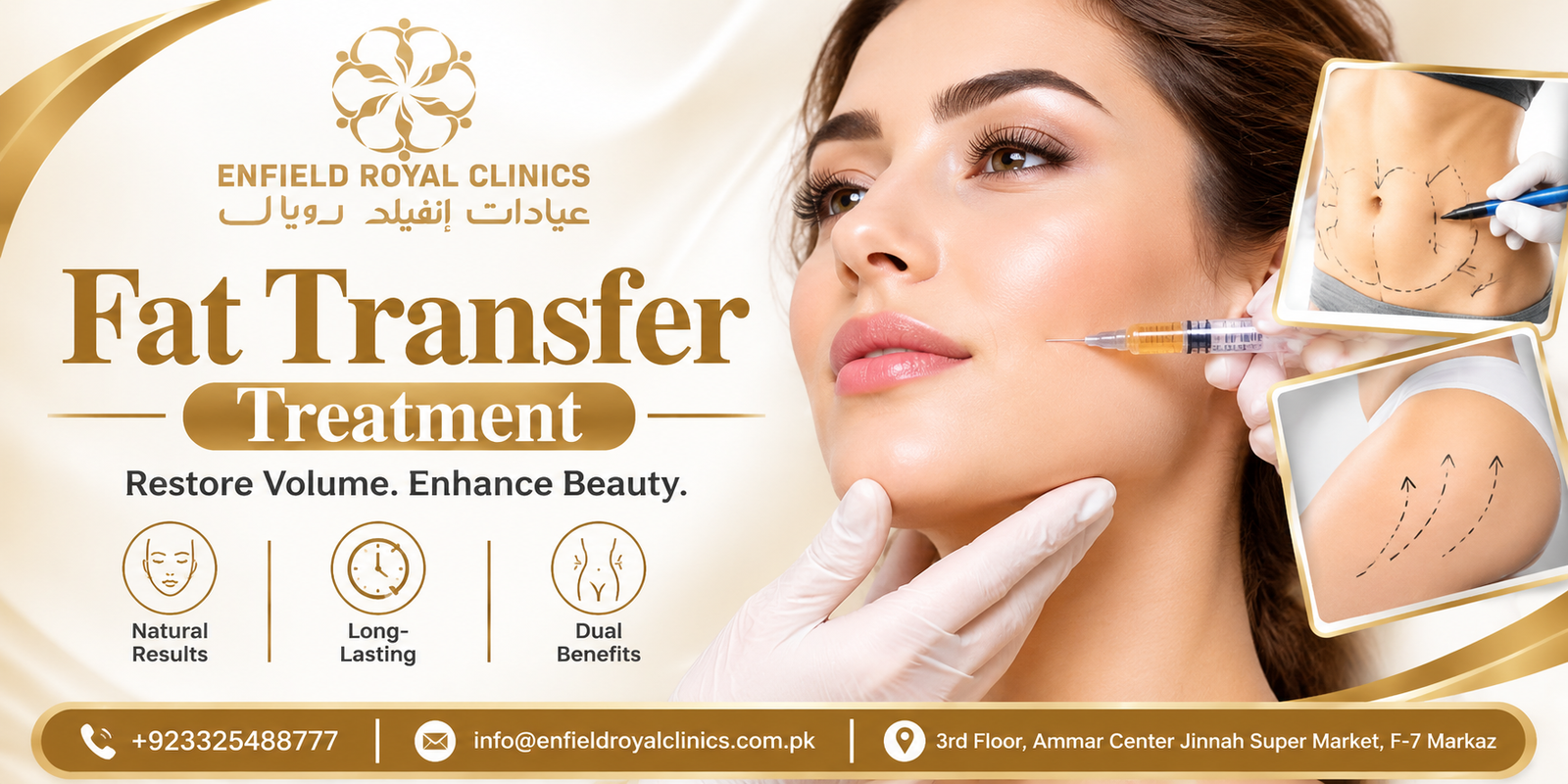
Facial appearance is influenced by several factors, including skin quality, bone structure, facial proportions, and natural volume. As people age, the face gradually loses some of its natural fat, which can make the cheeks appear flatter, the temples look hollow, and certain facial areas seem less youthful. Weight changes, genetics, and other natural factors can also affect facial volume and symmetry.
Fat Transfer Treatment in Islamabad is an option for individuals who want to restore lost facial volume using their own body fat. Also known as fat grafting or autologous fat transfer, this procedure moves fat from one area of the body to selected facial areas to create softer contours and a refreshed appearance. Because it uses the patient’s own tissue, it can offer a natural-looking approach to facial enhancement.
Understanding how the procedure works, which features it can improve, and what results patients can realistically expect helps individuals make informed decisions.
1. What Is Fat Transfer Treatment for Facial Enhancement?
Fat transfer treatment is a cosmetic procedure that uses a patient’s own fat to improve volume and contour in another area of the body. For facial enhancement, fat is usually collected from suitable donor areas, such as the abdomen, thighs, hips, or flanks.
The collected fat is carefully processed to separate suitable fat cells from unwanted fluids and other materials. The prepared fat is then injected into specific facial areas using small instruments designed for precise placement.
Unlike treatments that rely on synthetic injectable materials, facial fat transfer uses tissue taken from the patient’s own body. This makes it an appealing option for people interested in restoring facial fullness without relying entirely on temporary fillers.
However, the procedure requires careful planning because facial structures contain important blood vessels, nerves, and delicate tissues. A qualified medical professional must assess facial anatomy and determine whether fat grafting is appropriate.
2. Which Facial Features Can Fat Transfer Treatment Enhance?
One of the main advantages of Fat Transfer Treatment in Islamabad is its ability to address volume loss in different facial areas. The treatment can be customized according to the patient’s facial structure and aesthetic goals.
Common areas that may benefit include:
- Cheeks: Fat transfer can restore fullness to hollow or flattened cheeks, helping create softer and more balanced facial contours.
- Temples: Hollow temples can sometimes make the upper face appear older. Carefully placed fat may restore volume in this area.
- Under-eye hollows: Selected patients with suitable anatomy may benefit from volume restoration beneath the eyes, although this area requires particular expertise because of its delicate structures.
- Lips: Fat grafting may add fullness and improve lip proportions in carefully selected cases.
- Nasolabial folds: Volume restoration around the cheeks may soften the appearance of deeper folds extending from the nose toward the corners of the mouth.
- Chin and jawline: Fat may be used in selected cases to improve contour irregularities and create smoother transitions between facial areas.
Not every patient needs enhancement in multiple areas. A personalized treatment plan helps maintain natural proportions rather than creating excessive fullness.
3. How Does Fat Transfer Improve Facial Balance and Symmetry?
Facial balance depends on how different features relate to one another. When one area loses volume, it can affect the overall appearance of the face. For example, flattened cheeks may make the lower face look heavier, while hollow temples can create a less balanced transition around the forehead.
Fat transfer can help improve these concerns by adding volume to selected areas. The goal is not to make every facial feature identical but to create more harmonious proportions.
A patient with naturally hollow cheeks may benefit from carefully distributed fat that restores a softer cheek contour. Someone experiencing volume loss around the temples may achieve a smoother transition between the forehead and upper face.
The procedure can also address certain volume-related asymmetries. However, it cannot correct every cause of facial imbalance. Differences caused by bone structure, muscle movement, significant skin laxity, or underlying medical conditions may require other treatment approaches.
A detailed facial assessment is therefore important before deciding on fat grafting.
4. How Is the Facial Fat Transfer Procedure Performed?
Fat transfer treatment generally involves three main stages. The exact technique depends on the patient’s needs, the donor area, and the facial region being treated.
Step 1: Fat harvesting
The procedure begins by identifying a suitable donor area with enough available fat. A small amount of fat is collected through a liposuction technique, usually with carefully controlled suction.
Step 2: Fat processing
The harvested fat is processed to separate suitable fat tissue from excess fluid, blood, and other unwanted materials. Proper preparation helps make the fat suitable for transfer.
Step 3: Fat injection
The prepared fat is placed into selected facial areas using small amounts and carefully planned injection techniques. Precise placement is important because facial tissues have different depths and structures.
The procedure may involve local anesthesia, sedation, or general anesthesia depending on the treatment plan and extent of fat harvesting. Patients should receive clear instructions about preparation, anesthesia, and recovery before treatment.
5. What Makes Fat Transfer a Natural-Looking Facial Enhancement Option?
Many individuals prefer facial enhancement methods that preserve their natural appearance. Fat transfer can support this goal because it uses the patient’s own tissue and allows volume to be added gradually in selected areas.
When performed appropriately, the treatment can improve facial contours without creating an overly artificial appearance. The result depends on several factors, including the amount of fat transferred, injection technique, facial anatomy, and how much of the transferred fat survives.
Another important consideration is that transferred fat does not all remain permanently. The body naturally absorbs some of the injected fat during the healing period. The amount that survives varies between individuals.
Once fat cells establish a blood supply and survive, they can remain for years. Their volume may still change with significant weight gain or weight loss, just like fat elsewhere in the body.
For this reason, maintaining a relatively stable weight and following aftercare instructions can help support more consistent results.
6. Who Is a Suitable Candidate for Fat Transfer Treatment in Islamabad?
Fat transfer may be suitable for adults who want to restore facial volume or improve selected contours. However, a consultation is necessary to determine whether the procedure matches their anatomy and expectations.
Potential candidates may include individuals who:
- Have hollow or sunken facial areas.
- Experience age-related facial volume loss.
- Want to improve cheek or temple fullness.
- Have suitable fat available in a donor area.
- Prefer using their own tissue for volume enhancement.
- Have realistic expectations about the final outcome.
A medical professional will also review the patient’s medical history, medications, smoking habits, previous cosmetic procedures, and ability to heal.
People with insufficient donor fat, certain health conditions, active infections, or unrealistic expectations may not be suitable candidates. Facial fat transfer is also not a general weight-loss treatment or a complete replacement for procedures designed to tighten significantly loose skin.
7. Recovery, Results, and Possible Risks
After Fat Transfer Treatment in Islamabad, patients may experience swelling, bruising, tenderness, and temporary unevenness in the treated areas. These effects are generally part of the healing process, but their duration and severity vary.
Some important recovery considerations include:
- Following all wound-care and medication instructions.
- Avoiding strenuous activities until medically cleared.
- Protecting the treated areas from unnecessary pressure or trauma.
- Attending follow-up appointments to monitor healing.
- Avoiding smoking because it can interfere with tissue healing.
Initial swelling may make the face look fuller than the eventual result. As swelling settles and the body absorbs some transferred fat, facial contours gradually become clearer. The final outcome is often assessed over several months, commonly around three to six months.
Although fat transfer can provide lasting improvement, it is not risk-free. Possible complications include infection, bleeding, fat necrosis, lumps, contour irregularities, asymmetry, and changes in sensation. Rare but serious complications can occur if fat enters a blood vessel. Facial vascular complications may cause tissue damage and, in very rare cases, vision loss.
Patients should seek prompt medical assessment if they develop fever, spreading redness, worsening pain, or unusual swelling. Sudden vision changes require emergency medical attention.
For more information visit Enfield royal clinic in islamabad
Frequently Asked Questions (FAQs)
1. Does fat transfer treatment improve facial appearance?
Yes. Fat transfer can restore volume in selected facial areas, such as the cheeks and temples, helping improve contours and create a fuller appearance.
2. How long do facial fat transfer results last?
Fat cells that successfully survive the transfer may remain for years. However, some injected fat is naturally absorbed, and long-term volume can change with weight fluctuations and aging.
3. Is facial fat transfer better than dermal fillers?
Both treatments have different benefits. Fat transfer uses the patient’s own tissue and may provide longer-lasting volume, while dermal fillers offer a nonsurgical option with temporary results. The appropriate choice depends on individual needs.
4. How long does recovery take after facial fat transfer?
Initial swelling and bruising may improve over one to two weeks, although recovery varies. Final results usually take several months to assess as swelling settles and transferred fat stabilizes.
5. Can fat transfer correct facial asymmetry?
It can improve asymmetry caused by uneven volume loss in selected areas. However, it cannot correct every type of asymmetry, particularly differences caused by bone structure or muscle function.
6. Is fat transfer treatment safe for everyone?
No cosmetic procedure is suitable for everyone. Safety depends on medical history, facial anatomy, donor fat availability, surgical technique, and appropriate patient selection. A professional consultation is essential.
Conclusion
Fat Transfer Treatment in Islamabad offers an option for individuals who want to restore facial volume and improve selected features using their own body fat. It can enhance cheek fullness, soften hollow areas, improve certain contours, and support better facial balance when carefully planned.
However, successful treatment depends on suitable patient selection, precise fat placement, realistic expectations, and proper aftercare. Since some transferred fat is naturally absorbed and complications are possible, patients should understand both the benefits and limitations before proceeding. A thorough consultation can help determine whether facial fat transfer is an appropriate choice for achieving natural-looking enhancement.