
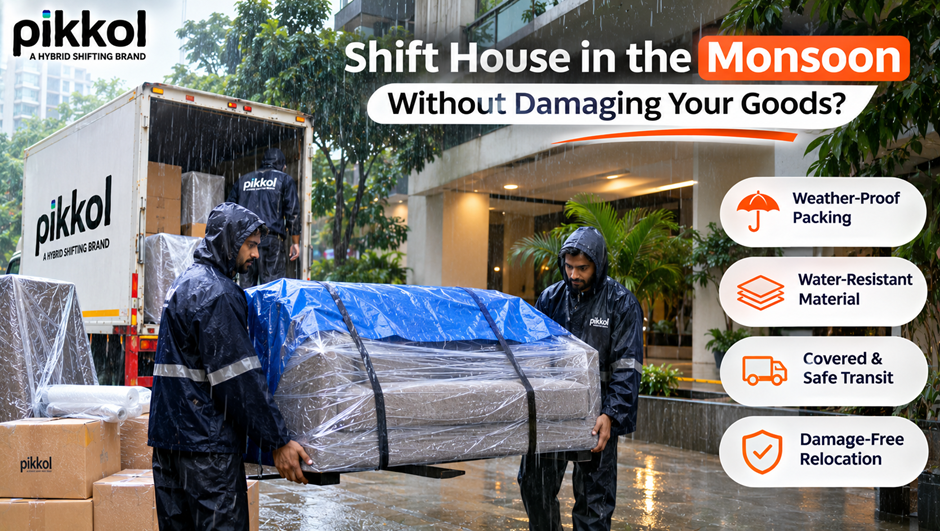
To shift house in the monsoon without damaging your goods, use waterproof wrapping, move in a closed vehicle, keep a flexible date, and protect the paths at both homes. Rain and damp damage cardboard, wood, upholstery, electronics and documents, so pack everything in water-resistant layers, keep items off wet floors, and unpack and air your goods quickly. Ask your mover how it handles rain, and get the answer in writing.
The six essentials:
- Book a flexible or tentative date, and check the forecast the day before.
- Wrap in plastic, not just paper and cardboard.
- Use a closed vehicle, and keep goods off the floor of the vehicle.
- Protect the route: covered walkways, floor sheets and dry lifts.
- Take extra care of electronics, mattresses, wooden furniture and documents.
- Unpack, dry and air your goods soon after arrival.
Moving in the rains? Get a free quote from Pikkol or message us on WhatsApp.
Why is moving in the monsoon risky for your goods?
Rain and humidity cause problems that dry-season moves don’t have:
- Water damage. Cardboard boxes weaken and tear when wet, and contents can fall out.
- Damp and mould. Mattresses, sofas, clothes and books can develop mould if packed or stored damp.
- Warping and swelling. Wooden furniture can swell or warp with moisture.
- Electronics. Moisture can damage TVs, computers and appliances, and powering them on while damp can make it worse.
- Slips and accidents. Wet floors, steps and lifts make carrying goods dangerous.
- Delays. Heavy rain, waterlogging and traffic can slow or stop a move.
Most of this is avoidable with planning.
When is the monsoon, and how does it vary?
In most of India the southwest monsoon runs roughly from June to September. Tamil Nadu and parts of the south-east coast get much of their rain in the northeast monsoon, roughly from October to December. Mumbai and the west coast see some of the heaviest rain, and cities like Bengaluru and Hyderabad see frequent heavy showers during the season. Check your city’s local forecast and advisories close to your date.
For city-specific points, see Pikkol’s guides to shifting house in Mumbai and shifting house in Chennai.
How do you plan the date?
- Keep it flexible. Pikkol lets you book with a tentative date and change it later, subject to slot availability. Rescheduling is allowed after the token, depending on slot availability.
- Check the forecast a few days ahead and again the evening before.
- Avoid days with heavy rain or flood warnings. If the forecast turns bad, ask your coordinator about moving the date.
- Start early. Mornings are often drier, and an early start gives you buffer time if rain arrives later.
- Consider a weekday. Pikkol says non-month-end weekdays carry discounts, and fewer people move then. See moving on a weekday vs a weekend.
- Confirm your society’s rules. Move timings and lift slots may be harder to rebook if you change dates.
How do you protect your goods from rain?
Packing materials
- Wrap in plastic. Use plastic sheeting, stretch wrap or waterproof covers, not just paper and cardboard.
- Use sturdy boxes, and avoid boxes that have been stored in damp places. Consider plastic crates for heavy or important items.
- Seal boxes with strong tape, and label them on the side, so labels stay readable.
- Use silica gel or moisture absorbers in boxes with electronics, leather items or documents.
- Keep boxes off the ground, and don’t leave them in puddles.
Pikkol’s page says its crews pack with premium materials. Ask specifically what they use for rain protection.
Transport
- Ask whether goods travel in a closed vehicle. Pikkol says it moves goods in a fleet of container vehicles. Confirm that your vehicle is fully enclosed and watertight.
- Keep goods off the vehicle floor, and secure them so they can’t shift.
- Cover loading and unloading. Rain falls mostly during loading and unloading, so ask how the crew covers goods between the door and the vehicle.
At both homes
- Cover the path from the door to the vehicle with a canopy, tarpaulin or temporary cover, if you can.
- Lay floor sheets to stop wet footprints and protect the floors.
- Ask your society about covered access or a dry loading area.
- Make sure lifts and stairs are dry and safe, and ask the crew to take extra care.
How do you protect specific items?
Mattresses, sofas and upholstery. Wrap in thick plastic covers and seal the edges. Don’t pack them damp. If they get wet, dry them thoroughly before use.
Wooden furniture. Wipe dry, wrap in plastic and padding, and avoid leaving it in damp places. Unwrap and let it breathe at the new home to avoid trapped moisture.
Electronics and appliances. Wrap in plastic, add silica gel, and keep them upright. If they’ve been exposed to damp, let them dry fully before switching them on, and ask a technician if you’re unsure. See Pikkol’s guidance on moving appliances once it’s published.
Books, papers and documents. Keep important documents with you in a waterproof folder or bag. Pack books in plastic bags, then boxes.
Clothes and bedding. Use sealed plastic bags or vacuum bags, and keep them dry to avoid mould.
Artwork, mirrors and fragile items. Use waterproof wrapping and rigid protection. See the high-value move guide and moving a piano, large mirror or heavy furniture.
What should you do when you arrive?
- Check goods against the inventory and report damage promptly, in writing.
- Unpack boxes soon, especially clothes, bedding, books and anything that might be damp.
- Air your goods. Open windows when it’s dry, and use fans or a dehumidifier.
- Dry any damp item fully before you store or use it.
- Check electronics and appliances before turning them on.
- Look for mould or damp smells in the first few days, and act early.
What if your new home isn’t ready, or the rain delays you?
Storage helps in the monsoon, but damp matters there too. You can hold your goods in storage in Bengaluru, Hyderabad, Mumbai, Chennai or Delhi, and see how household storage works. Ask how the facility protects goods from damp and pests during the monsoon, and get the answer in writing.
What about insurance and damage?
Pikkol’s packers and movers page mentions damage and transit care packages, but doesn’t state coverage limits or a claims process. Before you book, ask:
- Does cover include water and rain damage?
- What value is covered, and is cover included or optional?
- How do I file a claim, and how long does it take?
- Does the cover apply if goods are damaged by damp after delivery?
Read the risk guide for how to think about damage and loss.
How much does a monsoon move cost?
Pikkol doesn’t publish a standard rate card, and it doesn’t state a separate monsoon charge. Your quote depends on volume, distance, floors and lift access, packing needs, dismantling, the date and any cover you choose. Extra protective packing may add to a quote, so ask. Get an itemised quote, and read Pikkol’s guide to GST and hidden charges on your packers and movers invoice.
How does a Pikkol move work?
According to Pikkol’s packers and movers page, a move follows four steps:
- Share your requirement: area, floors, lift access, home size and date.
- Get a free instant quote based on your requirements.
- Schedule and confirm. A token advance locks your price and slot.
- Pikkol moves your goods.
The service includes premium packing materials, dismantling and assembly, dedicated two-wheeler packing, a fleet of container vehicles, a dedicated move manager and post-move customer care. See packers and movers, house shifting and the payment policy.
City pages:
How do you choose a mover for a rainy-season move?
- A clear rain plan, including how goods are covered during loading and unloading
- A closed, watertight vehicle
- A written, itemised quote with cover terms
- A named coordinator you can reach on the day
- A flexible rescheduling policy
- Genuine reviews
Read our guide to finding genuine packers and movers. Learn more about Pikkol, browse the FAQs or contact us. Pikkol is headquartered in Bengaluru and has completed more than 1,00,000 moves since 2015.
Ready to plan your move? Get a free quote or chat on WhatsApp. Tell us your city, home size, floors, lift access and a flexible date range.
Frequently asked questions
Can I shift house during the monsoon?
Yes, with planning. Use waterproof packing, a closed vehicle, a flexible date and protected paths at both homes.
How do I protect furniture from rain during a move?
Wrap it in plastic and padding, move it in a closed vehicle and cover the path between the door and the vehicle.
Will cardboard boxes survive rain?
Not well. Wet cardboard weakens and tears. Use plastic wrapping, sturdy or plastic crates and sealed boxes.
How do I protect electronics from moisture?
Wrap in plastic, add silica gel and keep them upright. If they’ve been exposed to damp, let them dry fully before switching them on.
What if it rains on moving day?
Contact your coordinator early. You may be able to delay or reschedule. Pikkol allows rescheduling after the token, depending on slot availability.
Can I book with a tentative date?
Yes. You can book with a tentative date and change it later, subject to slot availability.
Does Pikkol move goods in a closed vehicle?
Pikkol says it moves goods in a fleet of container vehicles. Ask the team to confirm that your vehicle is enclosed and watertight, and how goods are covered during loading.
Is rain damage covered by insurance?
It depends on the policy. Ask what’s covered, on what value and how to claim, in writing.
Is the monsoon cheaper for moving?
Not necessarily. Pikkol’s pricing varies by day, with weekends and month-ends higher and non-month-end weekdays discounted. Ask for a quote for your dates.
What should I do after the move to prevent mould?
Unpack soon, air your goods, dry anything damp, and check mattresses, clothes and books.