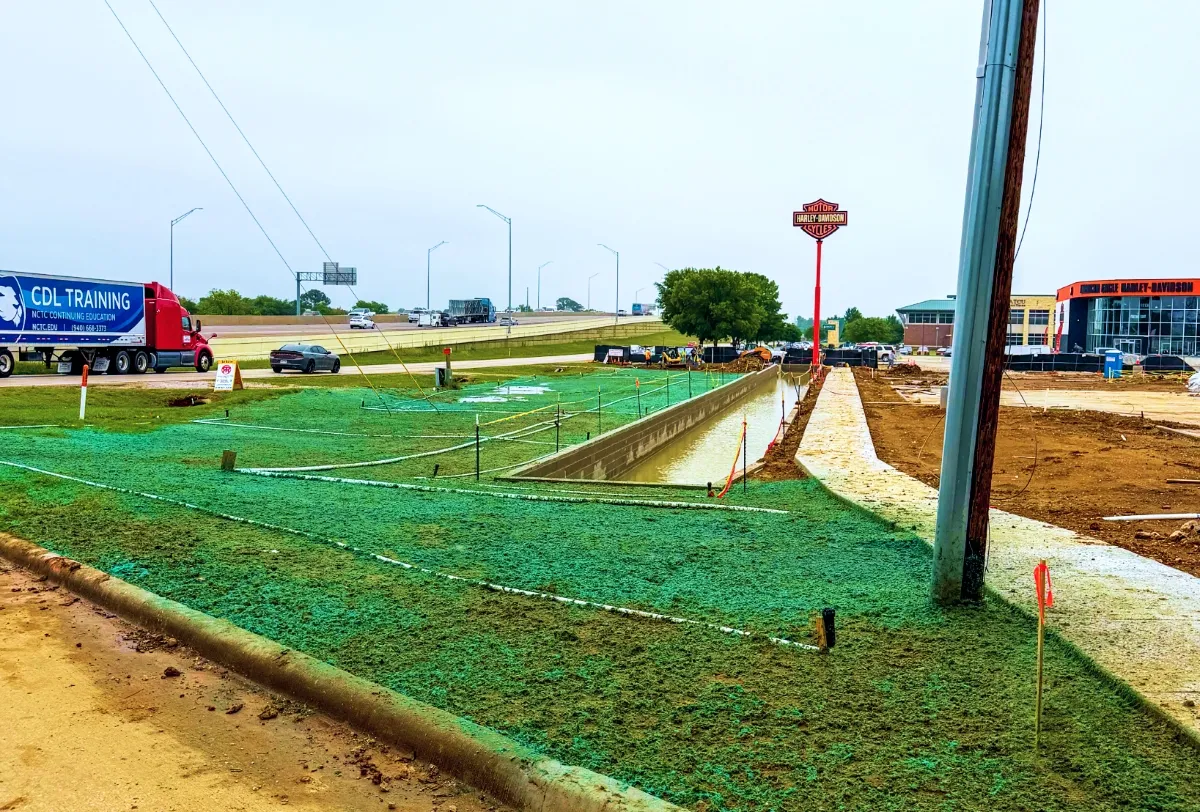
Establishing healthy grass across a large property can be a time-consuming and expensive process when the wrong seeding method is selected. Commercial developments, construction sites, business parks, roadside landscapes, and recreational properties often require extensive ground coverage within specific project timelines. Traditional seeding methods can involve significant labor, additional materials, and repeated applications to achieve consistent results. This is why many property owners and contractors consider commercial hydroseeding services an efficient solution for large-scale landscaping projects.
Hydroseeding combines grass seed, water, mulch, and other selected materials into a specially prepared mixture that is sprayed across the soil using professional equipment. This approach helps distribute seed across large areas while supporting moisture retention and early germination. When properly planned and maintained, hydroseeding can reduce certain installation costs, simplify landscaping work, and help projects move forward more efficiently. Understanding how this process works can help property owners determine whether it is the right investment for their landscaping needs.
What Are Commercial Hydroseeding Services?
Commercial hydroseeding services involve professionally applying a mixture of grass seed, water, mulch, and optional fertilizers or soil amendments to prepared ground. Specialized hydroseeding equipment distributes the mixture across the property, creating relatively uniform coverage. The mulch helps protect the seeds and maintain moisture around them, creating favorable conditions for germination and early grass development.
This method is commonly used for large commercial landscapes, industrial properties, construction developments, parks, roadside projects, and other areas where extensive vegetation coverage is required. Unlike conventional broadcasting, which spreads dry seed across the ground, hydroseeding applies seed within a liquid mixture. This makes it particularly useful for covering uneven terrain, slopes, and large open spaces.
The materials used in the mixture can be customized according to the property’s soil conditions, climate, grass requirements, and intended use. Professional contractors evaluate these factors before selecting an appropriate seed blend and mulch type. Proper preparation and material selection are essential because successful grass establishment depends on more than simply spraying seeds onto the ground.
1. Faster Application Reduces Project Timelines
Time is an important consideration in large landscaping projects. Traditional seeding can require considerable labor, especially when contractors need to cover extensive properties manually or operate conventional spreading equipment. Maintaining consistent coverage across different sections may also require additional passes and careful coordination.
Hydroseeding equipment allows professional operators to distribute seed mixtures across large areas much more efficiently. Instead of spreading dry seed section by section, contractors can spray the prepared mixture across broad surfaces using specialized machinery. This makes commercial hydroseeding particularly useful for construction developments, business parks, industrial facilities, and large recreational properties.
Faster application can also help contractors coordinate landscaping with other construction activities. For example, developers may need to establish vegetation before completing final property improvements or preparing a site for occupancy. Reducing the time spent on seed distribution can help keep landscaping work aligned with the overall project schedule.
However, faster application does not mean immediate grass growth. Seeds still need suitable temperatures, moisture, soil conditions, and sufficient time to germinate. The main time-saving advantage comes from the installation process rather than eliminating the natural growing period.
2. Lower Labor Requirements Can Reduce Overall Costs
Labor expenses can represent a significant portion of large landscaping projects. Traditional seeding may require multiple workers to spread seed, apply protective materials, and cover extensive ground areas. Projects involving slopes, irregular surfaces, or difficult-to-access sections can demand even more time and effort.
Commercial hydroseeding can reduce some of these labor requirements because specialized equipment handles much of the application process. A trained operator can cover substantial areas without relying entirely on manual seed distribution. This can make workforce planning easier and help contractors allocate employees to other important landscaping tasks.
For property owners, reduced labor requirements may translate into better overall project value. However, savings depend on the size of the property, equipment availability, site accessibility, and preparation requirements. Hydroseeding equipment and materials also involve costs, so it is important to compare complete project estimates rather than assuming that every hydroseeding job will automatically be cheaper.
3. More Uniform Coverage Helps Avoid Additional Expenses
Uneven seed distribution is a common challenge with traditional broadcasting methods. When seed is spread inconsistently, certain areas may develop thick grass while others remain thin or completely bare. Correcting these problems can require additional seed, labor, equipment, and application work.
Hydroseeding helps improve distribution by suspending grass seed within a liquid mixture. Professional operators apply the mixture across the prepared surface, helping achieve more consistent coverage. This can be particularly beneficial for commercial properties where landscaping appearance and vegetation uniformity are important.
More consistent application can reduce the likelihood of extensive corrective work, although it cannot guarantee perfect growth across every section. Soil differences, drainage problems, shade, weather, and watering practices can still affect the final results. Proper site preparation and selecting suitable seed varieties remain important for avoiding unnecessary expenses.
4. Mulch Helps Retain Moisture and Protect Seeds
Water management is another important factor in successful grass establishment. Newly planted seeds need consistent moisture to begin germinating and developing roots. With traditional seeding, seeds may remain exposed to direct sunlight, wind, and changing weather conditions unless additional protective materials are applied.
Hydroseeding includes mulch within the application mixture. This mulch creates a protective surface layer that helps retain moisture around the seeds and reduce the effects of certain environmental conditions. Depending on the material selected, it may also help limit seed displacement caused by wind and rainfall.
Improved moisture retention can support more favorable germination conditions and help reduce the risk of seeds drying out too quickly. This may contribute to more efficient establishment when combined with proper irrigation. However, mulch does not eliminate the need for watering. Property owners must follow a suitable irrigation schedule based on local weather, soil type, and the selected grass variety.
5. Supports Erosion Control and Reduces Soil-Related Problems
Large construction and landscaping projects frequently involve exposed soil. Without vegetation or suitable protective measures, rainfall and surface runoff can move loose soil, create drainage problems, and damage surrounding areas. These issues may result in additional cleanup, grading, and landscaping expenses.
Commercial hydroseeding provides a practical way to introduce vegetation across exposed surfaces. The mulch in the mixture helps protect the soil while grass seeds begin developing. As vegetation becomes established, its root system can gradually help hold soil particles together and improve surface stability.
This makes hydroseeding useful for selected roadside areas, commercial slopes, construction developments, and properties with erosion concerns. For more demanding conditions, contractors may recommend specialized erosion-control mulch, tackifiers, or additional stabilization measures. Property owners should remember that hydroseeding is not a replacement for engineered erosion-control systems when a site requires structural protection.
6. Flexible Seed Mixtures Help Match Project Requirements
Every property has different landscaping requirements. A commercial office complex may need attractive grass that can tolerate regular foot traffic, while a roadside project may require vegetation suited to local environmental conditions. Selecting the wrong seed variety can lead to poor growth, increased maintenance, and additional replacement costs.
Hydroseeding allows contractors to customize mixtures according to the property’s needs. They can select appropriate grass varieties and incorporate suitable mulch, fertilizers, and soil amendments when necessary. These choices can be based on soil composition, sunlight exposure, drainage, climate, and the intended use of the landscape.
This flexibility also benefits homeowners who are researching residential hydroseeding near me. A residential property may need a particular grass blend for a backyard, front lawn, or larger outdoor area. An experienced contractor can evaluate the growing conditions and recommend suitable materials rather than using a standard mixture for every project.
7. Efficient Coverage Provides Better Value for Large Properties
One of the strongest reasons to consider hydroseeding is its ability to handle different property sizes and surface conditions. Large developments often contain open spaces, slopes, uneven ground, and areas that are difficult to access using conventional seeding equipment. Managing these sections separately can increase labor requirements and project complexity.
Hydroseeding provides a flexible application method that can cover many of these areas using specialized spraying equipment. This makes it a practical option for commercial landscapes, industrial facilities, parks, roadside developments, and residential properties. Contractors can adjust application techniques and materials according to the property’s layout and requirements.
For large projects, combining efficient application with appropriate seed selection and professional site preparation can improve overall project value. Property owners may also benefit from having one contractor coordinate preparation, application, and post-installation recommendations. This can simplify communication and reduce the likelihood of avoidable mistakes during the landscaping process.
How to Choose the Right Hydroseeding Contractor
Choosing an experienced contractor is essential for controlling costs and achieving reliable results. Property owners searching for residential hydroseeding near me should compare companies based on their experience, equipment, materials, and understanding of local growing conditions. A professional contractor should be willing to evaluate the property before recommending a particular application method.
Ask about the seed varieties, mulch products, fertilizers, and other materials included in the hydroseeding mixture. You should also confirm whether the estimate covers site preparation, grading, application, and post-installation guidance. Reviewing previous projects and customer feedback can provide additional insight into the contractor’s workmanship and reliability.
It is equally important to understand the maintenance requirements after application. Ask for watering instructions, expected germination periods, mowing recommendations, and guidance for addressing bare patches. A trustworthy professional should explain that grass establishment depends on environmental conditions and ongoing care rather than promising unrealistic results.
Conclusion
Commercial hydroseeding services can help property owners save time and manage landscaping expenses on large projects through efficient application, reduced manual labor, consistent seed distribution, and improved moisture retention. The method also provides flexibility for different property types and can support erosion management while vegetation becomes established.
Although hydroseeding involves equipment and material costs, its overall value can be significant when applied to suitable large-scale projects. Proper soil preparation, appropriate seed selection, experienced contractors, and consistent maintenance are essential for achieving successful results.
Whether you are managing a commercial development or searching for residential hydroseeding near me to improve your lawn, evaluating your property’s specific requirements is the best place to start. Working with a knowledgeable hydroseeding professional can help you choose the right materials, manage installation efficiently, and establish healthy green spaces without unnecessary project expenses.