
Natural teeth are designed to withstand everyday chewing, biting, and speaking activities. However, tooth decay, cracks, large fillings, accidents, and excessive wear can gradually weaken their structure. When a tooth loses a significant amount of its natural strength, it may become more vulnerable to breaking or developing further damage.
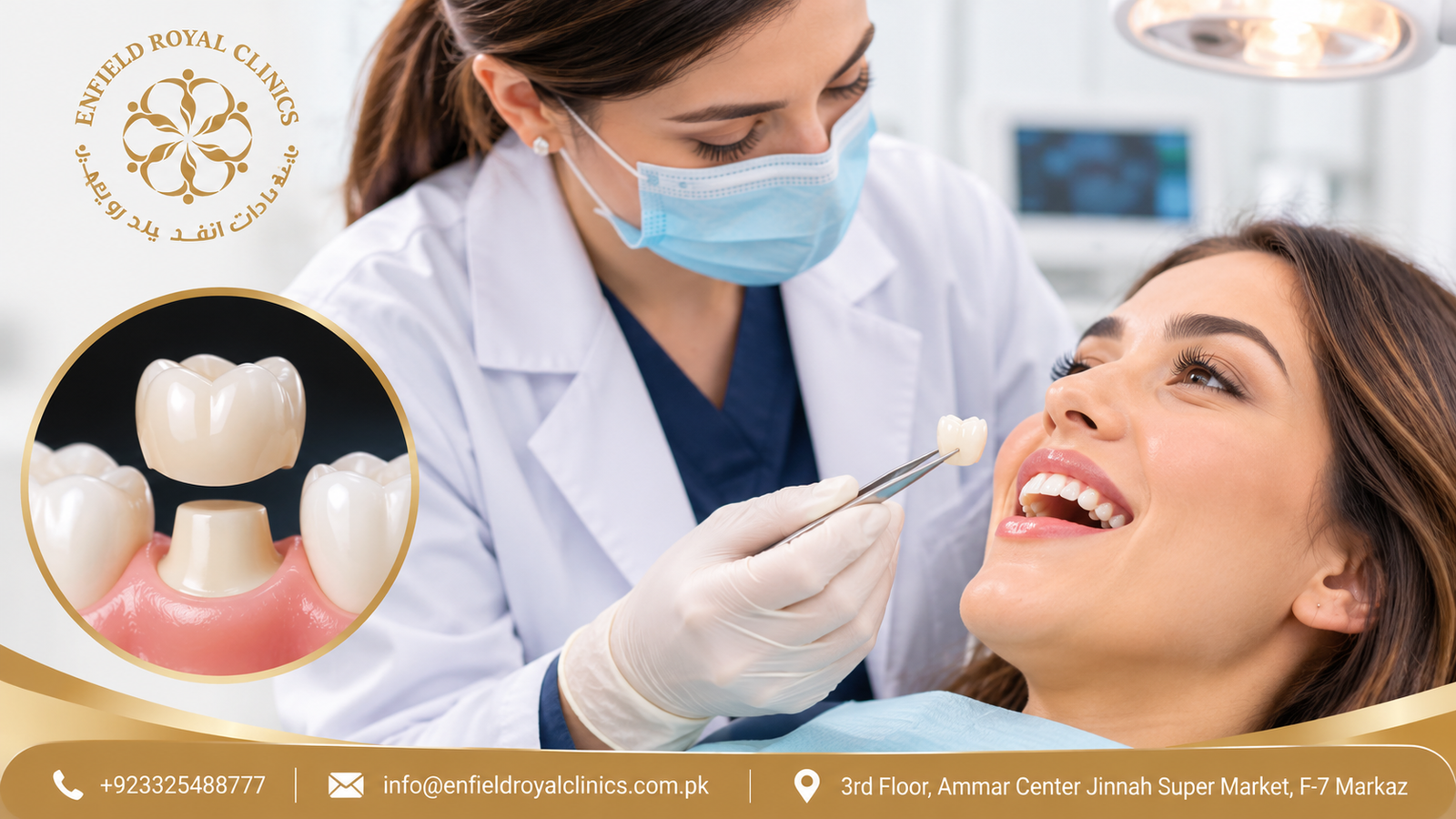
Dental crowns are commonly used to restore and protect such teeth. A crown is a custom-made covering placed over a prepared tooth to rebuild its shape, provide structural support, and improve its ability to handle normal chewing pressure. With proper planning and maintenance, it can help extend the functional life of a damaged natural tooth.
Dental Crown Treatment in Islamabad can be a suitable option for patients whose teeth need additional protection because of extensive decay, fractures, or severe wear. The treatment focuses on restoring the damaged tooth while helping preserve its remaining natural structure.
Understanding how crowns improve tooth durability can help patients make informed decisions about their dental health.
1. How Does a Dental Crown Protect a Weak Tooth?
A weakened tooth may struggle to withstand everyday biting forces, particularly when a large portion of its natural structure has been lost. Deep cavities, extensive fillings, and cracks can leave the remaining tooth walls vulnerable to further damage.
A dental crown provides a protective covering around the visible portion of the prepared tooth. It restores the tooth’s outer shape and helps support its remaining structure during normal chewing.
This coverage can be particularly beneficial for molars and premolars because these teeth experience considerable pressure when grinding food.
A properly designed crown may help:
- Cover weakened areas of the tooth.
- Reduce the risk of certain further fractures.
- Restore the tooth’s natural shape and chewing surface.
- Support remaining tooth structure during normal biting.
- Protect teeth that have undergone extensive restorative treatment.
However, a crown does not make a natural tooth indestructible. Its effectiveness depends on the tooth having enough healthy structure to support the restoration. Teeth with deep root fractures or severe damage may require different treatment.
2. Prevents Further Structural Damage to Certain Teeth
One of the main reasons dental crowns are recommended is to protect teeth that have become structurally weak. When a tooth loses substantial enamel and dentin, the remaining walls may become more vulnerable to cracking under chewing pressure.
For example, a molar with a large filling may have thin remaining walls. Repeated biting forces can place stress on these weakened areas, increasing the possibility of a fracture.
A crown covers the prepared tooth and helps distribute normal chewing forces across the restoration. This can reduce stress on vulnerable parts of the remaining tooth.
Crowns may be particularly useful for:
Teeth With Large Fillings: Extensive fillings can leave limited natural structure around the restoration. Full coverage may provide additional support when a conventional filling is no longer suitable.
Cracked Teeth: Certain cracks can be stabilised with a crown that covers and supports the remaining tooth, provided the fracture has not made the tooth unrestorable.
Severely Worn Teeth: Grinding, clenching, or other causes may reduce tooth height and weaken chewing surfaces. A crown can rebuild the lost shape when sufficient tooth structure remains.
Teeth With Extensive Decay: After the decayed areas have been removed and the tooth has been properly treated, a crown may help protect the remaining structure.
For patients considering Dental Crown Treatment in Islamabad, early evaluation is helpful because some damaged teeth can be protected before further structural loss occurs.
3. How Do Different Crown Materials Affect Tooth Durability?
The material selected for a crown influences its strength, wear characteristics, appearance, and suitability for different teeth. Since front teeth and back teeth perform different functions, the choice should reflect the location and condition of the affected tooth.
Common crown materials include:
Zirconia Crowns: Zirconia is known for its strength and resistance to chewing pressure. It is often considered for molars and other teeth that experience significant biting forces. Different varieties offer different aesthetic characteristics.
Porcelain Crowns: Porcelain can provide a natural-looking appearance and is commonly considered for visible teeth. Its suitability depends on the tooth’s position and functional demands.
Lithium Disilicate Crowns: This ceramic material offers a combination of strength and aesthetics. It may be suitable for selected front and back teeth when the clinical conditions are appropriate.
Porcelain-Fused-to-Metal Crowns: These restorations combine a metal framework with an outer porcelain layer. They provide structural support and a tooth-coloured surface, although the porcelain can sometimes chip.
Metal Crowns: Certain dental metal alloys are durable and may be suitable for back teeth where appearance is less important.
No single material is best for every patient. The dentist considers tooth position, chewing pressure, remaining structure, available space, and cosmetic expectations before recommending an option.
4. How Does Crown Treatment Help After Root Canal Therapy?
Root canal treatment is performed to remove infected or irreversibly inflamed pulp tissue from inside a tooth. It can help preserve a natural tooth that might otherwise need extraction.
After treatment, the remaining tooth structure becomes an important consideration. A tooth that has already lost substantial structure because of deep decay, fractures, or large fillings may need additional protection.
Crowns are commonly recommended for molars and premolars when significant tooth structure has been lost. These teeth experience considerable chewing pressure, and full coverage may help reduce the risk of fracture.
A crown restores the tooth’s external shape and supports its remaining structure during normal function.
However, every root canal-treated tooth does not automatically require a crown. Some front teeth with limited structural damage may be restored successfully using bonded fillings or other conservative restorations.
For patients seeking Dental Crown Treatment in Islamabad, the decision depends on the amount of healthy tooth remaining, the position of the tooth, and its functional requirements.
5. What Factors Influence the Long-Term Durability of a Dental Crown?
A crown’s durability depends on more than the material used to make it. Proper preparation, accurate fitting, bite alignment, and the patient’s everyday habits all influence how well the restoration performs.
Important factors include:
- Condition of the original tooth: A crown needs a suitable foundation with enough healthy structure to support it.
- Quality of fitting: Accurate margins and proper contact with neighbouring teeth help reduce problems such as food trapping and gum irritation.
- Bite alignment: Excessive pressure on one area can affect the crown and the underlying tooth.
- Oral hygiene: Plaque accumulation around crown margins can contribute to decay in the natural tooth underneath.
- Grinding and clenching: Repeated excessive pressure can damage crowns and natural teeth.
- Dental monitoring: Regular check-ups help identify loose restorations, wear, cracks, and gum problems.
A well-made crown can still develop problems if these factors are neglected. Many crowns last around 5 to 15 years or longer, but their lifespan varies according to individual circumstances. This estimate is not a guarantee.
6. How Can Patients Maintain the Durability of Their Crowned Teeth?
Good aftercare is essential for protecting both the crown and the natural tooth underneath it. Although crown materials do not develop cavities, the exposed natural tooth near the crown margins can still decay.
Patients can support long-term results through simple daily habits.
Maintain Daily Oral Hygiene: Brushing twice daily with fluoride toothpaste and cleaning between teeth every day helps remove plaque around the restoration.
Avoid Excessive Biting Pressure: Chewing ice, hard candies, and other very hard objects can damage crowns. Teeth should not be used to open packages or bite non-food items.
Manage Teeth Grinding: Patients who grind or clench their teeth may benefit from a custom nightguard when recommended by a dental professional.
Attend Regular Check-Ups: Dental examinations allow the crown’s fit, condition, bite, and surrounding gums to be monitored.
Address Discomfort Early: Persistent sensitivity, pain while chewing, swelling, or a loose crown should be assessed rather than ignored.
With appropriate care, a crown can provide reliable support for a weakened tooth and help it remain functional for many years. Patients should also remember that crowns are not the only restorative option. Fillings, bonding, inlays, and onlays may preserve more natural tooth structure when the damage is less extensive.
The most suitable treatment is one that restores the tooth effectively while maintaining as much healthy natural structure as possible.
Frequently Asked Questions
1. Can dental crown treatment make weak teeth more durable?
Yes. A crown covers and supports weakened tooth structure, helping the tooth withstand normal chewing forces and reducing the risk of certain further fractures.
2. Does a dental crown prevent a tooth from breaking again?
A crown can reduce the risk of certain fractures by covering vulnerable areas, but it cannot guarantee that a tooth will never break. Excessive pressure, deep fractures, and other dental problems can still cause damage.
3. Which crown material is best for long-lasting durability?
Zirconia and certain metal alloys are known for their strength, while other ceramic materials offer a balance of strength and appearance. The best material depends on the tooth’s position and individual dental needs.
4. Does every root canal-treated tooth need a crown?
No. Crowns are often recommended for back teeth that have lost substantial structure, but some front teeth can be restored with bonded fillings. The decision depends on the remaining tooth structure.
5. How long does a dental crown usually last?
Many crowns last around 5 to 15 years or longer. Their lifespan depends on material, fit, oral hygiene, chewing pressure, and regular dental maintenance.
6. Can a crowned tooth still develop decay?
Yes. The crown itself does not develop cavities, but the natural tooth around its edges can still decay. Brushing, flossing, fluoride toothpaste, and regular dental check-ups help reduce this risk.