
Introduction
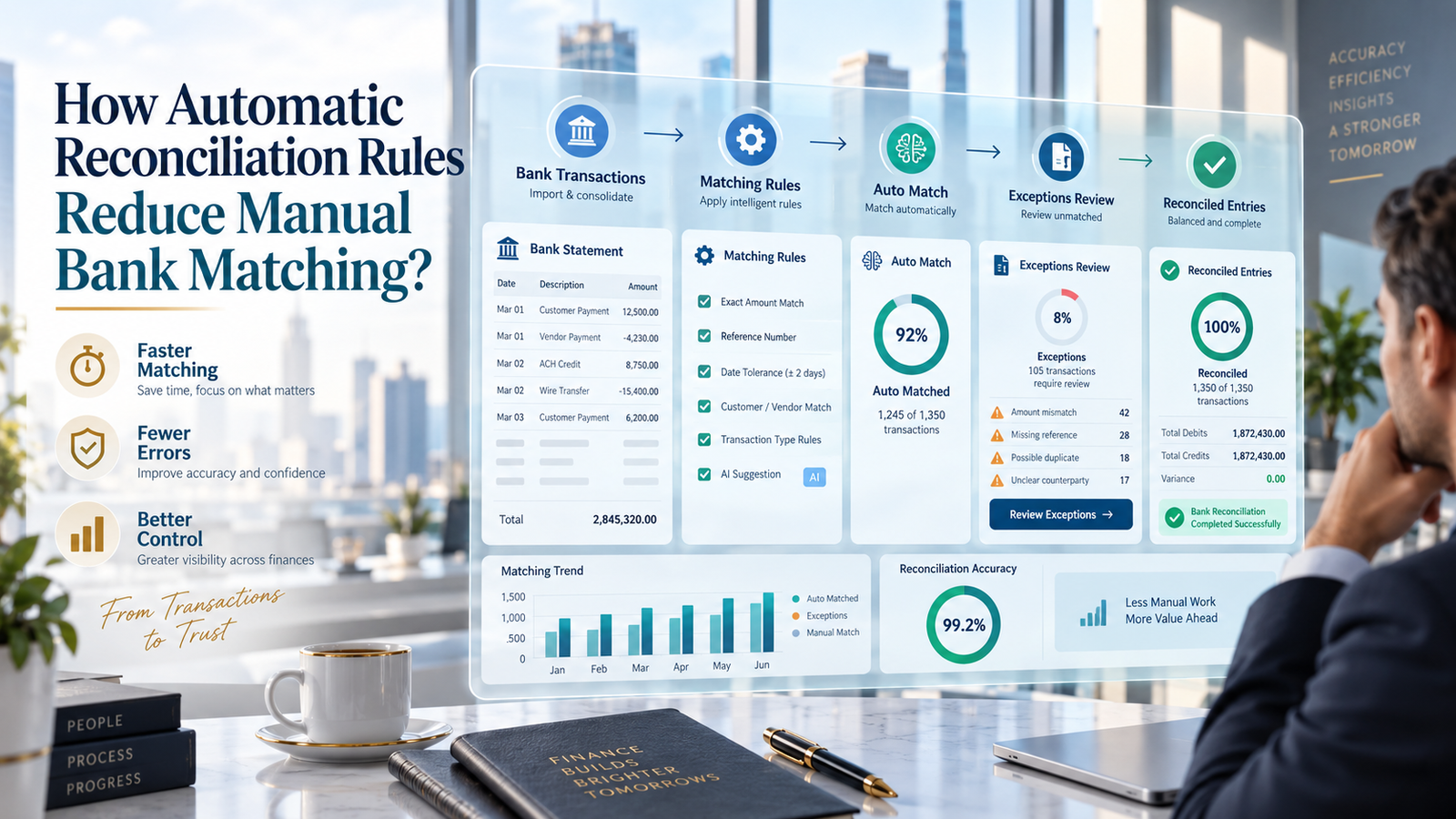
Automatic bank reconciliation depends on translating recognizable transaction patterns into clear, well-defined matching rules. Anyone exploring Oracle Fusion Financials Training in Bangalore through Soft Online Training quickly learns that automation’s real value isn’t fewer manual steps; it’s a dependable match built on a clear source, an accurate statement-to-transaction relationship, and criteria sharp enough to isolate correct records. Automation earns its keep only when it routes uncertain items to human review instead of forcing plausible-looking matches.
A bank statement and an accounting system rarely describe the same event identically; settlements may be bundled differently, dates may vary, and references may be full, truncated, or missing. A well-built rule accommodates these inconsistencies rather than assuming uniformity.
Why Oracle Fusion Financials Training in Bangalore Emphasizes Relationship Types First
Before criteria are even considered, the matching type must be chosen; it defines how many records sit on each side of a reconciliation. One-to-one matching links a single statement line to a single system transaction. One-to-many connects one statement line to multiple system transactions. Many-to-one groups several statement lines under a single system transaction. Many-to-many allows grouping on both sides simultaneously, and zero-amount matching handles system transactions that never surface as a bank statement amount. Picking the wrong relationship type can make even well-crafted criteria produce unreliable results.
The right approach starts with the actual economic event, not with whatever configuration is most convenient to set up. A card settlement that arrives as a single bank deposit might correspond to several internal transactions that need to be grouped. On the other hand, a bank fee and a payment shouldn’t be lumped together simply because their combined value happens to match an open amount. A properly designed rule mirrors how the bank presents the transaction and how the internal system records it, which limits the risk of accidental matches that satisfy the math but misrepresent what actually happened.
Grouping Attributes Shape the Candidate Pool
Grouping attributes decide which records are even eligible to be considered together whenever a matching type spans multiple lines or transactions. One-to-many matching requires grouping on the system-transaction side; many-to-one needs it on the statement-line side; many-to-many needs grouping applied to both. These aren’t minor configuration details; a loosely defined grouping rule can pull unrelated records into the same pool before any matching criteria are even evaluated, while an overly restrictive one can prevent legitimate pieces of the same settlement from ever meeting.
According to Oracle’s own documentation on reconciliation matching rules, attributes like date, transaction type, and reconciliation reference can only serve as matching criteria once they’ve first been designated as grouping attributes for grouped matching. This dependency forces a more deliberate design process. If a transaction source needs to stay consistent within a group, that consistency has to be built into the grouping logic itself; it can’t be assumed retroactively after multiple sources have already been combined.
Criteria That Identify Records, Not Just Resemble Them
The most common matching criteria are amount, date, reconciliation reference, and transaction type. Amount plays a central role in most rules, but on its own it rarely distinguishes records in accounts where the same values repeat often. A reference field can be a much stronger identifier, provided the bank supplies it consistently and the system preserves it accurately. Date ranges are useful within a reasonably justified window, though widening that window too much increases the number of false candidates. Transaction type can help separate deposits, disbursements, and fees but only when the underlying statement coding is reliable.
Advanced criteria add another layer of precision for specific bank formats or recurring transaction patterns. They allow comparisons between matching data types, filtering on selected attributes, and the application of literal values against stored data. Precision is critical at this stage; a condition built around display formatting rather than the actual stored value can silently fail, while excessive case sensitivity can reject references that should have matched. Every expression needs to be tested against records that should match, as well as near-misses that should legitimately remain unmatched.
Sequencing Rules From High Confidence to Broader Coverage
Matching rules run through rule sets that are assigned to specific bank accounts, and the order in which they’re evaluated significantly affects which logic processes a record first. High-confidence one-to-one rules should always be positioned ahead of broader, grouped rules. A rule that relies on a trustworthy reference paired with an exact amount match can resolve a transaction with certainty early in the process. Rules further down the sequence can then apply looser logic like a justified date range or a grouping pattern for records that lack a strong reference. This ordering protects the value of strong identifiers before the matching logic broadens its net.
A broad, catch-all rule should never be treated as a safety valve meant to resolve every remaining item. Unmatched transactions are actually useful evidence they can point to missing references, unusual bank formatting, transactions that never made it into the system, or a rule that’s simply grown outdated. Reviewing these exceptions regularly is part of maintaining a healthy reconciliation process. If a legitimate pattern keeps recurring, it may be worth building a carefully tested rule around it. But a single unusual transaction usually calls for direct investigation, not a blanket loosening of matching tolerances.
Measuring Success Through Exception Quality, Not Match Volume
A high automatic match rate on its own doesn’t prove the process is working well. What actually matters is whether the matched groups contain the correct statement lines paired with the correct system transactions. Reviewers should periodically sample successful matches particularly ones generated by grouped or advanced rules and examine open items by category. False matches are especially damaging because they quietly remove records from the exception queue while leaving the underlying accounting error unresolved.
Sampling shouldn’t be limited to typical processing periods. It should also include days with heavy settlement volume, repeated transaction amounts, or delayed file arrivals, since these conditions tend to generate more plausible-but-incorrect candidates and can expose weaknesses in rules that appeared solid in smaller test sets. A thorough reviewer should be able to explain why every single record in a sampled group belongs there, not just confirm that the totals happen to balance.
Ongoing maintenance needs to track changes in bank formatting, transaction sources, reference reliability, and settlement behavior. A data source that suddenly starts dropping identifiers can quietly undermine a rule that used to be precise. A new payment channel might introduce aggregation patterns that call for an entirely different matching type. Maintaining versioned test cases makes it far easier to evaluate these changes with confidence. Before any revised rule goes live in regular processing, it should be able to reproduce known correct matches, correctly reject known incorrect combinations, and still leave genuinely ambiguous cases open for manual review.
Conclusion
Automatic reconciliation only reduces manual work when its rules reflect real transaction relationships and apply evidence in a disciplined, deliberate order. The matching type establishes the shape of the relationship, grouping defines which records are even eligible to be compared, criteria do the actual identifying, and sequencing protects strong, high-confidence logic from being overridden by broader, looser rules. Professionals pursuing Oracle Fusion Financials Training in Bangalore learn to treat unmatched items as valuable signals rather than failures to be swept aside. A well-maintained reconciliation process automates the clear-cut cases, surfaces the uncertain ones for review, and improves over time through tested evidence not by chasing the highest possible match percentage.