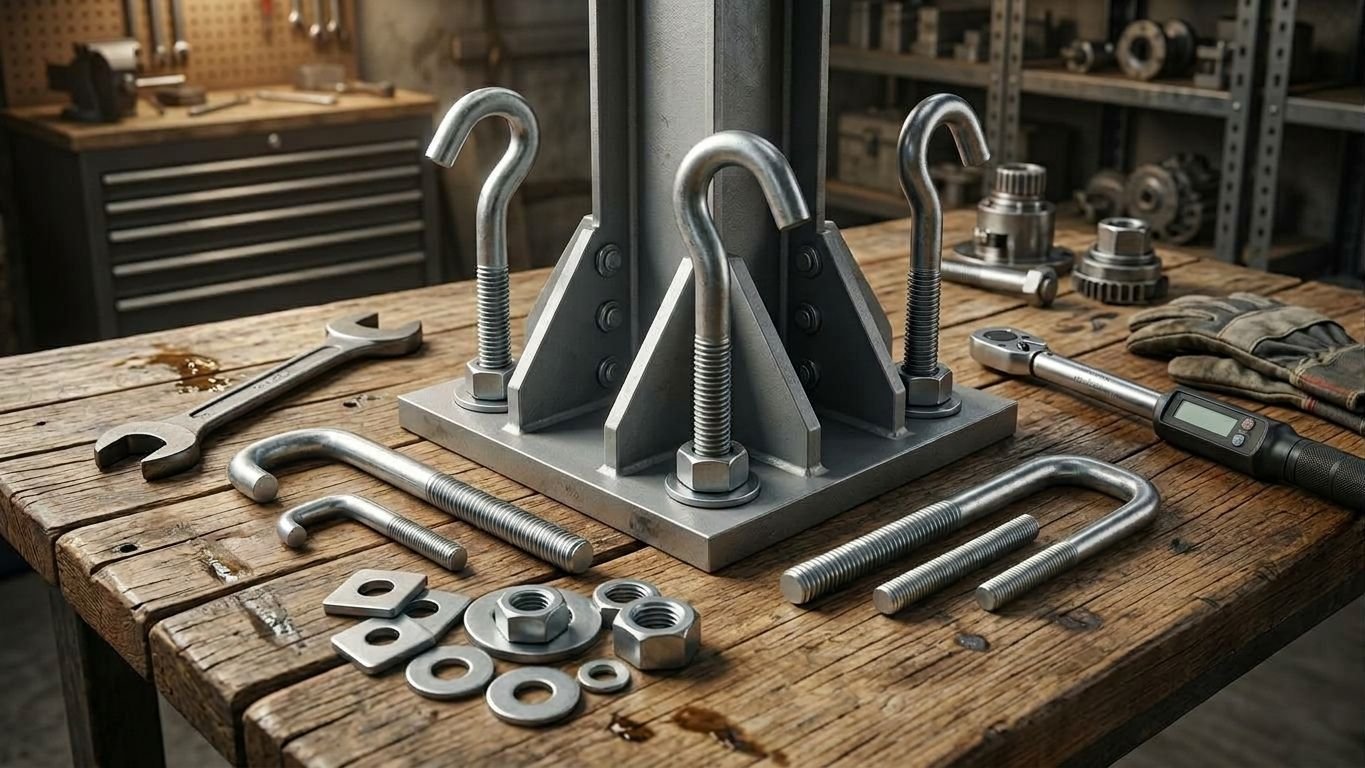
Modern buildings require strong foundations and reliable connections to remain stable throughout their service life. From commercial offices and residential towers to industrial facilities, every structure depends on carefully selected fastening components. Anchor Bolts play an important role in this process by connecting structural elements to concrete foundations and helping buildings resist different types of loads. When properly designed and installed, they improve structural stability, support safety, and contribute to long-term building performance.
Understanding the Role of Anchor Bolts in Construction
Anchor Bolts are fastening components used to secure steel columns, base plates, machinery, and other structural elements to concrete. They create a connection between the foundation and the structure above it, allowing forces to transfer safely between these components.
In modern construction, buildings may experience loads caused by their own weight, occupants, equipment, wind, and other environmental conditions. A reliable connection between the foundation and the structure is essential for managing these forces.
Anchor Bolts help prevent unwanted movement by holding connected components in position. Their design, size, material, and installation method must match the requirements of the building project to achieve dependable performance.
Improving the Connection Between Foundations and Structures
A building’s foundation provides the base on which the entire structure rests. However, the foundation alone cannot ensure stability if the structural components above it are not securely connected.
Anchor Bolts connect steel columns and base plates to concrete foundations. This connection helps transfer loads from the building’s framework into the foundation and supports the intended structural design.
A properly designed anchoring system can help:
- Keep steel columns securely positioned.
- Reduce unwanted movement at structural connections.
- Transfer tension and shear forces into the foundation.
- Maintain alignment during construction and throughout service.
These benefits are particularly important in buildings that use steel frameworks, where the accuracy and strength of column connections can influence overall structural performance.
Helping Buildings Resist Wind and Lateral Forces
Modern buildings must withstand more than vertical loads. Wind can place significant pressure on exterior surfaces and create lateral forces that affect the structure’s stability. Tall buildings may experience greater movement because of their height and exposure to environmental conditions.
Anchor Bolts help secure structural supports to foundations, contributing to the building’s ability to resist the forces considered in its engineering design. They can also help resist uplift forces that may occur when wind acts on roofs, canopies, or other exposed structural elements.
Their effectiveness depends on several factors, including bolt dimensions, embedment depth, concrete strength, edge distances, and the design of the connected base plate.
It is important to remember that Anchor Bolts work as part of a complete structural system. Their performance depends on the combined design of the foundation, steel framework, connections, and other load-resisting elements.
Supporting Heavy Loads in Modern Buildings
Commercial and industrial buildings often contain heavy equipment, large steel columns, storage systems, and mechanical installations. These components require secure connections to prevent movement and maintain operational safety.
Anchor Bolts help distribute the forces transferred through these connections into the concrete foundation. When engineers select the correct anchoring system, it can support the loads expected during normal use and other relevant design conditions.
Common applications include:
- Steel columns in commercial and industrial buildings.
- Equipment bases in manufacturing facilities.
- Structural supports in warehouses and distribution centres.
- Mechanical systems installed on concrete foundations.
- Canopies, support frames, and other structural assemblies.
Selecting the right Anchor Bolts requires an understanding of the load type, installation environment, concrete properties, and applicable engineering standards. Using unsuitable fasteners can weaken a connection and increase the risk of structural problems.
Reducing the Risk of Structural Movement
Even small movements at structural connections can create problems over time. Misalignment may affect connected components, while repeated movement can place additional stress on fasteners and surrounding concrete.
Anchor Bolts help keep structural components in their intended positions when they are correctly selected, installed, and maintained. Secure anchoring is especially important for steel columns, equipment supports, and other components where accurate alignment is necessary.
For dependable results, construction teams must follow approved installation drawings and specifications. Bolt positions should be checked before concrete placement, and completed connections should be inspected to confirm that the components are correctly aligned.
Proper installation also helps avoid issues such as insufficient embedment, damaged threads, incorrect projection, and unsuitable tightening practices.
Choosing Suitable Materials for Long-Term Performance
The material used for Anchor Bolts affects their strength, durability, and resistance to environmental conditions. Construction projects may require different grades and finishes depending on structural loads and exposure to moisture, chemicals, or other corrosive elements.
Carbon steel fasteners are commonly used in many structural applications, while stainless steel and appropriately protected steel options may be considered for environments with greater corrosion risks.
Material selection should account for the following factors:
- Required tensile and shear strength.
- Exposure to moisture and corrosive substances.
- Expected service life of the structure.
- Compatibility with connected components.
- Applicable project specifications and standards.
Protective coatings can help reduce corrosion, but the selected coating must suit the environment and the project’s requirements. Engineers should also consider the effects of coating thickness on threads, nuts, washers, and connection fit.
Businesses sourcing structural fastening products may evaluate suppliers such as Petrofast Middle East FZC to find suitable fastening solutions for construction and industrial requirements. Regardless of the supplier, product specifications and quality documentation should be checked before materials are approved for a project.
Why Accurate Installation Matters
The performance of Anchor Bolts depends not only on product quality but also on installation accuracy. Even a strong bolt may fail to perform as intended if it is incorrectly positioned or installed under unsuitable conditions.
Before concrete is poured, anchor bolt templates and positioning systems can help maintain the required spacing, alignment, and projection. After installation, the completed connection should be checked against the approved drawings.
Important installation practices include:
- Confirming bolt diameter, grade, and length.
- Checking embedment depth and edge distances.
- Maintaining accurate bolt spacing and alignment.
- Ensuring concrete has achieved the required strength before loading.
- Following specified tightening and inspection procedures.
For post-installed anchors, the installation process must follow the manufacturer’s instructions, including drilling, hole cleaning, and curing requirements where applicable.
Qualified professionals should verify that the anchoring system meets the design requirements before the connected structure is placed into service.
Preventing Common Problems With Anchor Bolts
Several issues can affect the reliability of anchoring systems if they are not identified early. These may include corrosion, incorrect bolt placement, insufficient embedment, damaged threads, and cracking or failure of the surrounding concrete.
Careful planning and quality control help reduce these risks. Construction teams should inspect materials upon delivery, confirm that the correct products have been supplied, and document installation checks.
Regular inspections may also be necessary for buildings exposed to harsh environmental conditions, heavy vibration, or demanding industrial operations. Signs of corrosion, loosening, concrete damage, or unusual movement should be assessed by a qualified professional.
Repairs or replacements should follow an appropriate engineering assessment rather than relying on temporary adjustments that may not address the underlying problem.
Conclusion
Anchor Bolts are essential components in modern construction because they connect structural elements to concrete foundations and help buildings maintain stability under expected loads. They support secure column connections, help resist lateral and uplift forces, and reduce the risk of unwanted movement when correctly designed and installed.
Their effectiveness depends on proper material selection, accurate positioning, suitable corrosion protection, and compliance with engineering specifications. By giving these details appropriate attention, construction professionals can create reliable structural connections that contribute to the safety, durability, and long-term performance of modern buildings.