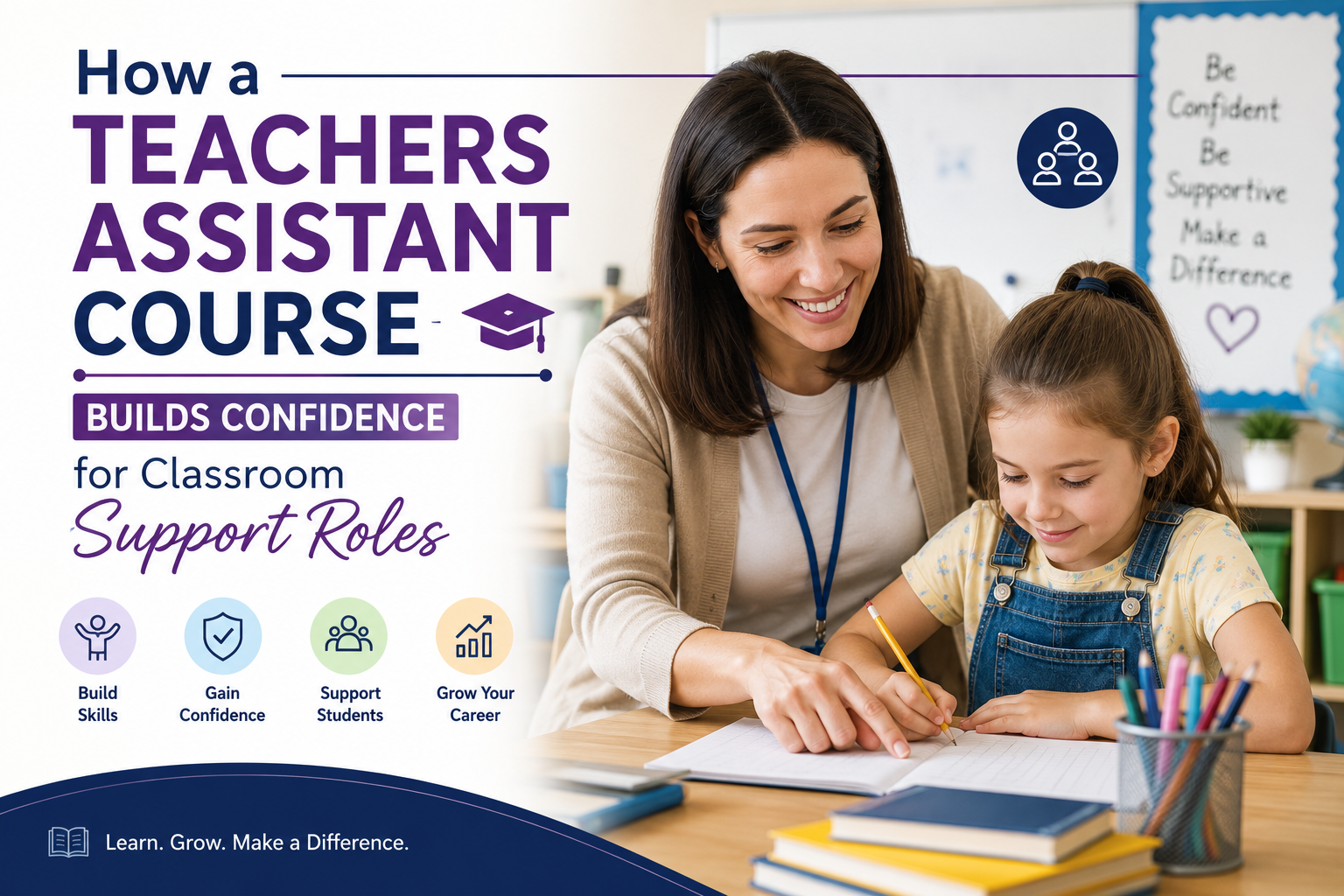
Confidence is one of the most valuable qualities a teaching assistant can bring into the classroom. While knowledge and enthusiasm are important, confidence enables support staff to communicate effectively, assist students with assurance, and work collaboratively with teachers. Developing this confidence often begins with structured training that provides both theoretical understanding and practical insights into the education sector.
A well-designed teachers assistant course helps learners build the skills and self-belief needed to succeed in classroom support roles. Through comprehensive learning, aspiring teaching assistants gain a better understanding of their responsibilities while preparing to contribute positively to student learning and classroom management.
Why Confidence Matters in the Classroom
Teaching assistants play a vital role in supporting teachers and helping students achieve their academic goals. Their responsibilities may include assisting with lesson activities, supporting individual learners, supervising group work, and encouraging positive classroom behaviour.
Confidence allows teaching assistants to:
- Communicate clearly with students and teachers.
- Handle classroom responsibilities effectively.
- Adapt to different learning environments.
- Respond calmly to everyday challenges.
- Encourage student participation and engagement.
When classroom support staff feel prepared, they are more likely to make meaningful contributions that enhance the learning experience.
Learning the Foundations of Classroom Support
Professional training provides learners with a strong understanding of how classrooms operate. Rather than relying solely on observation, structured learning introduces the principles that guide effective educational support.
Typical areas of study include:
- Classroom organisation
- Child development
- Learning support techniques
- Safeguarding responsibilities
- Equality and inclusion
- Communication skills
Understanding these core topics helps learners approach classroom situations with greater confidence and professionalism.
Developing Practical Skills
Confidence grows through practice and preparation. A quality training programme introduces realistic scenarios that help learners understand what to expect in educational settings.
Participants often learn how to:
Support Classroom Activities
Teaching assistants regularly assist teachers with lesson preparation, classroom organisation, and learning activities. Training helps learners understand how to contribute effectively without disrupting lesson flow.
Encourage Student Participation
Some students require additional encouragement to engage with classroom activities. Teaching assistants learn supportive strategies that promote confidence and participation among learners.
Manage Everyday Challenges
Every classroom experiences minor challenges, from keeping students focused to assisting children with different learning needs. Understanding practical approaches helps teaching assistants respond calmly and effectively.
Building Strong Communication Skills
Communication is central to every classroom support role. Teaching assistants interact daily with teachers, students, parents, and school staff.
Professional training focuses on:
- Active listening
- Clear verbal communication
- Positive body language
- Professional written communication
- Collaborative teamwork
Improved communication creates stronger relationships throughout the school community while increasing confidence during daily interactions.
Understanding Inclusive Education
Modern classrooms include students with diverse abilities, backgrounds, and learning styles. Inclusive education ensures that every learner has the opportunity to succeed.
Training helps future teaching assistants understand:
- Different learning needs
- Inclusive teaching approaches
- Supporting additional learning requirements
- Respectful communication
- Creating positive learning environments
This knowledge allows teaching assistants to provide meaningful support to every student regardless of individual differences.
Preparing for Real Classroom Situations
One reason structured learning builds confidence is that it prepares learners for realistic classroom experiences.
Course content often introduces situations such as:
- Supporting small group activities
- Helping individual students complete tasks
- Managing transitions between lessons
- Encouraging positive behaviour
- Assisting teachers during classroom instruction
By understanding these responsibilities beforehand, learners are better prepared when entering educational environments.
Flexible Learning Supports Professional Growth
Many aspiring teaching assistants balance work, family responsibilities, or other commitments while studying. Flexible online education allows learners to continue developing professionally without disrupting their daily schedules.
Providers such as UK Open College offer learning opportunities designed to accommodate different lifestyles while maintaining high educational standards. This flexibility encourages consistent progress and supports long-term career development.
Developing Professional Confidence
Confidence develops gradually through learning, preparation, and practical understanding.
Completing a structured teachers assistant course helps learners become familiar with:
- Professional expectations
- Classroom routines
- Educational terminology
- Child safeguarding procedures
- School policies
- Collaborative working practices
As familiarity increases, individuals often feel more comfortable taking on classroom responsibilities.
Supporting Career Progression
Professional development is valuable throughout an education career. Employers often appreciate candidates who demonstrate commitment to learning and continuous improvement.
Completing relevant training may support opportunities in areas such as:
- Primary education support
- Secondary school support
- Early years education
- Special educational needs support
- Learning assistance programmes
For individuals planning long-term careers in education, continued learning creates opportunities for personal and professional growth.
The Importance of Lifelong Learning
Education continues to evolve with changing teaching methods, technology, and classroom practices. Successful teaching assistants recognise the value of continuous professional development.
By staying informed about educational developments, teaching assistants can continue improving their effectiveness while adapting to the changing needs of schools and students.
Institutions like UK Open College provide learners with access to flexible educational programmes that encourage ongoing development and help prepare individuals for rewarding careers in education.
Conclusion
Confidence plays an essential role in successful classroom support. Through structured learning, practical knowledge, communication training, and professional guidance, a teachers assistant course equips learners with the skills needed to contribute effectively in educational environments.
Whether supporting teachers, assisting students, or helping create positive learning experiences, well-prepared teaching assistants bring reassurance and professionalism to every classroom. Investing in a teachers assistant course is an important step toward building confidence, expanding knowledge, and preparing for a fulfilling career in education.
Continue Reading
Interested in learning more about professional growth in education? Explore our related article:
How Teaching Assistant Training Courses Online Enhance Professional Development
Discover how continuous learning, flexible online study, and practical training can help education professionals strengthen their skills and advance their careers.
Frequently Asked Questions
1. Who should enrol in a teachers assistant course?
Anyone interested in supporting teachers and students in educational settings, including career changers, school support staff, and aspiring teaching assistants.
2. What skills are developed during the course?
Learners typically develop communication, classroom support, safeguarding awareness, behaviour management, teamwork, and inclusive education skills.
3. Can a teachers assistant course improve career opportunities?
Yes. Relevant qualifications and professional development can strengthen your profile when applying for classroom support roles.
4. Is online learning suitable for future teaching assistants?
Online learning offers flexibility and allows learners to study at their own pace while balancing work and personal commitments.
5. Why is confidence important for teaching assistants?
Confidence enables teaching assistants to communicate effectively, support students professionally, work closely with teachers, and manage classroom responsibilities successfully.