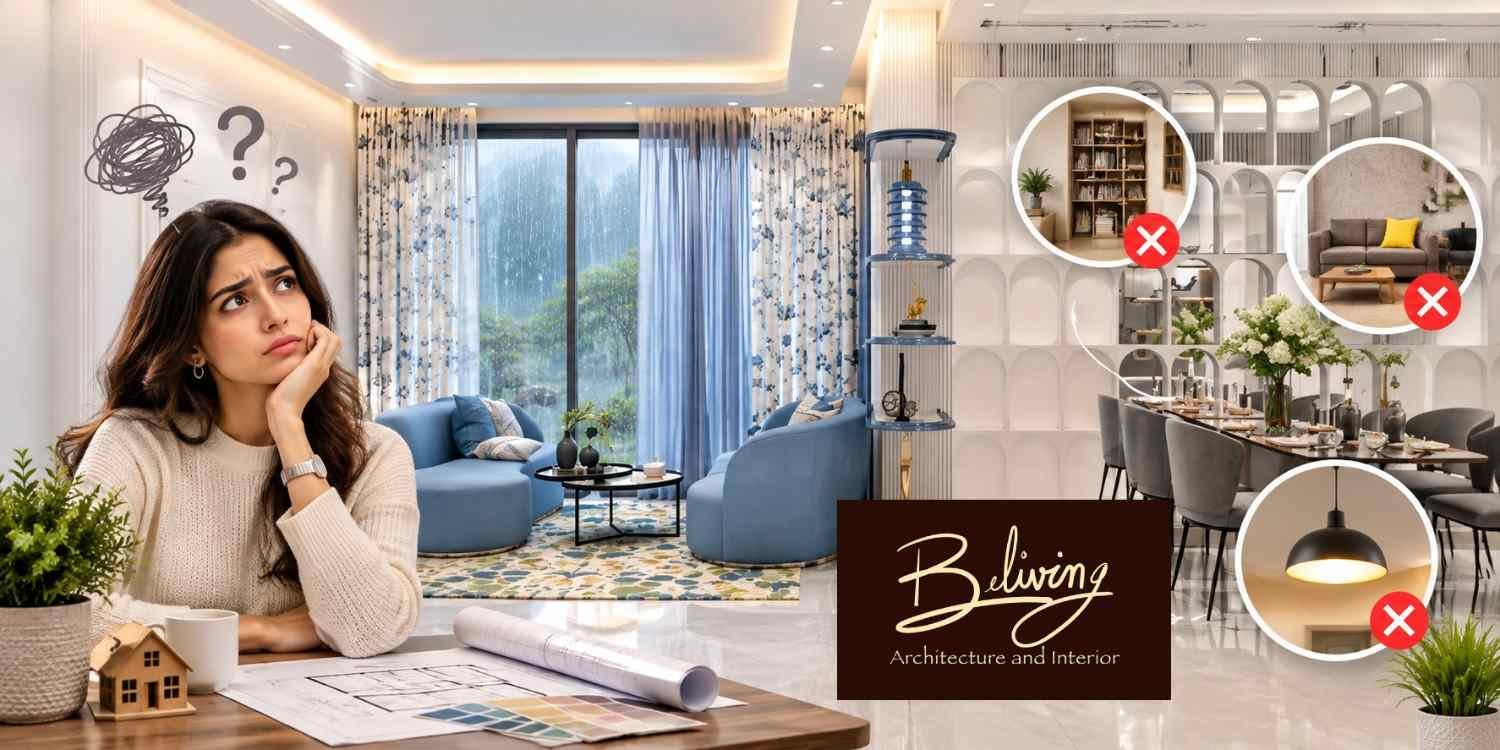
A good-looking house does not always mean a comfortable one. Poor space planning, lack of storage, wrong lighting, and incorrect placement of furniture can make daily life hard. While many people undertaking renovations or buying houses miss out on these aspects until they start using the spaces, working with Home Interior Designers in Delhi can solve this issue from the very beginning.
No matter whether you own an apartment in Dwarka, a builder floor in South Delhi, or an independent house in Greater Kailash, correct planning can work wonders for your place. It will also help save money and effort in the future.
1. Ignoring Space Planning and Everyday Movement
One of the most common home design mistakes is prioritising furniture and decoration before understanding how people will use the available space. A large sofa, oversized dining table, or decorative cabinet might look attractive individually but can restrict movement when placed incorrectly.
In Delhi apartments, particularly in areas such as Rohini, Janakpuri, and Dwarka, available floor space often needs careful utilisation. Every corner should serve a purpose without making the rooms feel overcrowded.
Before finalising furniture placement, consider door openings, walking paths, natural movement between rooms, and the distance between frequently used furniture pieces. Leave comfortable circulation space around dining tables, beds, and kitchen counters.
A professional design team can prepare a layout that considers your family’s routine rather than simply filling the available floor area. Beliving Interior approaches residential planning with attention to individual lifestyles, practical requirements, and visual balance.
2. Choosing Appearance Over Functionality
Another mistake is selecting materials, furniture, and decorative elements entirely based on appearance. A glossy kitchen finish may look impressive in a showroom, but fingerprints and regular cleaning can become frustrating in a busy household.
Similarly, delicate upholstery may not be suitable for families with young children or pets. Expensive decorative furniture can also become impractical when it occupies space that could have been used for additional storage.
The solution is to evaluate every design decision according to its everyday purpose. For example, choose durable upholstery for frequently used sofas, easy-to-clean kitchen surfaces, and finishes that can withstand regular use.
In Delhi’s dusty environment, closed storage, washable surfaces, and easy-maintenance materials can make a noticeable difference. Beliving Interior focuses on creating interiors that combine personal style with practical living requirements.
3. Not Planning Enough Storage Space
Insufficient storage is a problem that often becomes visible after homeowners move into their newly designed properties. Clothes, kitchen appliances, cleaning supplies, documents, and household accessories gradually occupy available surfaces.
The mistake usually happens when storage is treated as an additional feature instead of an essential part of the original layout.
Consider vertical storage, full-height wardrobes, under-bed drawers, kitchen pull-out units, and customised cabinets. However, avoid installing cupboards in every available corner because excessive storage can make smaller rooms feel restricted.
For example, a 2BHK apartment in Laxmi Nagar may benefit from a full-height wardrobe, a compact shoe cabinet near the entrance, and overhead kitchen storage rather than several separate furniture pieces.
Beliving Interior can incorporate storage requirements during the initial planning stage, helping homeowners maintain an organised environment without compromising the overall design.
4. Underestimating the Importance of Natural Lighting
Lighting affects how a home looks, but it also influences comfort, visibility, and the atmosphere of different rooms. Depending entirely on artificial lighting can make interiors feel dull, especially when windows are blocked by heavy curtains or poorly positioned furniture.
Delhi homes experience different lighting conditions depending on their orientation, surrounding buildings, and window placement. Apartments surrounded by taller residential structures may receive limited direct sunlight, while upper-floor properties can experience stronger afternoon heat.
Start by identifying the direction and intensity of natural light entering each room. Use lighter window treatments where privacy permits, position mirrors thoughtfully, and avoid placing bulky furniture directly in front of windows.
Artificial lighting should complement natural light through a combination of ambient, task, and accent lighting. Reading corners, kitchen worktops, study areas, and bedside spaces may require dedicated fixtures.
A well-planned lighting arrangement creates a more welcoming atmosphere while making daily activities easier.
5. Selecting the Wrong Colours and Finishes
Colour selection is often based on showroom samples, social media inspiration, or current interior trends. However, a shade that looks attractive under artificial showroom lighting may appear completely different inside your home.
Dark wall colours can make smaller rooms feel visually compact when combined with insufficient lighting. On the other hand, using only white and neutral shades can make interiors feel monotonous without suitable textures and contrasting elements.
Before selecting a complete colour scheme, test paint samples under different lighting conditions. Consider the flooring, furniture finishes, window treatments, and existing architectural features.
For apartments in South Delhi, where natural light and room proportions can vary considerably, warm neutrals, muted greens, earthy shades, and carefully selected accent colours can create a balanced appearance.
Also, consider maintenance when selecting wall finishes. High-traffic areas such as entrance passages, dining spaces, and children’s rooms benefit from durable, washable paints.
6. Overlooking Kitchen and Bathroom Functionality
Kitchens and bathrooms require more technical planning than many other areas of a home. Mistakes involving plumbing, ventilation, storage, and electrical positioning can become expensive to correct after installation.
A kitchen should be designed around the relationship between the sink, cooking area, and refrigerator. Adequate countertop space, accessible drawers, and suitable appliance positions make regular cooking more convenient.
For example, a family living in a builder floor in Greater Kailash may require a different kitchen arrangement from a couple occupying a compact apartment in Mayur Vihar.
Bathrooms also need proper waterproofing, drainage slopes, ventilation, and safe electrical placement. Selecting attractive tiles without considering slip resistance or cleaning requirements can create long-term difficulties.
Consulting experienced professionals before starting installation helps coordinate these technical requirements with the overall design.
7. Following Trends Without Considering Your Lifestyle
Social media has made modern interior inspiration easily accessible. However, copying an entire design without understanding its suitability is another common mistake.
Open shelving, oversized decorative lighting, elaborate wall panelling, and minimal furniture may look appealing in photographs but might not support your household’s everyday requirements.
A family with children may need additional storage, durable furniture, and flexible study areas. Someone working remotely may require a dedicated workspace with proper lighting, electrical points, and comfortable seating.
Instead of following every new trend, identify the features that genuinely improve your lifestyle. Personal preferences should guide the design, while professional planning ensures that those preferences remain practical.
This is where choosing the Best Commercial Interior Designers in Delhi for business environments and experienced residential design professionals for homes becomes important. Commercial and residential spaces have different functional requirements, and their planning should reflect their intended use.
8. Forgetting Ventilation and Indoor Comfort
A visually attractive home can still become uncomfortable when ventilation is overlooked. Poor air circulation, unsuitable window treatments, and inadequate exhaust systems can affect indoor comfort.
Delhi experiences hot summers, cooler winters, and considerable seasonal dust. Therefore, window placement, cross-ventilation, ceiling fans, kitchen exhaust systems, and suitable cooling arrangements deserve attention during the planning stage.
Avoid blocking existing ventilation openings with tall cabinets or decorative partitions. Select curtains and blinds according to sunlight exposure, privacy requirements, and the room’s orientation.
For rooms with limited natural airflow, consider suitable mechanical ventilation and air circulation solutions. These decisions should be coordinated with the electrical and ceiling layouts before finishing work begins.
9. Choosing Interior Materials Without Checking Quality
Selecting materials solely because they are inexpensive can lead to repairs and replacements much sooner than expected. Poor-quality plywood, unsuitable hardware, low-grade laminates, and incorrect installation practices can affect the durability of furniture and fittings.
Before approving materials, check their specifications, moisture resistance, finish quality, maintenance requirements, and warranty conditions.
For kitchen cabinets and bathroom-adjacent storage, moisture-resistant material specifications are particularly important. Similarly, frequently used wardrobe shutters and drawers should have reliable hinges and channels.
Request physical samples instead of relying entirely on digital photographs. A detailed material schedule also helps ensure that the products installed at the site match the approved design.
10. Ignoring Budget Planning and Project Coordination
Even a well-designed home can become stressful when its execution is not properly managed. Homeowners sometimes begin construction or renovation without a detailed estimate, defined project scope, or installation schedule.
This often results in additional expenses, delayed deliveries, and disagreements between different contractors.
What Does Home Interior Design Cost in Delhi?
Interior design expenses depend on property size, material selection, custom furniture, labour, and the amount of civil work required.
For initial budgeting in Delhi NCR, homeowners can consider the following indicative ranges:
- Basic interiors: Approximately ₹900–₹1,300 per sq. ft. for essential modular work and functional finishes.
- Mid-range interiors: Approximately ₹1,300–₹2,200 per sq. ft. for upgraded materials, improved hardware, and additional customisation.
- Premium interiors: Approximately ₹2,200–₹3,800 or more per sq. ft. for customised furniture, premium finishes, and detailed design elements.
A modular kitchen may require approximately ₹1.5–₹4 lakh or more, depending on its dimensions, storage configuration, countertop, shutters, and hardware.
A complete 2BHK project can require approximately ₹5–₹12 lakh or more, while larger or premium projects may exceed this range. These are preliminary budgeting estimates, not fixed quotations.
Before approving a proposal, clarify whether it includes appliances, loose furniture, electrical modifications, plumbing, painting, civil work, design fees, GST, and installation.
How to Execute a Home Interior Project Successfully
A structured execution process helps prevent confusion and unnecessary changes during construction.
- Understand your requirements: Identify your family’s lifestyle, preferred design style, storage needs, room usage, and essential features.
- Measure and plan the space: Conduct a site inspection, prepare floor layouts, and finalise furniture positioning, electrical points, and movement areas.
- Develop the design concept: Select colour palettes, materials, furniture styles, lighting arrangements, and finishes. Review 3D visualisations before approving the design.
- Finalise the budget: Prepare an itemised estimate covering materials, labour, installation, transportation, and additional expenses. Keep a contingency of around 5–10% for unforeseen requirements.
- Begin site execution: Coordinate civil modifications, plumbing, electrical work, waterproofing, carpentry, ceiling installation, painting, and furniture fitting in the correct sequence.
- Inspect and complete the project: Check finishes, hardware, electrical connections, plumbing, storage functionality, and pending corrections before final handover.
Homeowners should also maintain written approvals for design changes and material substitutions. Regular site inspections help identify mistakes before they become expensive to rectify.
Why Professional Interior Planning Makes a Difference
Professional interior planning is not limited to selecting furniture or choosing attractive wall colours. It involves understanding how different elements work together, from space utilisation and lighting to materials, technical drawings, and project execution.
When comparing Interior Design Firms in South Delhi, homeowners should examine their previous projects, design approach, material specifications, project management process, and communication practices.
Beliving Interior offers design solutions centred on individual preferences, functional layouts, residential requirements, and coordinated project execution. Its approach focuses on understanding how homeowners want to use their spaces before developing suitable design concepts.
Whether you are renovating an existing property or designing a newly purchased apartment, professional guidance can help you make informed decisions and avoid common execution problems.
A Short Conversation About Better Home Design
Client: I need something contemporary, but at the same time, functional and comfortable.
Designer: We can design the plan, lighting, furniture, and storage keeping in mind your needs.
Client: Are you able to help me avoid pitfalls that many people run into during the process?
Designer: Definitely. At Beliving Interior, our process of working with Home Interior Designers in Delhi starts from knowing your lifestyle and designing for it.
Summary
The creation of a comfortable house depends on making the right choices and not costly embellishments or passing design fashions. Space planning, adequate storage, proper lighting, good quality materials and realistic budgeting can all be factors that lead to an improved living space.
Before starting your next interior design project, take the time to assess your needs and make each design decision based on its sustainability. The expertise of Home Interior Designers in Delhi will help you make better decisions and ensure you get a sustainable result from your efforts.
With a special emphasis on personalized designs and sustainable results, Beliving Interior can make sure that homeowners get spaces they like and find comfortable.
Some Important Questions
1. What are the most common home interior design mistakes?
The most common mistakes include poor space planning, insufficient storage, incorrect lighting, unsuitable furniture, low-quality materials, and inadequate budget planning. Addressing these requirements before execution helps prevent expensive corrections.
2. How can I make a small Delhi apartment look more spacious?
Use multifunctional furniture, vertical storage, lighter colour combinations, appropriate mirrors, and well-planned lighting. Avoid overcrowding rooms with oversized furniture and unnecessary decorative accessories.
3. How much should I budget for home interior design in Delhi?
A basic 2BHK interior project may require approximately ₹5–₹12 lakh, depending on the scope and specifications. Premium materials, extensive civil work, and customised furniture can increase the overall investment.
4. Why should I hire professional interior designers?
Professional designers help with space planning, material selection, lighting, furniture layouts, technical coordination, and project execution. Their guidance can reduce planning mistakes and improve the functionality of your home.
5. How do I choose the right interior design company in Delhi?
Review previous projects, understand the company’s design process, compare detailed quotations, check material specifications, and clarify project timelines. Choose a team that understands your requirements and communicates clearly throughout execution.
About us –
Official Mobile No. – +91 9871678798