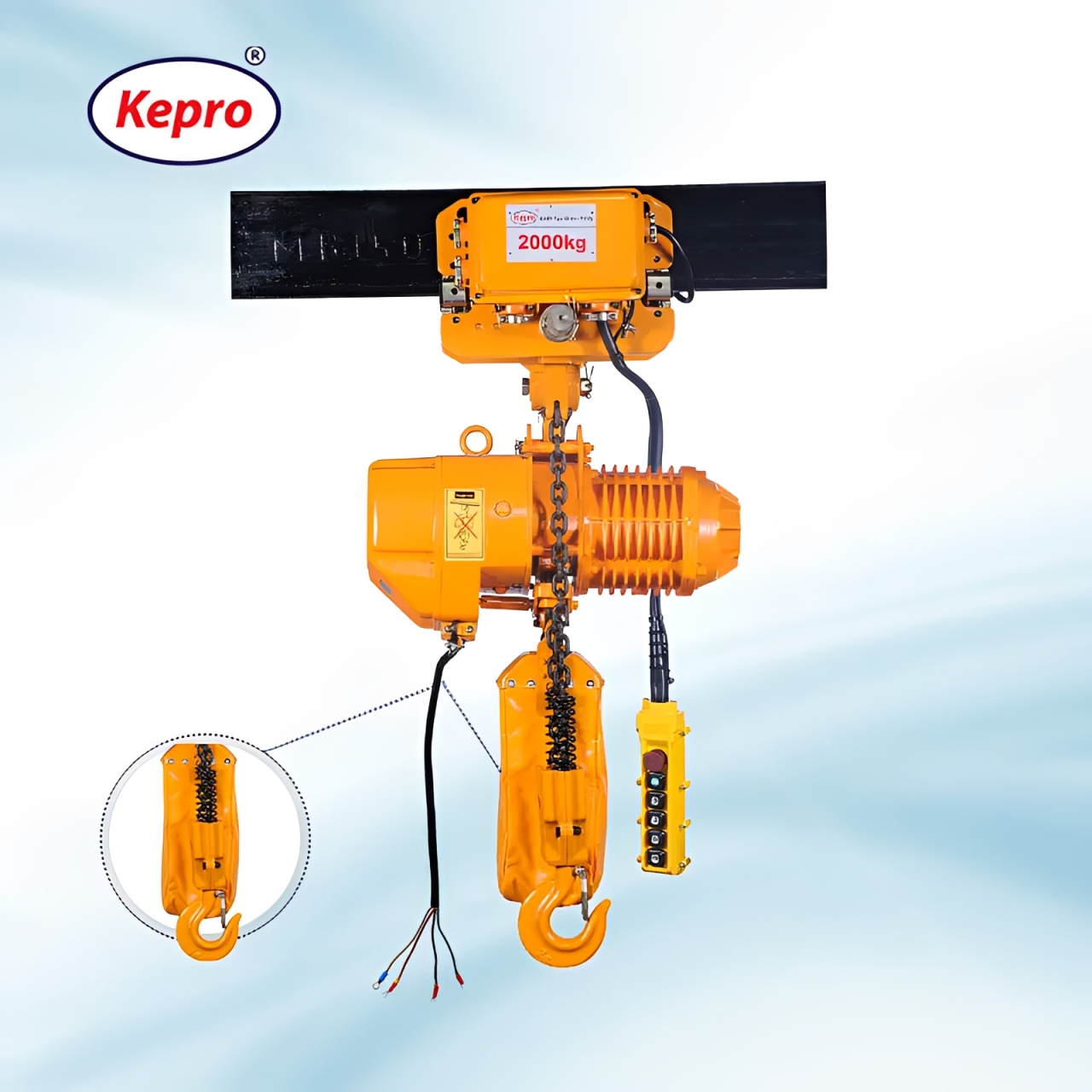
Overview – Heavy fabrication workshops move loads that no person or basic pulley setup should handle manually — thick steel plates, fabricated assemblies, dies, and machine components that often run into tonnes. A Heavy Duty Electric Chain Hoist is built specifically for this kind of repeated, high-load lifting, combining a strong alloy steel chain, a heavy-duty motor, and safety features that manual or lighter-duty lifting equipment simply cannot match.
This blog covers:
- Introduction
- Why standard lifting equipment falls short in fabrication work
- What makes a chain hoist “heavy-duty”?
- Key features to look for
- Where these hoists get used on the shop floor
- Frequently asked questions
Introduction
Fabrication work involves constant material movement — plates onto cutting tables, sections into position for welding, finished assemblies off the floor and onto transport. Every one of those moves is a lifting task, and doing it manually or with undersized equipment slows the line down and puts operators at risk. A Heavy Duty Electric Chain Hoist takes that load off people entirely, moving heavy components quickly and safely through a shift. This blog covers: Why standard lifting equipment falls short in fabrication work What makes a chain hoist “heavy duty” Key features to look for Where these hoists get used on the shop floor Frequently asked questions
Why Standard Lifting Equipment Falls Short in Fabrication Work?
Fabrication workshops are not warehouses moving light, uniform boxes. Loads are heavy, irregular in shape, and often need precise positioning for cutting, welding, or assembly. Manual chain blocks and light-duty hoists were never built for this kind of continuous, high-tonnage use.
- Manual lifting is slow and physically demanding, and it does not scale as load size or lift frequency increases.
- Light-duty hoists wear out quickly when pushed into heavy, repetitive service they were not rated for.
- Improvised lifting setups — chains and slings rigged without a proper hoist — carry a much higher risk of failure under sustained heavy loads.
A hoist rated correctly for the load and the duty cycle removes all three problems at once.
What Makes a Chain Hoist “Heavy Duty”?
The difference between a standard hoist and a heavy-duty one comes down to what it is built from and how much continuous use it is rated for.
- Load chain – made from high-strength alloy steel rather than standard chain, rated to handle heavy, repeated loading without stretching or fatiguing over time.
- Motor – A tough electric motor made for heavy-duty work, built to power through long, repetitive lifting cycles without overheating.
- Dual-speed capability – the ability to change between lifting speeds enables an operator to move quickly on light travel and slow down for precise, controlled positioning near the load point.
- Weather resistance and thermal protection – necessary for hoists that work in a workshop environment without interruption, where dust, heat and vibration are always present.
To better understand how these components work together during lifting, read our guide on the Chain Hoist Working Principle, which explains the complete lifting mechanism and operating process.
Key Features to Look for
Not every hoist on the market is suited to heavy fabrication work, and choosing the wrong one shows up quickly in downtime and maintenance costs. A few features are worth checking before buying:
- Load capacity range – confirm the hoist is rated well above your typical maximum load, not just at the edge of it.
- Trolley compatibility – an electric chain hoist paired with an electric trolley allows horizontal movement along a runway beam, which most fabrication layouts need alongside vertical lifting.
- Control options – pendant, radio, or automated control choices should match how the workshop actually operates day to day.
- Headroom design – a low headroom configuration matters in workshops with limited overhead clearance, since it maximizes usable lift height in a constrained space.
- Indoor and outdoor suitability – workshops with outdoor loading or storage areas need a hoist rated for both environments, not one built for indoor use only.
Where These Hoists Get Used on the Shop Floor?
Heavy duty electric chain hoists show up wherever fabrication work involves moving substantial loads repeatedly and precisely:
- Positioning steel plates and sections before cutting or welding
- Lifting fabricated assemblies for inspection or transport
- Loading and unloading raw material at receiving bays
- Moving dies, jigs, and fixtures between workstations
- Handling finished goods for dispatch
Across manufacturing, construction, automotive, shipbuilding, and power plant applications, the pattern is the same — heavy, frequent lifts that need to happen safely and without slowing the line down.
Kepro India has been serving the material handling and lifting industry with a focus on safety, quality, and performance. As one of the established Heavy Duty Electric Chain Hoist manufacturers, Kepro offers a range of models — including Plus Series, Tauro Series, Orpek Series, Star Series, and Tornado Series hoists, along with explosion-proof options for hazardous environments — built and tested at their own manufacturing facility before delivery. For guidance on selecting the right hoist for your workshop, get in touch with the Kepro India team.
Frequently Asked Questions
How is a heavy duty electric chain hoist different from a standard chain pulley block?
A chain pulley block is manual, suited to occasional light lifts. An electric chain hoist is motor-driven and built for frequent heavy lifting, often with dual-speed and thermal protection.
What load capacity should a fabrication workshop look for?
Match it to the heaviest regular load, with margin for irregular or unbalanced loads. Don’t size to occasional peaks alone.
Can these hoists be used outdoors?
Many heavy duty models are weather-resistant, but this varies by model. Confirm the environmental rating before installation.
Is dual-speed functionality necessary, or is single-speed enough?
Not mandatory, but useful where loads travel far and then need slow, precise positioning. Single-speed works fine for simpler tasks.