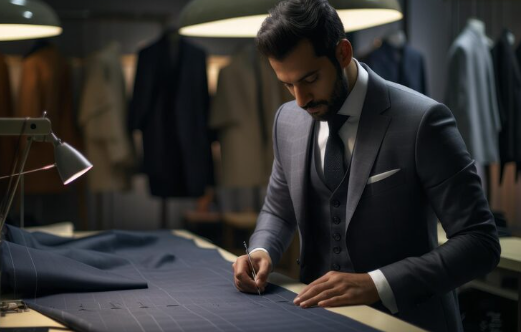
A handmade suit is created with close attention to cutting, construction, stitching, and finishing. While the exact process differs between tailors, handwork may be used for selected details that require careful finishing. Machine stitching can also form part of the overall construction.
The process usually begins by understanding the customer’s requirements. A suit may be intended for office use, business travel, weddings, or other formal occasions. Therefore, the intended purpose can influence the choice of fabric, color, cut, and construction.
Choosing Fabric for Bangkok’s Climate
Bangkok’s warm and humid weather makes fabric selection an important consideration. Lightweight and breathable materials may provide greater comfort when a suit is worn for long periods. Lightweight wool, linen blends, cotton blends, and other suitable fabrics can be considered.
However, fabric should also match the frequency of use. A suit worn regularly may need a material that offers durability and easier maintenance. On the other hand, an occasional formal suit can allow more flexibility in texture and appearance. Thus, comfort, durability, and purpose should all be considered together.
Exploring Handmade Suits in Bangkok
Handmade suits in Bangkok generally begin with detailed measurements and pattern preparation. The tailor may measure the shoulders, chest, waist, arms, jacket length, and trousers. Additionally, posture and body proportions can influence how the pattern is adjusted.
After construction begins, fittings allow the tailor to check the suit on the wearer. During these fittings, areas such as the shoulders, chest, sleeves, waist, and trousers can be reviewed. If changes are needed, the garment can be adjusted before final finishing. Consequently, fittings help refine the overall shape and comfort.
Selecting the Right Suit Style
The most suitable style depends on the occasion and personal preferences. Classic navy, charcoal, and black suits are often versatile choices for professional environments. Meanwhile, checks, stripes, lighter shades, or other patterns may be considered for social and formal events.
Furthermore, customers should think about how the suit will work with their existing wardrobe. A versatile suit can be paired with different shirts and accessories, while a distinctive design may be better suited to specific occasions.
Important Details to Consider
Small details can affect the overall appearance of a handmade suit. Customers may discuss lapel shape, pocket design, buttons, vents, trouser cuffs, and lining. However, these elements should complement the suit’s overall style rather than compete with one another.
Comfort should also remain a priority. The jacket should allow natural arm movement, while trousers should provide enough room for sitting and walking. Therefore, customers should pay attention to how the garment feels during fittings.
Before Ordering a Handmade Suit
Before placing an order, it is useful to ask about the construction process, fabric choices, number of fittings, estimated timeline, alterations, and maintenance. Customers should also confirm the total cost and what is included in the service.
Reference images can help communicate a preferred design. Nevertheless, the final suit may need modifications based on body proportions and fabric characteristics. Clear discussions can therefore help set practical expectations.
Making an Informed Decision
Handmade tailoring involves several stages, from consultation and measurements to construction, fittings, and finishing. Understanding these steps can help customers compare options and choose a suit that fits their intended use and local climate.
For readers researching tailoring choices in Bangkok, Louis Collections is one name that can be considered while exploring handmade suits and other tailored formalwear options.