Healthy gums do more than frame your teeth. They protect the roots, support oral hygiene and help maintain a stable foundation around each tooth. When gum tissue becomes thin or moves away from the tooth, the exposed root surface may become sensitive and more difficult to keep clean. In suitable cases, Gum Grafting in Islamabad can help improve soft tissue coverage and increase the thickness of vulnerable gum areas.
Gum grafting is a periodontal procedure that adds tissue to an area where the existing gum tissue is insufficient. The dentist or periodontist selects a suitable technique after examining the gumline, the condition of the teeth and the underlying periodontal structures. The treatment plan also considers how the graft may heal and how the patient can maintain the results.
Understanding the healing process is important before making a treatment decision. A graft needs time to establish a blood supply, integrate with surrounding tissue and develop sufficient stability. Good preparation and careful aftercare help support this process.
Why Does Gum Tissue Need Additional Support?
Gum recession occurs when the gumline moves away from its original position and exposes part of the tooth root. It may affect one tooth or several areas of the mouth. Some patients notice a visible change in their smile, while others first experience sensitivity during brushing or when consuming cold drinks.
Several factors can contribute to reduced gum coverage:
- Aggressive brushing: Excessive pressure and hard-bristled toothbrushes may contribute to gum recession.
- Periodontal disease: Infection and inflammation can damage the supporting tissues around teeth.
- Naturally thin gums: Some individuals have a thinner gum structure that offers less protection against recession.
- Tooth positioning: Teeth positioned outside the normal dental arch may have less surrounding gum and bone support.
- Tobacco use: Smoking and other tobacco products can negatively affect gum health and healing.
- Local irritation: Poorly fitting dental restorations or persistent plaque accumulation may contribute to gum problems.
The cause matters because grafting does not automatically remove the factor responsible for recession. A patient who continues brushing aggressively, for example, may place the treated area under unnecessary stress.
How Does Gum Grafting Support Tissue Healing?
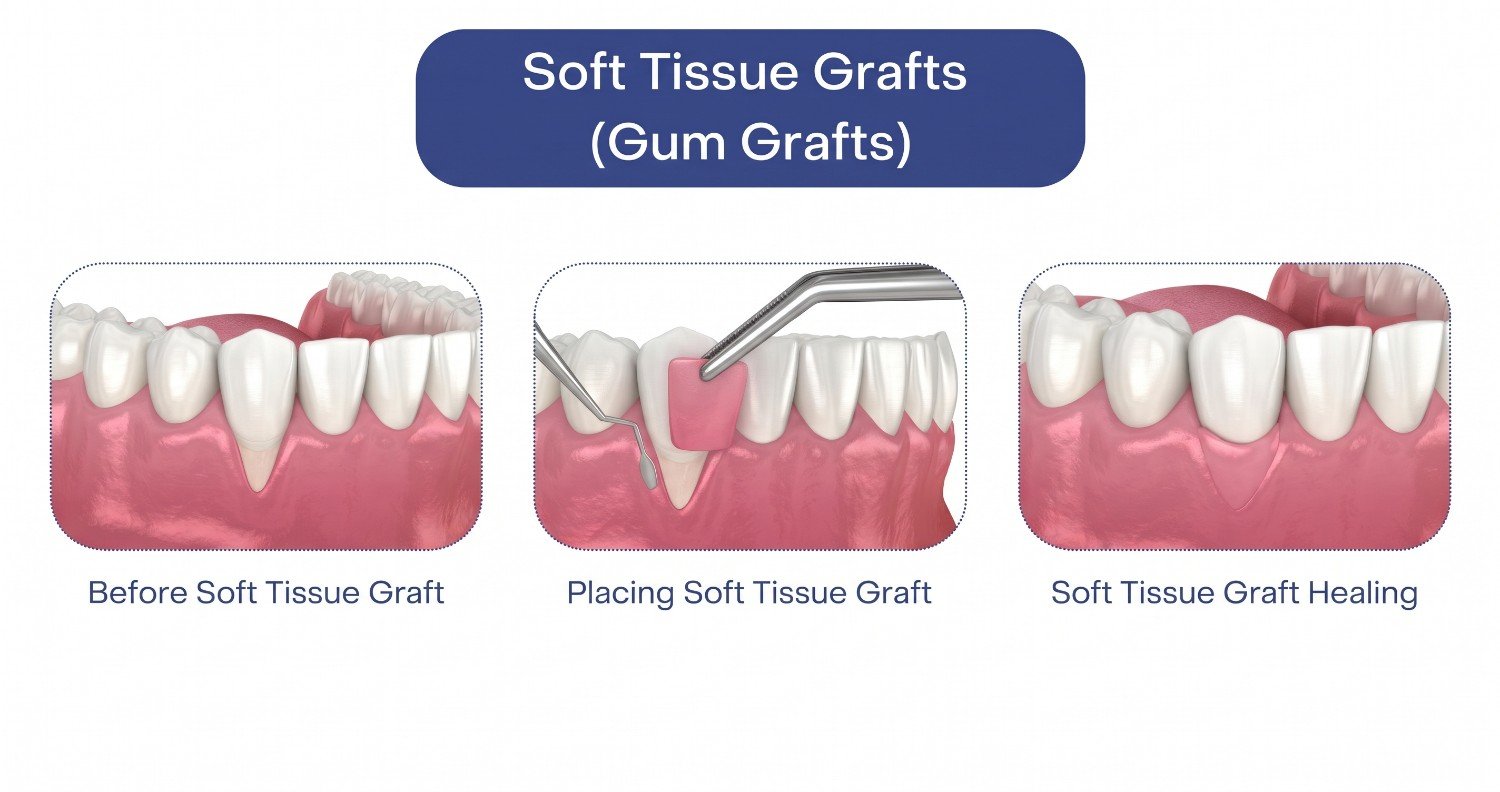
A gum graft introduces additional soft tissue into an area that needs better coverage or thickness. The purpose is to improve the condition of the gum tissue rather than simply change the appearance of the smile.
Depending on the clinical situation, treatment may help:
- Increase the thickness of thin gum tissue.
- Cover some exposed root surfaces when the anatomy allows.
- Reduce sensitivity associated with exposed roots.
- Improve the appearance of an uneven gumline.
- Create a more stable tissue environment around vulnerable teeth.
- Make certain areas easier to maintain with appropriate oral hygiene.
However, the amount of root coverage varies between patients. The position of the tooth, the severity of recession, the available supporting tissue and the presence of periodontal damage can all influence the result.
Types of Gum Grafts Used in Periodontal Treatment
The choice of graft depends on the patient’s gum condition and the purpose of treatment. A periodontist evaluates the available tissue and selects an approach that suits the affected area.
1. Connective Tissue Graft
A connective tissue graft is commonly considered when the goal is to improve coverage over exposed roots. The clinician usually takes connective tissue from beneath the surface layer of tissue on the roof of the mouth.
The graft is positioned over the affected area and secured with sutures. This approach may help improve tissue thickness and root coverage in suitable cases.
2. Free Gingival Graft
A free gingival graft involves taking a small piece of tissue from the palate and placing it directly over the recipient area.
Periodontists may consider this technique when the main objective is to increase the amount of firm gum tissue. It is not necessarily the preferred option for every exposed root, as the appearance and texture of the healed area may differ from the surrounding gums.
3. Pedicle Graft
A pedicle graft uses tissue from the gum area next to the recession. The clinician carefully moves part of this neighbouring tissue over the exposed area while keeping it attached to its original blood supply.
This technique requires sufficient healthy tissue near the affected tooth. It may not be suitable when neighbouring gums are also thin or recessed.
4. Donor Tissue Graft
In selected cases, a clinician may use processed donor tissue instead of taking tissue from the patient’s palate.
This option can reduce the need for a second surgical site. The suitability of donor material depends on the treatment objective, the patient’s oral condition and the clinician’s assessment.
What Happens Before the Gum Grafting Procedure?
Proper assessment helps reduce avoidable complications and allows the clinician to select an appropriate technique.
The consultation generally includes the following steps.
Examination of the Gumline
The clinician checks where recession has occurred and measures the exposed root area. They also examine the thickness and quality of the surrounding gum tissue.
Periodontal Assessment
Gum pockets, bleeding, inflammation and supporting bone condition may need evaluation. If active periodontal disease is present, the clinician generally addresses it before considering graft surgery.
Review of Tooth Position
The position of the affected tooth can influence the expected result. A tooth positioned outside the dental arch may present different treatment challenges from one that sits in a normal position.
Discussion of Treatment Expectations
The clinician explains the likely benefits, limitations, possible complications and recovery requirements. Patients should understand that complete root coverage is not guaranteed.
This consultation also provides an opportunity to discuss existing medical conditions, medications, tobacco use and any previous periodontal treatment that may affect healing.
What Happens During Gum Grafting?
Gum grafting usually takes place under local anaesthesia. The exact steps depend on the selected technique and the number of areas requiring treatment.
First, the clinician prepares the recipient site. If the procedure requires tissue from the palate, a small graft is collected from that area. The graft is then positioned over the treatment site and secured using fine sutures.
The clinician checks that the tissue sits correctly and remains stable. In some cases, a protective dressing may be used.
The procedure may involve one tooth or several sites, depending on the treatment plan. Treating multiple areas can require additional time and more detailed aftercare.
Understanding the Healing Stages After Gum Grafting
Recovery does not happen overnight. The graft passes through several stages as it connects with the surrounding tissue.
First 24 to 72 Hours
Some tenderness, swelling and minor bleeding may occur. Patients who have a graft taken from the palate may also experience discomfort at the donor site.
During this period, protecting the surgical area is particularly important. Avoid touching the graft with your fingers or tongue, and do not pull your lip or cheek repeatedly to inspect it.
First Week
The initial healing process continues during the first week. The surgical area may feel sensitive, and the appearance of the graft can change as the tissue settles.
Follow the clinician’s instructions regarding food, oral hygiene and medication. Do not brush directly over the graft unless the treating professional specifically advises you to do so.
Second to Fourth Week
The tissue gradually becomes more stable. Swelling and tenderness usually reduce, although the exact timeline varies.
A follow-up appointment allows the clinician to assess healing and decide when normal cleaning around the treated area can resume.
Following Months
The graft continues to mature and adapt to the surrounding gum tissue. Its final appearance and degree of coverage may become clearer over time.
Patients should attend recommended follow-up visits rather than judging the outcome only by the appearance during the first few days.
Eating and Drinking During Recovery
Food choices can affect comfort during the early healing period. Hard, crunchy and very hot foods may irritate the surgical site.
Consider the following general precautions:
- Choose soft foods that require minimal chewing.
- Avoid hard toast, nuts, chips and crusty foods near the treated area.
- Allow hot drinks and meals to cool before consuming them.
- Avoid chewing directly over the graft.
- Stay hydrated and follow any dietary instructions provided by the clinician.
The duration of these restrictions depends on the procedure and the progress of healing. Your treating professional should provide instructions suited to your specific graft.
Oral Hygiene Without Disturbing the Graft
Maintaining a clean mouth is important, but direct pressure on the surgical area can interfere with early healing.
Patients should use a soft toothbrush and follow the clinician’s instructions about when and where to brush. A prescribed mouth rinse may be recommended in some cases.
Avoid vigorous rinsing, forceful spitting or using dental floss directly around the graft until the clinician confirms that it is safe.
Once the area has healed sufficiently, gentle and consistent cleaning helps protect the gumline. Long-term brushing habits are especially important for patients whose recession developed partly because of excessive brushing pressure.
What Can Affect the Success of Gum Grafting?
Gum grafting outcomes depend on several clinical and personal factors. Even when the procedure is performed carefully, healing can vary.
Important factors include:
Graft stability: The graft needs to remain properly positioned during the early healing stage.
Blood supply: Healthy surrounding tissue helps support the graft as it integrates.
Existing periodontal health: Active inflammation and untreated gum disease can affect healing.
Tooth position: The location and alignment of the tooth may influence how much coverage is achievable.
Tobacco use: Smoking can interfere with normal tissue healing and should be discussed before surgery.
Aftercare: Following dietary, brushing and activity instructions helps protect the surgical area.
Patients should contact their treating clinician if they experience persistent bleeding, increasing pain, unusual swelling, fever or signs of infection.
Possible Risks and Limitations
Although gum grafting is a recognised periodontal treatment, it carries potential risks.
These may include:
- Postoperative pain or swelling.
- Bleeding at the graft or donor site.
- Infection.
- Incomplete graft integration.
- Partial or limited root coverage.
- Differences in colour or texture between the graft and nearby gums.
- Temporary or persistent sensitivity.
- Discomfort at the palate when tissue is taken from that area.
The clinician should explain these risks before treatment. Patients should also understand that gum grafting cannot reverse every type of periodontal damage or guarantee that recession will never occur again.
How Much Does Gum Grafting Cost in Islamabad?
The cost of gum grafting depends on the clinical requirements rather than a single standard fee. A small graft involving one area may require a different treatment plan from surgery involving several teeth.
Several factors influence the overall expense:
- Number of teeth or gum areas requiring treatment.
- Type of graft selected.
- Use of the patient’s own tissue or donor material.
- Complexity of the recession.
- Need for periodontal treatment before surgery.
- Diagnostic examinations and follow-up appointments.
For further information about the factors involved, patients can read about Gum Grafting cost and discuss their individual requirements during a dental consultation.
An accurate estimate should follow an examination. Choosing treatment based only on the lowest advertised price may overlook important differences in technique, clinical assessment and aftercare.
Can Gum Recession Be Managed Without Surgery?
Not every patient with gum recession needs a graft. If the recession is mild, stable and not causing significant problems, a clinician may recommend monitoring and preventive care.
Non-surgical management may include:
- Switching to a soft-bristled toothbrush.
- Improving brushing technique.
- Professional cleaning where indicated.
- Managing periodontal inflammation.
- Using desensitising toothpaste for exposed-root sensitivity.
- Correcting local factors that irritate the gums.
- Attending regular periodontal reviews.
These measures can help protect existing gum tissue and manage symptoms. However, they do not normally rebuild gum tissue that has already been lost.
If recession continues to progress or creates functional concerns, the clinician may discuss surgical options.
Maintaining Healthy Gums After Treatment
Long-term maintenance is an important part of gum grafting care. Even after successful healing, patients need to protect the treated area from factors that can contribute to further recession.
Use gentle brushing pressure and clean along the gumline without scrubbing. Keep regular dental appointments and seek professional advice if the gums become swollen, bleed repeatedly or change in appearance.
Patients with a history of periodontal disease may require a personalised maintenance schedule. The clinician can recommend suitable cleaning intervals based on gum health and individual risk factors.
For a general dental assessment and guidance on maintaining oral health, patients can consult Dental Clinic Islamabad and discuss the concerns affecting their teeth and gums.
Conclusion
Gum grafting can help improve soft tissue coverage and thickness when gum recession creates a clinical need for additional protection. The treatment may reduce exposed-root sensitivity, improve the appearance of the gumline and support better long-term tissue stability in suitable cases.
However, treatment decisions require a proper periodontal examination. The type of graft, healing process and expected coverage depend on the condition of the gums and the individual patient’s needs. Careful aftercare and consistent oral hygiene remain essential for protecting the treated area.
Frequently Asked Questions
1. How long does gum grafting take to heal?
Initial healing generally takes a few weeks, but the graft may continue to mature over several months. The exact timeline depends on the technique and the patient’s healing response.
2. Does gum grafting cover the entire exposed root?
Not always. Some patients achieve substantial root coverage, while others experience partial coverage. Tooth position, recession severity and available supporting tissue influence the outcome.
3. Can gum grafting treat thin gums without visible recession?
Yes. In selected cases, a clinician may recommend a graft to increase gum thickness even when significant root exposure is not present.
4. Is gum grafting performed under local anaesthesia?
Yes, local anaesthesia is commonly used to numb the treatment area. The clinician explains the procedure and anaesthesia options during the consultation.
5. Can I brush my teeth after gum grafting?
You can usually continue cleaning unaffected areas, but you should avoid disturbing the graft. Follow the treating clinician’s specific instructions about brushing and rinsing.
6. Will my gums look different after grafting?
The treated area may look different during early healing. As the tissue matures, its appearance may become more natural, although colour and texture differences can remain.
7. Can gum recession return after grafting?
Further recession may occur if contributing factors remain uncontrolled or new problems develop. Gentle brushing, periodontal maintenance and regular examinations help protect gum health.
8. Is gum grafting suitable for every patient?
No. Suitability depends on periodontal health, the amount of supporting tissue, tooth position and the patient’s overall clinical condition. A professional examination is necessary before recommending surgery.