
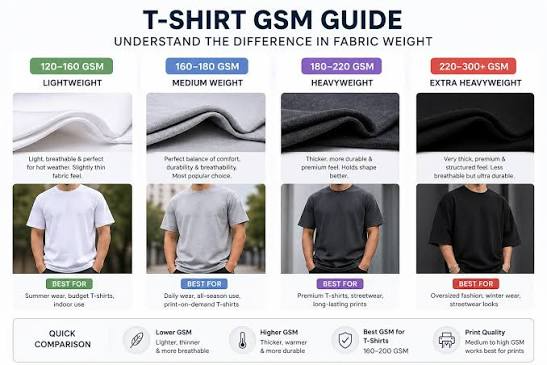
Open almost any t-shirt listing and you will find a small number tucked into the description: 180 GSM, 240 GSM, sometimes even 300 GSM. Most shoppers scroll past it, assuming it is just technical jargon. In reality, that single figure tells you more about how a shirt will feel, hang and last than the color, the print or the price.
The challenge is knowing what the numbers actually mean in daily life. Is 300 always better than 180? Will a heavy tee feel unbearable in summer? In this guide, we’ll compare the three most common weights, explain what each one does well and help you choose based on your climate, style and budget. If you’re also browsing graphic t shirts Pakistan sellers list with different weights, understanding GSM will help you judge quality before you order.
What GSM Actually Means
GSM stands for grams per square meter. It measures how much one square meter of fabric weighs, which in practice tells you how thick and dense the cloth is. A higher number means more material packed into the same area, so the fabric feels heavier, thicker and more substantial.
It is worth remembering that GSM is only one part of the picture. A rough, poorly spun 250 GSM cotton can feel worse than a smooth, well-made 200 GSM one. Cotton type, knit, finishing and stitching all matter. Still, GSM is the fastest way to predict a shirt’s basic behavior, which is why it is worth learning.
The 180 GSM T-Shirt
A 180 GSM tee sits in the light-to-midweight range and is the standard for many everyday shirts. The fabric is soft, flexible and breathable, and it feels easy against the skin. In hot weather, it is one of the most comfortable options, because air passes through readily and the shirt dries quickly after sweat.
For an oversized cut, 180 GSM works if the cotton is good and the knit is tight. It drapes reasonably well and keeps the shirt from feeling heavy, but it has less structure than thicker fabric. Light colors can show through in thin versions, and the shirt tends to wrinkle more easily. It also loses shape sooner after repeated washing. A 180 GSM tee is best for summer wear, travel and anyone who prioritizes breathability over structure.
The 240 GSM T-Shirt
A 240 GSM tee is firmly in heavyweight territory, and for many people it is the sweet spot for oversized shirts. The fabric is dense enough to hang straight from the shoulders, hold a boxy silhouette and resist clinging. It feels substantial and premium, and it almost never turns see-through, even in white or cream.
Durability is a major strength. Dense cotton tends to keep its collar firm, resist pilling and hold prints and embroidery cleanly through repeated washing. It layers well under jackets and overshirts without bunching. The trade-offs are modest: it feels a little warmer than lighter cotton in peak summer, can be slightly stiff when new and usually costs more. For most of the year in Pakistan, a good 240 GSM tee offers the best balance of structure and comfort.
The 300 GSM T-Shirt
A 300 GSM tee is extra heavy, closer to the feel of a thin sweatshirt than a typical summer shirt. The fabric is thick, stiff and very structured, with a bold, boxy look that suits streetwear. It holds its shape dramatically, keeps its collar rigid and feels extremely durable.
This weight shines in cooler weather. It offers some insulation, makes a statement as a standalone piece and layers well under coats. In summer heat, however, it can feel stifling, especially in humid cities, and it takes longer to dry after washing. It also costs the most and can feel too stiff for people who prefer a soft, flowing drape. A 300 GSM tee is best for winter, heavy streetwear looks and anyone who wants a very sturdy, long-lasting shirt.
Side-by-Side Comparison
Drape is the first clear difference. The 180 GSM tee falls softly and moves with you, the 240 GSM tee hangs straight and holds structure and the 300 GSM tee stands away from the body in a bold, rigid shape. Each creates a different visual effect, so choose based on the look you want.
Comfort follows the climate. In heat, the lighter fabric feels best, the midweight is comfortable in most conditions and the heaviest suits cold days. Durability rises with weight, so 300 GSM generally lasts longest, 240 GSM is very reliable and 180 GSM wears out soonest. Price follows the same pattern, since heavier fabric uses more cotton, though quality finishing matters as much as weight.
Choosing by Pakistan’s Weather
Climate should guide your choice more than anything. In peak summer, from May to August, when temperatures pass 40 degrees and coastal humidity makes the air thick, 160 to 200 GSM fabric feels most comfortable. A 180 GSM tee in breathable combed cotton lets air move and keeps you from feeling weighed down.
In autumn and spring, 220 to 240 GSM works beautifully. The shirt holds its shape, looks sharp and still feels comfortable in mild temperatures. In winter, 240 to 300 GSM fabric gives a bit of warmth and sits neatly under jackets and coats. A common worry is that heavy cotton always feels hot, but a good thick cotton breathes better than a cheap synthetic blend because it does not stick to the skin.
Which Weight Suits Which Fit
Fabric weight and fit work together. Oversized and boxy tees depend on the fabric to create their shape, so they look best at 200 GSM and above. At 180 GSM, an oversized cut can still work, but you need a tight knit and a modest size, or the shirt will collapse and cling.
Regular and slim cuts are more forgiving, since the structure comes from the cut, so lighter fabric works fine. For a closer comparison of how fit, fabric and comfort change across cuts, this guide to oversized vs regular fit breaks down the key differences. As a rule, the roomier the shirt, the more weight you want in the cloth.
Prints, Embroidery and Graphics
If you love graphic tees, GSM affects how designs look and last. Heavier fabric has a tighter, smoother surface, so screen prints, puff prints and embroidery sit more cleanly and crack less. A 240 GSM or 300 GSM tee gives artwork a stable base and helps it survive repeated washing.
On a 180 GSM tee, large or thick prints can warp the fabric and feel stiff, so smaller prints and softer water-based or DTF methods work better. Very heavy embroidery on thin fabric can also pucker. If you want bold, long-lasting graphics, choose 220 GSM or more.
Colors and the See-Through Test
Weight and color interact in a practical way. Light colors such as white, cream and pastels show the most through thin fabric, especially when you sweat. A 180 GSM white tee can turn slightly transparent, while a 240 GSM version stays opaque and looks cleaner.
If you prefer lightweight tees, lean toward mid-tone or darker colors and look for a tight knit. A simple test in person is to hold the fabric up to light. If you can see your fingers clearly through it, the shirt is probably too thin for light colors. Reviews and customer photos often mention transparency, so check them before buying.
Moisture, Drying and Performance Fabrics
Cotton is not the only option. For active use, moisture-wicking polyester fabrics are designed to pull sweat away from the body and dry quickly, often at lighter weights. They behave very differently from cotton at the same GSM, so the number alone does not tell you everything. For a deeper look at how performance fabric compares with cotton for everyday wear, this guide to dri-fit t-shirts explains where each one fits.
For regular casual wear, cotton at the right weight is usually the more comfortable and natural choice, particularly in hot, dry weather. Keep performance fabrics for workouts and long, sweaty days.
How to Check GSM Before You Buy
You can judge a lot even when shopping online. First, check whether the listing states the GSM clearly, because honest sellers usually do. If it does not, ask. Then read the cotton type, since combed or ring-spun cotton feels softer and lasts longer than basic carded cotton at the same weight.
Look at the product photos to see how the shirt hangs, and read reviews for comments on thickness, softness and see-through problems. Check for pre-shrunk or garment-washed finishes, which keep the size stable. If you handle the shirt in person, feel the density and check that the knit looks tight and smooth.
Common Mistakes to Avoid
The most common mistake is assuming heavier always means better. A stiff, rough 300 GSM tee can feel worse than a smooth 220 GSM one, so look at cotton quality as well. Another is buying very light fabric for an oversized cut, which clings and loses shape. Going extra heavy for peak summer is just as risky, since it can feel stifling. Ignoring the size chart, skipping reviews, forgetting that heavy cotton can shrink a little and trusting vague claims like “premium quality” without a stated GSM are the other usual traps.
Caring for Different Weights
Good care keeps any weight looking its best. Wash tees inside out in cold water to protect prints and colors, and avoid hot dryers that shrink cotton and loosen collars. Heavier fabric takes longer to dry, so give it room to air in the shade, and handle lighter shirts gently to prevent stretching. Fold your tees instead of hanging them to prevent shoulder bumps, which are especially noticeable on thicker cotton.
Final Thoughts
Fabric weight shapes almost everything about a t-shirt. A 180 GSM tee is light, breathable and ideal for the hottest months. A 240 GSM tee offers structure, durability and a premium drape for most of the year, and a 300 GSM tee gives a bold, sturdy, cold-weather feel.
For most people in Pakistan, the smartest approach is a mix: a few lightweight tees for peak summer and several 220 to 240 GSM tees for everything else, with a heavier piece or two for winter. Check the GSM, the cotton type and the reviews before you buy, and you will choose shirts that feel right, look good and last far longer.