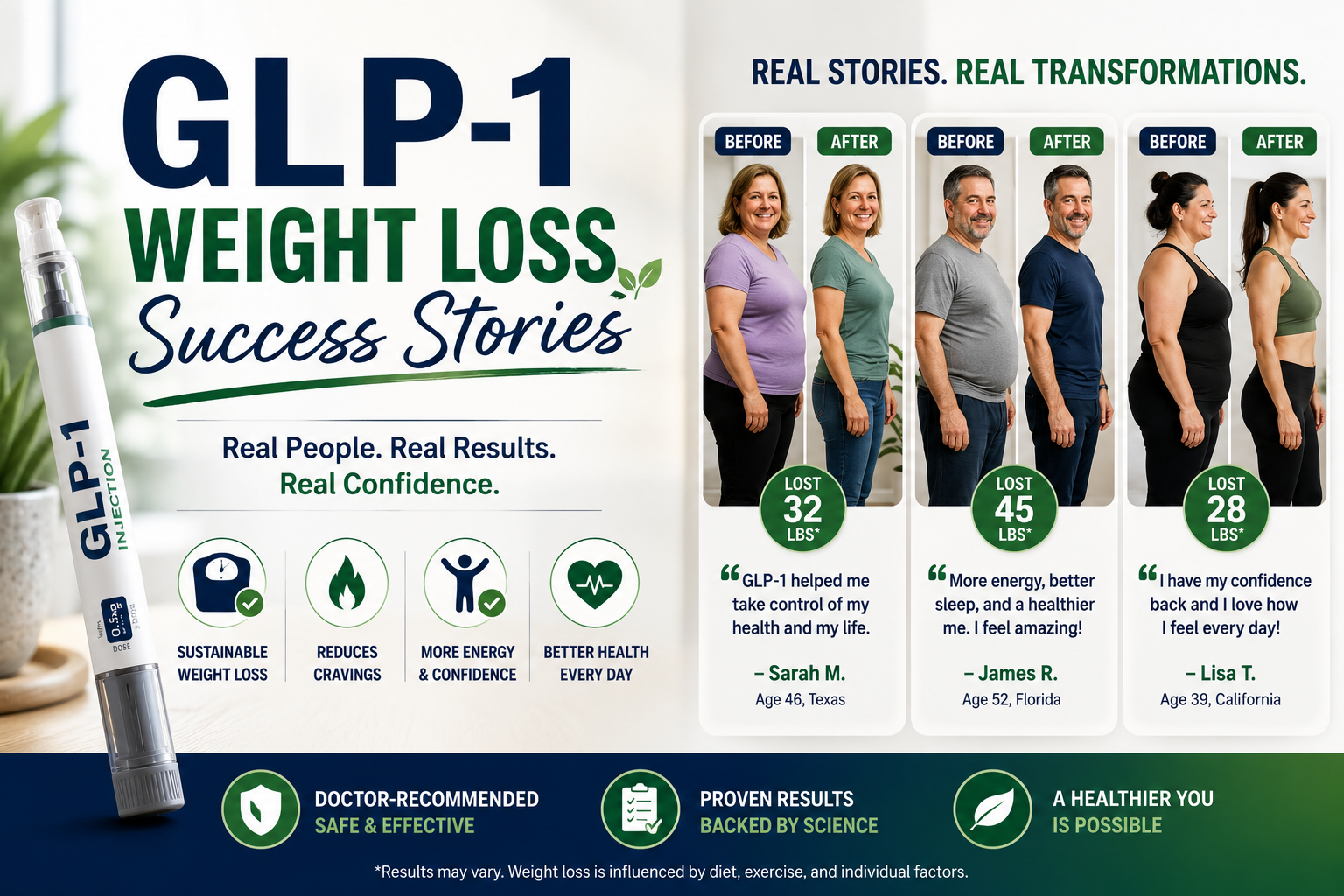
GLP-1 medications have become one of the biggest breakthroughs in modern weight management. While these medications can help reduce appetite and support weight loss, not everyone achieves the same results. Some people lose a few pounds, while others completely transform their health and body composition.
This raises an important question: What do successful GLP-1 users do differently?
The answer is often more complex than simply taking a medication. The most successful individuals typically combine GLP-1 treatment with lifestyle habits that help maximize results and support long-term weight maintenance.
If you’re considering GLP-1 treatment or are already using it, understanding the habits behind successful weight loss journeys may help you get the most out of your efforts.
Why Some People Achieve Better GLP-1 Results Than Others
GLP-1 medications can reduce hunger and make it easier to eat less, but they don’t automatically create healthy habits.
Many success stories share a common theme: people used the medication as a tool rather than relying on it as a complete solution.
Instead of expecting the medication to do all the work, they focused on improving nutrition, becoming more active, sleeping better, and staying consistent over time.
These changes often helped them achieve results that lasted beyond the initial weight loss phase.
Success Habit #1: They Focused on Protein
One of the most common habits among successful GLP-1 users is prioritizing protein.
Because appetite often decreases significantly, some people unintentionally eat too little. When protein intake drops, the body may lose muscle along with fat.
Successful users frequently build meals around protein-rich foods such as:
- Chicken
- Fish
- Eggs
- Greek yogurt
- Cottage cheese
- Beans
- Tofu
Adequate protein helps support muscle maintenance, improves satiety, and may contribute to better long-term weight management.
Success Habit #2: They Didn’t Skip Meals
Many people assume eating less automatically means skipping meals.
However, successful GLP-1 users often avoid this mistake.
Skipping meals may lead to:
- Low energy levels
- Nutrient deficiencies
- Muscle loss
- Increased cravings later in the day
Instead, many people focus on eating smaller, balanced meals throughout the day, even when their appetite is reduced.
This approach helps support nutrition while maintaining consistent energy levels.
Success Habit #3: They Started Moving More
Weight loss is heavily influenced by nutrition, but physical activity still plays an important role.
Many successful users gradually increased their activity levels through simple changes such as:
- Daily walks
- Taking stairs more often
- Strength training
- Cycling
- Swimming
Exercise not only burns calories but also helps preserve muscle mass and improve overall health.
Some people report that as they lost weight, physical activity became easier and more enjoyable, creating a positive cycle of progress.
Success Habit #4: They Focused on Consistency, Not Perfection
One of the biggest differences between long-term success and short-term failure is consistency.
Many successful users admit they didn’t eat perfectly every day.
Instead, they focused on making good choices most of the time.
They understood that:
- Occasional treats are normal
- Progress isn’t ruined by one meal
- Small improvements add up over time
- Sustainable habits matter more than perfection
This mindset often reduces stress and makes long-term adherence easier.
Success Habit #5: They Drank More Water
Hydration may seem simple, but it can have a significant impact on overall well-being.
Many successful GLP-1 users prioritize water intake because it may help:
- Support digestion
- Reduce feelings of fatigue
- Improve fullness
- Prevent dehydration
- Support physical performance
Some people also find that they mistake thirst for hunger, making hydration even more important.
Success Habit #6: They Improved Their Sleep
Many people underestimate the connection between sleep and weight management.
Poor sleep can increase hunger hormones and make healthy choices more difficult.
Successful users often prioritize:
- Consistent bedtimes
- Quality sleep environments
- Reduced screen time before bed
- Adequate sleep duration
Better sleep may improve energy, recovery, mood, and appetite regulation.
Success Habit #7: They Managed Their Expectations
Many online transformation stories feature dramatic results.
While inspiring, these stories can sometimes create unrealistic expectations.
Successful users often approach treatment with patience.
Instead of focusing on rapid weight loss, they concentrate on:
- Weekly progress
- Improved habits
- Better health markers
- Long-term sustainability
This perspective helps maintain motivation even when progress slows temporarily.
Success Habit #8: They Tracked More Than Just Weight
The scale is only one measure of success.
Many people who achieve long-term results monitor additional indicators such as:
Clothing Fit
Looser clothing may indicate progress before major scale changes occur.
Body Measurements
Waist, hip, and chest measurements can reveal improvements in body composition.
Energy Levels
Increased energy is often one of the earliest positive changes.
Physical Performance
Improved strength, endurance, and mobility are valuable signs of progress.
Tracking multiple forms of success helps maintain motivation throughout the journey.
Success Habit #9: They Learned to Handle Plateaus
Almost every weight loss journey includes periods where progress slows down.
Successful GLP-1 users understand that plateaus are normal.
Rather than giving up, they often:
- Review eating habits
- Increase physical activity
- Stay consistent
- Focus on long-term goals
Many eventually resume losing weight after temporary stalls.
Patience is often one of the most important factors in long-term success.
Success Habit #10: They Viewed GLP-1 as a Tool, Not a Shortcut
Perhaps the most important lesson from successful users is their mindset.
The people who achieve the best long-term outcomes rarely view the medication as a magic solution.
Instead, they see it as a tool that helps make healthier choices easier.
This perspective encourages sustainable habits that can continue even if treatment eventually ends.
Common Challenges Along the Way
Even successful users encounter obstacles.
Some of the most common challenges include:
- Digestive side effects
- Weight loss plateaus
- Social situations involving food
- Emotional eating habits
- Unrealistic expectations
What separates many successful individuals is their willingness to continue despite temporary setbacks.
What Realistic Success Looks Like
Success doesn’t always mean losing 100 pounds.
For some people, success may be:
- Losing 10% of body weight
- Improving blood sugar levels
- Reducing food cravings
- Feeling more confident
- Becoming more active
- Developing healthier habits
Every journey is different, and meaningful progress comes in many forms.
Long-Term Maintenance Matters
Losing weight is only part of the process.
Maintaining results often requires continued attention to:
- Nutrition
- Exercise
- Sleep
- Stress management
- Healthy routines
People who maintain their results typically focus on these habits long after the initial excitement of weight loss fades.
Final Thoughts
GLP-1 weight loss success stories often have one thing in common: the medication helped create an opportunity for healthier habits to take root. The individuals who achieve the most meaningful results usually focus on consistency, nutrition, movement, hydration, sleep, and realistic expectations.
While every person’s journey is unique, these habits can help maximize the benefits of GLP-1 treatment and support long-term success. Rather than chasing quick fixes, focus on building a healthier lifestyle that can continue long after the number on the scale changes.
Frequently Asked Questions
Do successful GLP-1 users follow strict diets?
Not necessarily. Many focus on balanced, sustainable eating habits rather than extreme restrictions.
Is exercise required for GLP-1 weight loss?
Exercise isn’t mandatory, but it often improves results and supports long-term health.
How long does it take to see meaningful results?
Many people notice changes within a few months, while significant transformations often occur over six months or longer.
Why do some people lose more weight than others?
Factors such as genetics, starting weight, activity levels, diet quality, and consistency all influence results.
Can healthy habits improve GLP-1 outcomes?
Yes. Nutrition, physical activity, hydration, sleep, and stress management can all contribute to better results.