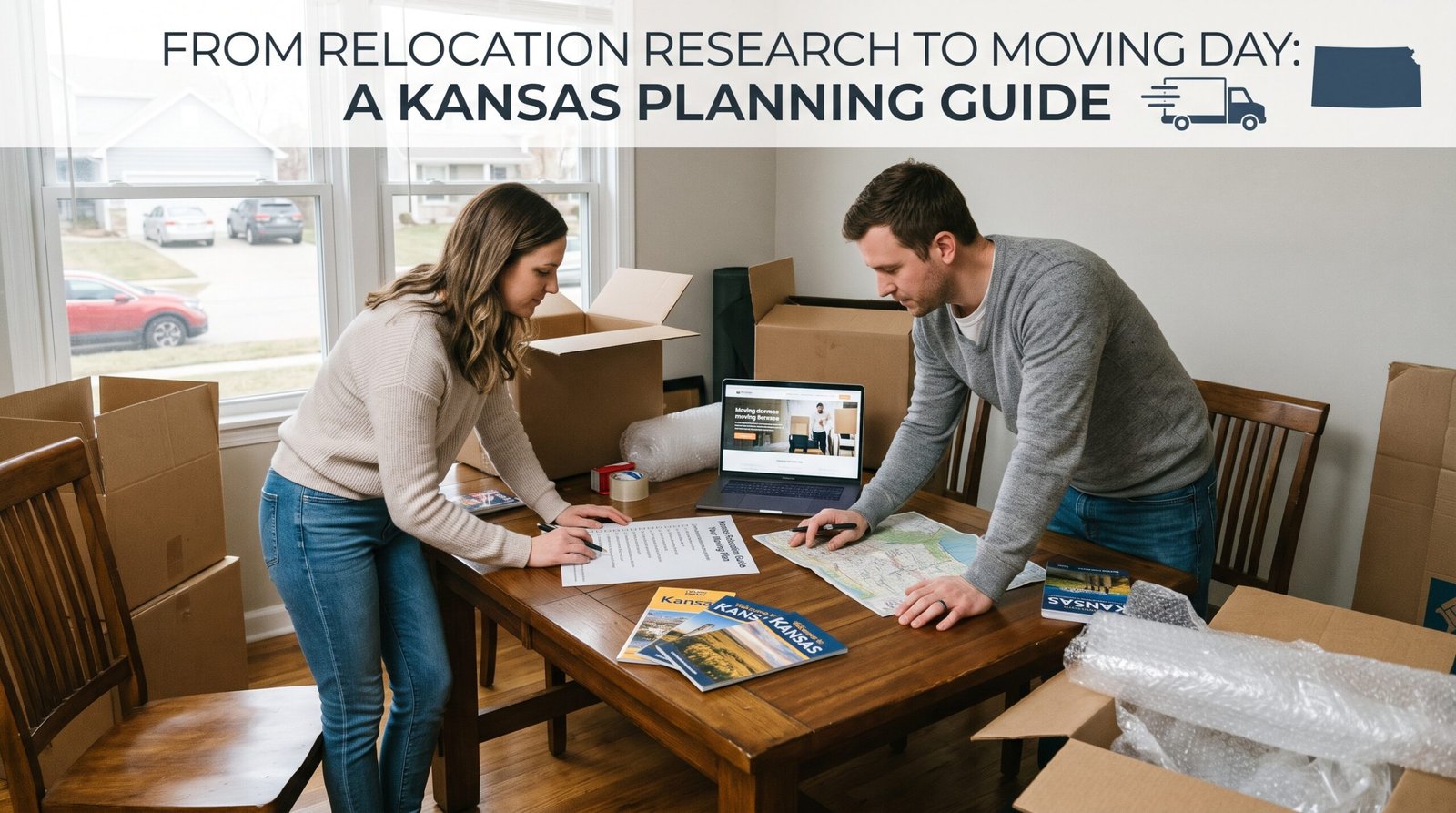
Moving to a new state involves much more than choosing a house and arranging transportation. Whether you are relocating for a new job, starting a family, pursuing education, or looking for a fresh lifestyle, Kansas offers several opportunities for individuals and families planning a new beginning. However, a successful relocation requires careful research, realistic budgeting, and the right moving assistance.
This moving to Kansas guide explains how to research communities, prepare your relocation budget, compare moving services, and organize every stage of the process.
With the right preparation and reliable information, you can make informed decisions and enjoy a more organized transition to your new Kansas home.
Start Your Kansas Relocation Journey with Proper Research
Before packing your belongings or contacting moving companies, spend time understanding what relocating to Kansas will involve. Research helps you identify suitable communities, estimate living expenses, and determine which moving services you may need.
Kansas has a variety of residential environments, from larger metropolitan areas to smaller towns and rural communities. Your ideal destination will depend on your employment opportunities, family requirements, lifestyle preferences, and financial situation.
Understand Why You Are Moving to Kansas
Every relocation has a different purpose. Some people move because they have accepted employment, while others want more space, affordable housing options, or a change in their surroundings.
Start by identifying your primary relocation goals.
Consider these questions:
- Are you moving for employment or business opportunities?
- Do you need to live near schools, universities, or healthcare facilities?
- Are you looking for a suburban neighborhood or a quieter rural location?
- Will you rent a property or purchase a home?
- Do you need additional space for children, pets, or home-based work?
- How far will you travel from your current location?
Writing down your priorities makes it easier to compare Kansas communities and avoid choosing a location that does not support your long-term plans.
Research the Kansas Housing Market
Housing is one of the most important parts of relocation planning. Before selecting a property, compare rental prices, home values, property taxes, neighborhood conditions, and access to everyday services.
Look beyond the advertised property price. Monthly housing expenses may also include utilities, insurance, maintenance, parking, and homeowners association fees.
If you are purchasing a property, arrange an inspection and review the property’s condition before making a final decision. Renters should carefully read lease agreements, understand deposit requirements, and confirm move-in dates.
Explore the Best Kansas Cities and Communities for Your Lifestyle
Kansas has several cities that attract newcomers for different reasons. Choosing the right destination requires considering your employment, transportation, housing, education, and lifestyle needs.
Kansas City, Kansas
Kansas City, Kansas, offers access to a metropolitan environment with employment opportunities, shopping, restaurants, healthcare services, and entertainment.
It may appeal to people who prefer living near urban amenities while exploring different residential neighborhoods.
Before choosing a property, compare commuting distances, local services, neighborhood conditions, and housing options.
Overland Park
Overland Park is a popular destination in the Kansas City metropolitan area. It offers residential neighborhoods, shopping areas, parks, educational facilities, and access to regional employment centers.
Families may find its variety of housing and community amenities worth researching. However, compare individual neighborhoods rather than assuming every part of the city offers the same lifestyle or costs.
Wichita
Wichita is one of Kansas’s major cities and has a diverse employment base, including aviation, manufacturing, healthcare, education, and professional services.
People considering a move to Wichita should research employment opportunities, housing availability, transportation, and access to schools and healthcare.
Topeka
Topeka, the state capital, offers government-related employment, educational institutions, healthcare services, and residential neighborhoods.
It may suit people who want a smaller-city environment with access to important public and community services.
Lawrence
Lawrence is known for the University of Kansas and its educational environment. The city offers cultural activities, restaurants, shopping, and a range of residential options.
Students, university employees, and people who enjoy an active educational and cultural community may want to consider Lawrence.
Olathe and Lenexa
Olathe and Lenexa are important communities in the Kansas City metropolitan area.
Both offer different residential neighborhoods, employment access, shopping, and family-oriented amenities. Research housing availability and commuting routes to determine which community better matches your requirements.
Create a Realistic Budget Before Relocating
A relocation budget helps prevent unexpected expenses from disrupting your plans.
Even when you have secured a new home and arranged employment, moving costs can add up quickly. Transportation, packing materials, temporary accommodation, deposits, and utility connections should all be considered.
Calculate Your Moving Expenses
Start by estimating the major expenses associated with your relocation.
Your budget may include:
- Professional moving company charges.
- Packing and unpacking services.
- Moving boxes and protective materials.
- Furniture disassembly and reassembly.
- Temporary accommodation.
- Fuel, meals, and travel expenses.
- Vehicle transportation, if required.
- Storage services.
- Utility deposits and connection fees.
- Cleaning and property preparation.
The actual cost depends on the distance, shipment size, service requirements, timing, and accessibility of your properties.
For example, moving from a small apartment will generally require a different transportation arrangement than relocating a large family home with several bedrooms.
Compare Multiple Moving Estimates
Never assume that the first moving estimate represents the best available option.
Request written estimates from multiple moving companies and compare the services included in each proposal.
Pay attention to:
- Estimated shipment weight or volume.
- Transportation distance.
- Pickup and delivery arrangements.
- Packing and unpacking charges.
- Additional handling fees.
- Storage requirements.
- Valuation coverage options.
- Cancellation and rescheduling policies.
A lower estimate may exclude important services or depend on assumptions that do not match your actual shipment.
How to Find Movers in Kansas and Compare Your Options
Selecting a reliable moving company is one of the most important decisions in your relocation journey.
A professional mover can help coordinate transportation, protect household belongings, and reduce the physical demands of moving day. However, not every company offers the same services, experience, or pricing structure.
That is why researching companies before signing a contract is essential.
Use an Online Moving Directory to Research Companies
Searching for moving services online can produce many different results. Instead of selecting the first company you find, use an organized approach to compare available providers.
My Good Movers is a digital platform that helps users compare moving companies online. It is a moving directory and review platform, not a moving company or transportation provider.
The platform helps people research licensed and insured moving companies, explore customer reviews, compare available options, and request free moving quotes.
Find Movers in Kansas Based on Your Requirements
Your moving requirements should determine which companies you consider.
For example, someone relocating from another state to Wichita may need an interstate moving company, while someone moving from one Kansas city to another may require local moving services.
Consider the following service categories:
Local Moving Services
Local movers can assist with household relocations within a particular area. Depending on the company, services may include loading, unloading, transportation, furniture handling, and packing assistance.
Long-Distance Moving Services
Long-distance movers handle relocations involving greater travel distances. Interstate moves require additional attention to federal registration, documentation, transportation arrangements, and delivery schedules.
Residential Moving Services
Residential movers help individuals and families relocate apartments, condominiums, townhouses, and single-family homes.
Commercial Moving Services
Businesses may need specialized assistance when relocating office furniture, equipment, documents, and other workplace materials.
Packing and Storage Services
Some moving companies offer packing assistance and temporary storage. These options can be useful when your new property is not ready or your move-in date does not match your pickup schedule.
Compare Moving Companies
When you want to find movers in Kansas, start by exploring the available directory listings.
Compare companies according to your relocation requirements instead of relying on advertising claims alone.
Review the following details:
- Licensing and authorization: Check whether the company has the appropriate registration and authorization for your type of move.
- Insurance and valuation: Understand the protection options available for your belongings.
- Customer reviews: Read feedback about communication, delivery, handling, and overall customer experiences.
- Moving services: Confirm that the company provides the services you actually need.
- Written estimates: Request detailed estimates and compare their terms.
- Delivery arrangements: Ask how pickup dates, delivery windows, and delays are handled.
- Customer support: Make sure you know how to contact the company throughout the relocation.
Using a directory makes it easier to organize your research and identify companies worth contacting.
Remember that directory listings and customer reviews are starting points for research. Always verify important credentials and contract details independently.
Verify Moving Company Credentials Before Hiring
A professional-looking website or attractive estimate does not automatically prove that a moving company is legitimate.
Before hiring a provider, take time to verify its credentials.
Check Federal Registration for Interstate Moves
If your relocation involves moving household goods across state lines, the company must meet applicable federal requirements.
The FMCSA provides resources that allow consumers to research interstate household goods movers and brokers.
You should verify:
- The company’s legal business identity.
- Its U.S. Department of Transportation (USDOT) number.
- Its operating authority for the services being offered.
- Applicable insurance information.
- Available complaint history.
Do not rely solely on a USDOT number displayed in an advertisement. Confirm that the registration belongs to the company you are considering.
Understand the Difference Between Movers and Brokers
A moving company and a moving broker perform different roles.
A carrier operates the trucks and physically transports household goods. A broker arranges transportation through authorized moving companies.
If you work with a broker, ask which carrier will actually handle your belongings.
Before signing an agreement, understand who is responsible for pickup, transportation, delivery, communication, and resolving potential problems.
Watch for Moving Scams
Be careful when a company offers an unusually low estimate without properly evaluating your belongings.
Other warning signs include:
- Refusing to provide written estimates.
- Demanding large unexplained upfront payments.
- Avoiding questions about licensing.
- Providing incomplete contract documents.
- Changing the agreed price without a clear explanation.
- Using unclear company names or contact information.
The Federal Trade Commission provides useful consumer guidance in its article about avoiding moving company scams.
A little verification before hiring can help protect your money and household possessions.
Choose the Right Time to Move to Kansas
Moving dates can influence transportation availability, scheduling, and overall expenses.
The best time for your relocation depends on your personal circumstances, weather preferences, employment schedule, and housing arrangements.
Moving During Spring
Spring can be a convenient period for relocating because temperatures generally become milder after winter.
However, weather conditions can change, and storms or rainfall may affect transportation and loading arrangements.
Reserve your moving services in advance and keep an eye on the forecast.
Moving During Summer
Summer is a popular moving season, particularly for families planning around school schedules.
Warmer weather can make packing and transportation easier in some circumstances, but high temperatures may make physical moving tasks more demanding.
Book your moving company early and plan loading activities around the hottest part of the day when practical.
Moving During Fall
Fall may offer comfortable temperatures for packing and transportation.
It can also provide an opportunity to settle into your new home before winter arrives.
Compare moving company availability and confirm your preferred dates before making final arrangements.
Moving During Winter
Winter relocations require additional preparation.
Kansas can experience freezing temperatures, snow, ice, and changing road conditions.
If you are moving during winter, consider:
- Monitoring local weather forecasts.
- Keeping walkways clear of snow and ice.
- Protecting furniture from moisture.
- Preparing warm clothing and essential supplies.
- Allowing flexibility in pickup and delivery schedules.
- Confirming how the mover handles weather-related delays.
Organize Your Household Before Packing
Packing becomes much easier when you organize your belongings before moving day.
Instead of putting everything into boxes immediately, review your household items and decide what should travel with you.
Declutter Unnecessary Belongings
Moving is a good opportunity to reduce the number of items you own.
Go through each room and separate belongings into four categories:
- Items you want to keep.
- Items you can donate.
- Items suitable for selling.
- Items that should be discarded.
Reducing unnecessary belongings may lower transportation requirements and make unpacking easier.
Prepare a Room-by-Room Packing Plan
Organize your packing process by room.
Start with items you do not regularly use, such as seasonal decorations, extra bedding, books, and storage supplies.
Leave everyday essentials until closer to moving day.
A room-by-room approach helps prevent confusion and makes it easier to identify missing boxes after delivery.
Label Every Moving Box
Each box should have a clear label identifying its destination room and general contents.
For example:
- Kitchen – Cooking Equipment
- Bedroom – Bedding and Clothes
- Living Room – Decorative Items
- Bathroom – Daily Essentials
- Office – Documents and Supplies
Use additional labels for fragile belongings and boxes that require careful handling.
Avoid writing valuable personal information on the outside of boxes.
Protect Valuable and Fragile Items
Glassware, electronics, artwork, mirrors, and other delicate belongings require suitable protective materials.
Use appropriate cushioning, sturdy boxes, and secure packing techniques.
Keep passports, important documents, jewelry, medications, and other essential personal belongings with you whenever possible.
Prepare Your New Kansas Home Before Arrival
Your new property should be ready before the moving truck arrives.
A little preparation can save time and prevent unnecessary complications during unloading.
Inspect the Property
Before moving your belongings inside, inspect the property for visible damage, cleanliness, and maintenance concerns.
Check:
- Doors and windows.
- Electrical outlets and lighting.
- Plumbing fixtures.
- Heating and cooling equipment.
- Kitchen appliances.
- Bathroom facilities.
- Locks and security arrangements.
If you are renting, document the property’s condition and follow your landlord’s move-in inspection procedures.
Arrange Utility Connections
Contact utility providers before your arrival to arrange the services required at your new address.
Depending on the property, you may need:
- Electricity.
- Natural gas.
- Water.
- Sewer services.
- Internet.
- Trash collection.
Ask providers about installation appointments, deposits, service activation dates, and account requirements.
For a more localized starting point, the Lenexa Chamber of Commerce relocation guide provides examples of local resources covering housing, utilities, education, and other relocation needs in Lenexa.
Plan Furniture Placement
Think about where your larger furniture items will go before the movers arrive.
Measure important spaces such as doorways, staircases, hallways, and rooms.
Create a basic furniture layout so you can direct movers efficiently during unloading.
This is particularly helpful when moving into apartments or properties with limited access.
Understand Kansas Driver’s License and Vehicle Registration Requirements
Relocating to Kansas also means reviewing the state’s requirements for drivers and vehicle owners.
If you are moving from another state, make sure you understand the deadlines and documents required to update your credentials.
Obtain a Kansas Driver’s License
According to the Kansas Highway Patrol, new residents generally have 90 days after establishing residency to obtain a Kansas driver’s license.
The Kansas Department of Revenue administers driver’s licensing services.
Requirements can vary depending on your circumstances and documentation.
Review the official Kansas driver’s license information before visiting an office.
Register Your Vehicle
If you bring a vehicle from another state, research Kansas title and registration requirements.
Prepare the necessary ownership documents, identification, proof of insurance, and other applicable paperwork.
Confirm the current process with the Kansas Department of Revenue rather than relying on outdated information.
Update Your Address
Once you relocate, update your address with important organizations.
These may include:
- Banks and credit card providers.
- Insurance companies.
- Employers.
- Subscription services.
- Healthcare providers.
- Government agencies.
- Schools and educational institutions.
You can also arrange mail forwarding through the United States Postal Service.
Keeping your contact information current helps prevent missed bills, documents, and important communications.
Plan for Schools, Healthcare, and Family Needs
For families, relocating involves more than transporting household belongings.
You should also make arrangements for education, healthcare, childcare, and everyday family requirements.
Research Local Schools
If you have children, investigate the schools serving your intended residential area.
Check school district boundaries, enrollment procedures, transportation arrangements, and required documentation.
Contact the school district directly to understand admission deadlines and transfer requirements.
Do not assume that a nearby school automatically serves your new address.
Find Healthcare Providers
Before moving, research nearby hospitals, medical practices, dentists, and pharmacies.
If you have existing healthcare providers, request copies of relevant medical records and ask whether they can recommend providers in your new area.
Review your health insurance network to understand which services and facilities are covered.
Prepare for Pets
Moving with pets requires additional attention.
Arrange suitable transportation, prepare food and water supplies, and keep vaccination records accessible.
Before selecting a new home, confirm its pet policies and research nearby veterinary services.
During transportation, keep pets in secure carriers or other appropriate restraints.
Create a Kansas Moving Timeline
A moving timeline gives you a clear overview of what needs to happen and when.
Instead of trying to complete every task during the final week, divide your relocation into manageable stages.
Eight to Twelve Weeks Before Moving
Begin your research and establish the basic details of your relocation.
- Confirm your destination and approximate moving date.
- Research Kansas cities and neighborhoods.
- Establish your moving budget.
- Begin comparing moving companies.
- Research available housing.
- Review your employment and school arrangements.
- Start decluttering your home.
Six to Eight Weeks Before Moving
Focus on selecting services and organizing the household.
- Request written moving estimates.
- Verify moving company credentials.
- Review customer feedback.
- Compare service options.
- Confirm your housing arrangements.
- Reserve your preferred moving company.
- Begin packing nonessential belongings.
- Research utility providers.
Four to Six Weeks Before Moving
Start preparing the practical details of your relocation.
- Confirm the moving contract.
- Arrange packing supplies.
- Notify relevant service providers.
- Arrange mail forwarding.
- Contact schools if applicable.
- Organize transportation for pets.
- Confirm access arrangements at both properties.
- Begin packing additional household belongings.
One to Two Weeks Before Moving
Complete the final preparations.
- Confirm pickup and delivery schedules.
- Recheck your moving estimate.
- Label and organize boxes.
- Prepare essential documents.
- Pack an essentials bag.
- Confirm utility activation dates.
- Arrange payment according to the moving contract.
- Keep important contacts accessible.
Moving Day
Stay available to coordinate the loading process.
- Protect floors and entryways.
- Direct movers to the appropriate rooms.
- Check the inventory documentation.
- Keep essential belongings separate.
- Review paperwork before signing.
- Complete a final walkthrough.
- Confirm your destination address and contact details.
After Arrival in Kansas
Once your belongings arrive, focus on getting settled.
- Inspect delivered items.
- Record any missing or damaged belongings.
- Unpack essential rooms first.
- Confirm utility services.
- Update your address.
- Complete driver’s license and vehicle registration requirements.
- Locate nearby healthcare and shopping facilities.
- Familiarize yourself with your new neighborhood.
What to Expect on Moving Day
Moving day is the stage when all your research and preparation come together.
Even with professional assistance, you should remain involved in the process.
Prepare an Essentials Bag
Keep a separate bag containing items you may need immediately after arriving.
Include:
- Identification documents.
- Wallet and payment cards.
- Phone and chargers.
- Basic toiletries.
- A change of clothes.
- Important medications.
- Snacks and drinking water.
- Important household documents.
- Keys and emergency contact information.
This prevents you from searching through multiple boxes when you need something urgently.
Complete a Final Property Walkthrough
Before leaving your old home, inspect every room.
Check closets, cabinets, storage spaces, garages, bathrooms, and outdoor areas.
Make sure nothing important has been left behind.
Take photographs of the property’s condition if needed, particularly when moving out of a rental property.
Review the Moving Inventory
If your moving company provides an inventory, review it carefully.
Confirm that the listed belongings match the items being transported.
Before signing documents, read the information and ask questions about anything you do not understand.
The FMCSA provides a detailed moving checklist covering planning, moving day, and delivery day.
How to Settle into Your New Life in Kansas
Arriving at your new property is an important milestone, but the relocation process does not end when the last box is unloaded.
Give yourself time to become familiar with your surroundings.
Explore Nearby Services
Locate essential services around your new home, including:
- Grocery stores.
- Pharmacies.
- Hospitals and clinics.
- Schools and libraries.
- Banks and financial institutions.
- Public parks.
- Gas stations.
- Public transportation options.
Knowing where these facilities are located makes everyday activities easier.
Get Familiar with Your Community
Explore local neighborhoods and community facilities.
Visit parks, libraries, shopping districts, and public spaces.
Look for community events and opportunities to meet neighbors.
Building connections can help you feel more comfortable and develop a sense of belonging.
Establish a New Routine
A new home often requires adjustments to your daily schedule.
Allow time to understand commuting routes, shopping locations, school transportation, and local services.
Start with manageable routines instead of trying to organize everything immediately.
A gradual transition can make your first few weeks in Kansas more comfortable.
Common Mistakes to Avoid When Moving to Kansas
Even well-planned relocations can encounter problems when important details are overlooked.
Avoiding common mistakes can help protect your budget and make the process more manageable.
Choosing a Moving Company Based Only on Price
The lowest estimate is not necessarily the best choice.
Review credentials, services, written terms, customer feedback, and delivery arrangements before hiring a company.
Waiting Too Long to Book Movers
Last-minute bookings may limit your choices, especially during popular moving periods.
Start researching providers early so you have enough time to compare options.
Underestimating Packing Requirements
Many people underestimate the time needed to pack an entire household.
Begin with nonessential belongings and establish a realistic packing schedule.
Ignoring Additional Expenses
Transportation is only one part of your relocation budget.
Remember to account for packing supplies, utility deposits, temporary accommodation, cleaning, and other related expenses.
Forgetting Important Documentation
Keep identification, property agreements, moving contracts, inventory documents, and other important records organized.
Having these documents available can prevent unnecessary delays.
Not Verifying Moving Company Credentials
Never assume that online advertisements or positive reviews are sufficient proof of legitimacy.
Verify applicable registration and insurance information before signing an agreement.
Frequently Asked Questions About Moving to Kansas
What should I consider before moving to Kansas?
Before relocating, research housing, employment opportunities, neighborhoods, transportation, schools, healthcare, and living expenses. You should also establish a moving budget and compare moving companies before selecting a provider.
What are some of the best cities to move to in Kansas?
Popular communities to research include Overland Park, Wichita, Topeka, Lawrence, Olathe, Lenexa, and Kansas City, Kansas. The best choice depends on your housing preferences, employment requirements, family needs, and lifestyle.
3. How do I find movers in Kansas?
You can research moving companies through online moving directories such as My Good Movers. Compare company credentials, customer reviews, available services, written estimates, and delivery arrangements before hiring a provider.
Is My Good Movers a moving company?
No. My Good Movers is a digital moving directory and review platform. It helps consumers compare moving companies online, explore licensed and insured providers, read customer feedback, and request free moving quotes.
How far in advance should I book a moving company?
It is generally helpful to begin researching movers eight to twelve weeks before your planned relocation. Booking earlier may be beneficial during busy moving seasons or when you require specialized services.
How can I compare moving company estimates?
Request written estimates from multiple providers and compare transportation charges, shipment details, packing services, additional fees, valuation coverage, and delivery arrangements. Make sure every company is estimating the same requirements.
How can I verify whether a moving company is legitimate?
For interstate moves, use the FMCSA’s official resources to verify registration, operating authority, and available insurance information. Also research customer complaints and review the company’s written contract before hiring.
What is the difference between local and long-distance moving services?
Local moving services generally handle relocations within a particular geographic area, while long-distance services cover greater distances. Interstate moves involve transportation across state boundaries and are subject to applicable federal requirements.
How long do I have to obtain a Kansas driver’s license after moving?
According to the Kansas Highway Patrol, new residents generally have 90 days after establishing residency to obtain a Kansas driver’s license. Check the Kansas Department of Revenue for current documentation and application requirements.
What is the best season to move to Kansas?
Spring and fall may offer comfortable temperatures for relocation, while summer and winter have their own advantages and challenges. Your best moving season depends on your schedule, weather preferences, and moving company availability.
What should I pack separately for moving day?
Keep identification, important documents, medications, phone chargers, toiletries, clothing, keys, snacks, and other immediate necessities in a separate essentials bag. This makes your first day in the new home easier.
How can I reduce my moving expenses?
Declutter before packing, compare multiple written estimates, pack suitable belongings yourself, avoid unnecessary services, and book your moving company in advance. Make sure cost-saving decisions do not compromise the safety of your belongings.
What should I do immediately after arriving in Kansas?
Inspect your delivered belongings, arrange utilities, unpack essential items, update your address, research local services, and review driver’s license and vehicle registration requirements. Families should also complete school enrollment and healthcare arrangements where applicable.
Final Thoughts
Relocating to Kansas can be an exciting opportunity, but a smooth transition depends on preparation and informed decision-making. Research your destination, understand your expenses, organize your belongings, and verify moving company credentials before signing a contract.
Use reliable resources and compare available providers instead of making rushed decisions. With a clear moving timeline and access to helpful information from My Good Movers, you can approach every stage of your relocation with greater confidence and begin your new chapter in Kansas on the right foot.