
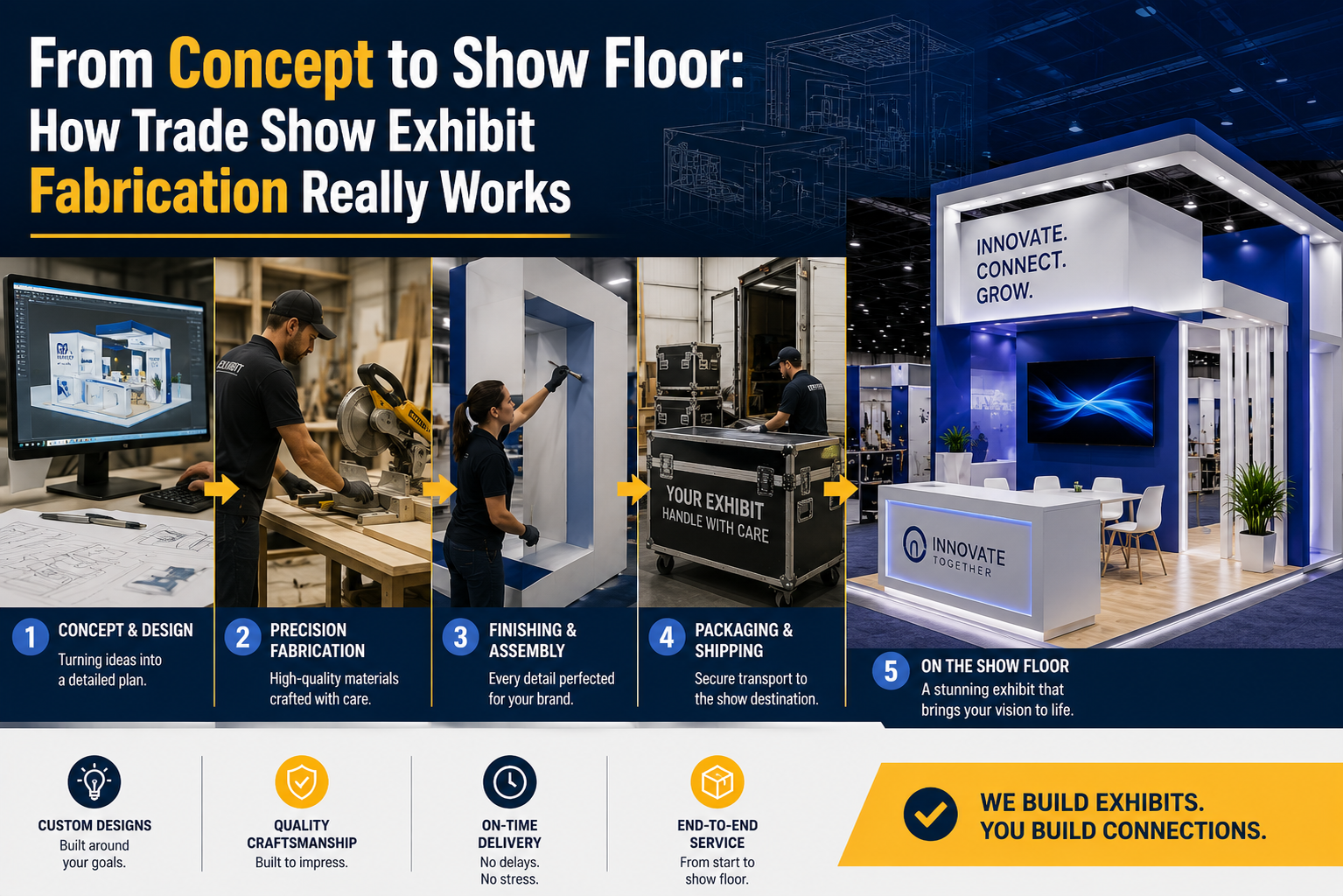
A finished trade show booth can look surprisingly effortless. Visitors see bold graphics, polished counters, product displays, digital screens, and a space that feels perfectly aligned with the brand. What they do not see is the detailed process that turns an initial idea into a real exhibit.
That process is known as trade show exhibit fabrication.
Fabrication is where creative concepts meet practical construction. It involves materials, engineering, production, graphics, lighting, technology, quality checks, logistics, and on-site execution. Understanding how the process works can help exhibitors plan better, avoid unrealistic expectations, and make smarter decisions about their booth investment.
From Concept to Show Floor: Steps really works
Step 1: It Starts With More Than a Sketch
Before fabrication begins, the project team needs a clear understanding of what the booth is expected to achieve.
Is the main goal to generate leads? Launch a new product? Host private meetings? Demonstrate equipment? Create an immersive brand experience?
These answers influence the physical exhibit.
A booth designed for product demonstrations may need reinforced surfaces, accessible power, and open viewing areas. A B2B brand may prioritize meeting rooms and acoustic privacy. A company launching a new product might need dramatic lighting and a central display feature.
Good trade show booth fabrication begins with strategy because the structure must support how the booth will actually be used.
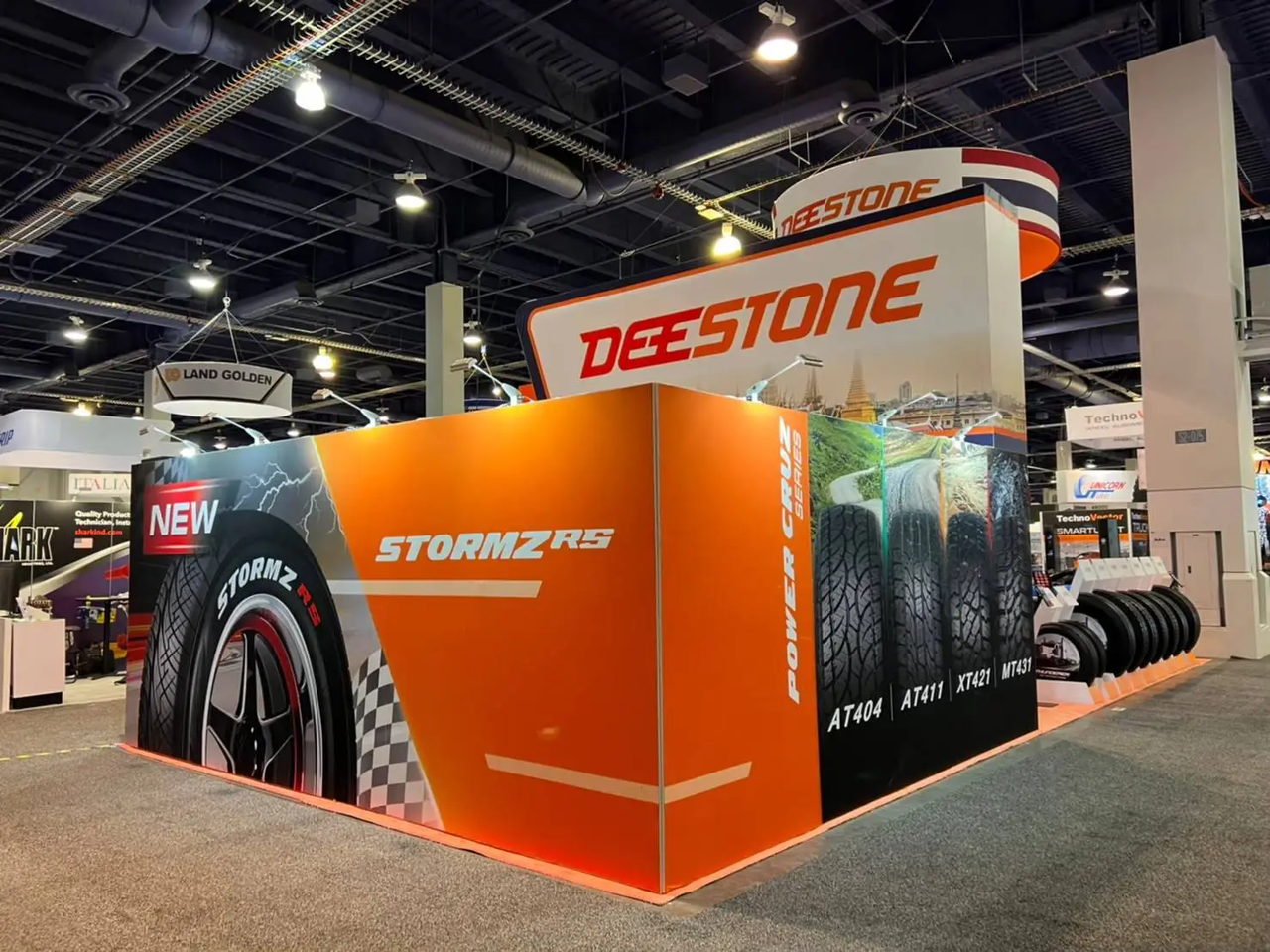
Step 2: Design Concepts Become Technical Plans
A 3D rendering helps stakeholders visualize the booth, but it is not a construction document.
Once a concept is approved, the design must be translated into detailed production information. This may include:
- Floor plans
- Structural dimensions
- Wall elevations
- Material specifications
- Electrical locations
- Lighting details
- Graphic measurements
- AV mounting requirements
This stage is where creative ideas are tested against real-world limitations.
Can the structure be shipped efficiently? Will it fit within venue height restrictions? Can the installation team assemble it within the available move-in window? Is there enough access for cables and maintenance?
Solving these questions before production helps reduce expensive changes later.
Step 3: Materials Are Selected for Looks and Performance
Material selection plays a major role in custom exhibit fabrication.
Wood, aluminum, laminates, fabrics, acrylic, glass, metals, and other finishes may all be used depending on the design. But appearance is only one consideration.
Fabricators also think about:
- Weight
- Durability
- Shipping requirements
- Reusability
- Assembly time
- Maintenance
- Budget
A material that looks impressive in a sample may not be practical if it is too fragile for repeated shipping. Similarly, an unnecessarily heavy structure may increase transportation and handling challenges.
The right material choice balances design intent with real event conditions.
Step 4: The Physical Build Begins
Once technical plans and materials are finalized, production moves into the workshop.
Depending on the booth, fabrication may involve carpentry, metalwork, painting, finishing, CNC cutting, structural assembly, lighting integration, and custom display construction.
This is where the exhibit begins to take physical form.
Counters are built. Wall systems are prepared. Product displays are tested. Storage areas are integrated. Structural elements are checked for alignment and fit.
For highly customized exhibits, many components are produced specifically for the brand rather than selected from standard inventory.
Step 5: Graphics Bring the Brand Into the Space
Even a well-built structure can feel incomplete without strong visual communication.
Graphic production may include:
- Large-format wall graphics
- Fabric graphics
- Dimensional logos
- Backlit signage
- Product messaging
- Directional signs
- Digital content areas
Accurate measurements are essential. A small sizing error can create visible gaps, poor alignment, or delays during installation.
The best graphics do more than decorate the booth. They help visitors quickly understand who the brand is, what it offers, and why they should stop.
Step 6: Technology Is Integrated Before the Show
Modern exhibits often include digital elements such as LED walls, touchscreens, video displays, interactive demos, and lead capture tools.
These features need to be considered during fabrication, not added as an afterthought.
Structures may require reinforced mounting points, hidden cable routes, ventilation, power access, or service panels. Planning these details early creates a cleaner final result and makes on-site setup more efficient.
Technology should feel like part of the booth, not equipment placed inside it at the last minute.
Step 7: Pre-Show Testing Catches Problems Early
One of the most valuable stages of professional trade show exhibit fabrication is pre-show quality control.
When practical, key components may be assembled or tested before shipping. Teams can check:
- Structural fit
- Graphic alignment
- Lighting
- Doors and storage areas
- AV mounting points
- Hardware
- Surface finishes
This is the time to identify problems—not during a limited move-in window at the convention center.
Even small corrections made before shipping can save significant time on-site.
Step 8: Packing and Shipping Are Part of Fabrication Planning
A booth is not truly complete until it can travel safely.
Exhibit components must be packed so they can withstand repeated handling during shipping, unloading, installation, dismantling, and return transport.
Custom crates, protective padding, labeled hardware, and organized packing plans all help protect the finished exhibit.
Fabricators also need to consider the order in which components will be required during installation. Smart packing can make the setup process more efficient once freight reaches the show floor.
Step 9: Installation Brings Everything Together
The final transformation happens at the venue.
Installation crews assemble structures, position graphics, integrate lighting, coordinate AV equipment, place furniture, and prepare product displays.
At this stage, accurate documentation becomes extremely important. The team should have access to current plans, component labels, graphic placement guides, and technical details.
A successful installation is the final link between the original concept and the visitor experience.
Why Does the Right Fabrication Partner Matters?
Trade show fabrication requires more than construction skills. It demands coordination between design, production, graphics, logistics, installation, and event requirements.
An experienced exhibit partner such as Purple Exhibits can help connect these stages, reducing the gaps that often occur when multiple disconnected vendors are involved. From interpreting the initial concept to preparing the finished exhibit for the show floor, coordinated support can make the entire process more manageable.
Trade show exhibit fabrication is where ideas become physical brand experiences.
The process moves through strategy, technical planning, material selection, production, graphics, technology integration, testing, shipping, and installation. Each stage affects the next, which is why early planning and clear communication matter so much.
The booth attendees see may exist for only a few days, but creating it requires months of decisions and coordination behind the scenes.
When fabrication is handled thoughtfully, the final exhibit does more than match a rendering. It works in the real world—on a busy show floor, under tight deadlines, and in front of the audience the brand came to meet.