
The demand for a fine bubble diffuser in India is increasing as municipalities and industries focus on wastewater treatment, water reuse, and environmental management.
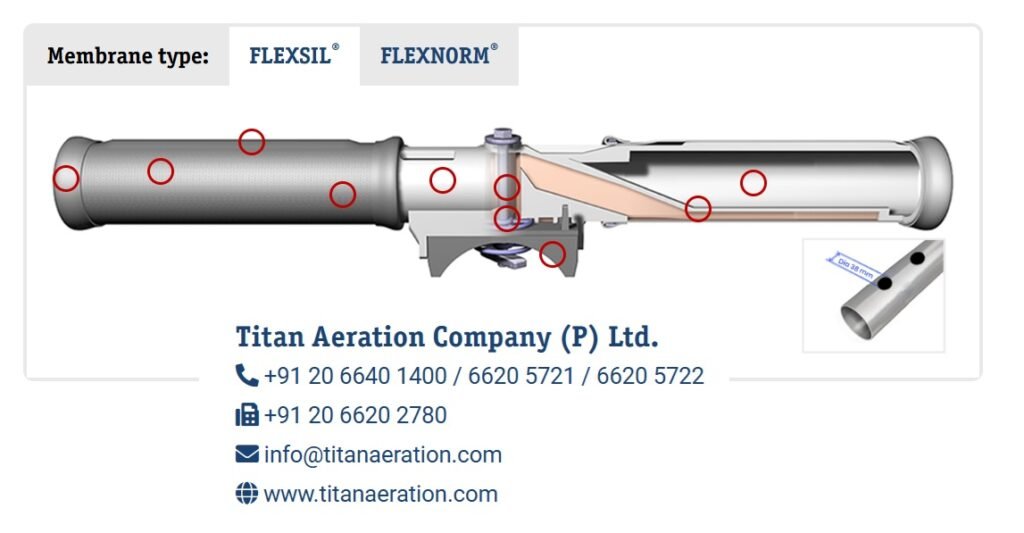
Modern wastewater treatment plants require aeration equipment that can provide effective oxygen transfer while maintaining reasonable operating costs.
Fine bubble diffusers are increasingly considered for new treatment plants as well as modernization projects involving existing aeration systems.
Indian industries are using fine bubble aeration solutions in:
- Municipal sewage treatment plants.
- Industrial effluent treatment plants.
- Common effluent treatment plants (CETPs).
- Food processing facilities.
- Pharmaceutical manufacturing units.
- Textile processing industries.
- Chemical manufacturing plants.
- Paper and pulp industries.
The selection of an appropriate diffuser depends on the characteristics of wastewater, oxygen demand, treatment technology, and plant operating conditions.
For buyers searching for a fine bubble diffuser in India, it is important to compare technical specifications, material quality, airflow capacity, and manufacturer support rather than focusing only on the initial purchase price.
10. Installation of an Air Diffuser in an Aeration Tank
Correct installation is essential for achieving the expected performance of an aeration system.
Even a high-quality diffuser may not perform effectively if it is installed incorrectly or connected to an unsuitable air distribution network.
The following steps provide a general overview of diffuser installation.
Step 1: Prepare the Aeration Tank
Clean the tank floor and check the installation area. Confirm the tank dimensions and proposed diffuser arrangement.
Step 2: Install the Air Distribution Network
Install the main air header, branch pipelines, and manifold connections according to the approved engineering design.
Step 3: Fix the Diffusers
Mount the diffusers securely using compatible connectors and supports. Maintain the specified spacing and orientation.
Step 4: Connect the Air Blower
Connect the blower to the air distribution system. Ensure that the blower capacity and operating pressure are suitable for the installed diffusers.
Step 5: Conduct Leakage Testing
Check the pipeline and diffuser connections for air leakage before starting normal operation.
Step 6: Perform an Air Distribution Test
Start the air supply and inspect the bubble pattern across the tank. Check for uneven distribution, blocked diffusers, and abnormal pressure conditions.
Step 7: Start Normal Operation
Once the system passes the required checks, introduce wastewater and operate the aeration system according to the treatment plant’s operating requirements.
Installation should follow the diffuser manufacturer’s instructions and the plant’s approved engineering specifications.
11. Maintenance of Fine Bubble Diffusers
Regular maintenance helps preserve diffuser performance and prevent unnecessary operating expenses.
Fine bubble membranes can experience fouling, scaling, and blockage over time. These problems may increase airflow resistance and reduce oxygen transfer.
Here are some important maintenance practices.
Regular Visual Inspection
Observe the bubble distribution pattern during operation. Uneven bubbling may indicate damaged membranes, blocked pores, or air distribution problems.
Monitor Air Pressure
Monitor blower discharge pressure and diffuser system pressure loss. An unexpected increase may indicate diffuser fouling or pipeline restrictions.
Maintain Air Quality
Use suitable air filtration to prevent dust, oil, and other contaminants from entering the diffuser system.
Clean Diffuser Membranes
Clean diffusers according to the manufacturer’s recommendations and the type of deposits present. Chemical cleaning should only be carried out using compatible procedures.
Check Membrane Condition
Inspect membranes for cracks, deformation, hardening, and physical damage. Replace damaged components when necessary.
Maintain Blowers and Pipelines
Regularly inspect blowers, valves, pipelines, and connections to maintain consistent airflow.
A planned maintenance programme helps maintain the efficiency and reliability of the complete aeration system.
Common Problems with Air Diffusers in Aeration Tanks
Although air diffusers are designed for continuous operation, certain problems can affect their performance.
| Common problem | Possible reason | Recommended action |
| Uneven bubbling | Blocked pores or poor air distribution | Inspect diffusers and manifolds |
| High air pressure | Membrane fouling or pipeline blockage | Check pressure loss and clean |
| Low oxygen transfer | Insufficient airflow or damaged membranes | Check airflow and diffuser condition |
| Air leakage | Loose connections or membrane damage | Repair or replace components |
| Excessive energy consumption | Poor aeration control or inefficient equipment | Review system performance |
| Reduced diffuser life | Incorrect operation or unsuitable materials | Follow manufacturer guidelines |
Monitoring these issues helps operators identify problems before they affect overall treatment performance.
13. Fine Bubble Diffuser vs. Coarse Bubble Diffuser
Understanding the differences between fine and coarse bubble diffusers makes it easier to select suitable aeration equipment.
| Parameters | Fine Bubble Diffuser | Coarse Bubble Diffuser |
| Bubble size | Relatively small | Relatively large |
| Oxygen transfer | Generally higher | Generally lower |
| Mixing | Moderate, depending on design | Stronger mixing |
| Air distribution | Fine and distributed | Larger air releases |
| Maintenance | Requires fouling management | Generally less prone to fine-pore clogging |
| Applications | Biological aeration | Mixing and selected aeration applications |
| Energy performance | Potentially more efficient | Depends on process requirements |
For many conventional biological wastewater treatment applications, fine bubble diffusers are a suitable choice because of their oxygen transfer potential. However, coarse bubble diffusers may be preferable where stronger mixing or greater resistance to clogging is required.
The final decision should always consider the complete treatment process rather than diffuser type alone.
14. Why Is Proper Diffuser Design Important for Energy Savings?
Aeration is one of the major electricity-consuming operations in many wastewater treatment facilities. Therefore, improving aeration efficiency can help reduce overall plant operating costs.
A properly designed diffuser system can support energy savings through several measures.
- Using diffusers with suitable oxygen transfer characteristics.
- Maintaining uniform air distribution.
- Selecting appropriately sized blowers.
- Avoiding unnecessary excess aeration.
- Monitoring dissolved oxygen levels.
- Preventing membrane fouling.
- Maintaining suitable operating pressure.
The US Department of Energy and Berkeley Lab highlight fine bubble diffusers as an energy efficiency opportunity because smaller bubbles provide greater contact area and longer contact time for oxygen transfer.
However, installing fine bubble diffusers alone does not guarantee energy savings. Proper blower selection, airflow control, diffuser maintenance, and process monitoring are equally important.
Choose the Right Fine Bubble Diffuser for Your Wastewater Treatment Plant
Selecting the right fine bubble diffuser in an aeration tank is an important investment for any wastewater treatment facility. A suitable aeration system helps maintain dissolved oxygen levels, supports biological treatment, and improves the overall performance of the plant.
Whether you are developing a new sewage treatment plant, upgrading an existing effluent treatment plant, or replacing old aeration equipment, selecting the correct diffuser is essential.
Consider the following before making a purchase:
- Required oxygen transfer capacity.
- Type of wastewater being treated.
- Tank dimensions and water depth.
- Required airflow per diffuser.
- Membrane material and durability.
- Blower pressure and capacity.
- Installation and maintenance requirements.
- Manufacturer’s technical support.
Working with a knowledgeable manufacturer can help you identify the most appropriate aeration equipment for your application.