Introduction
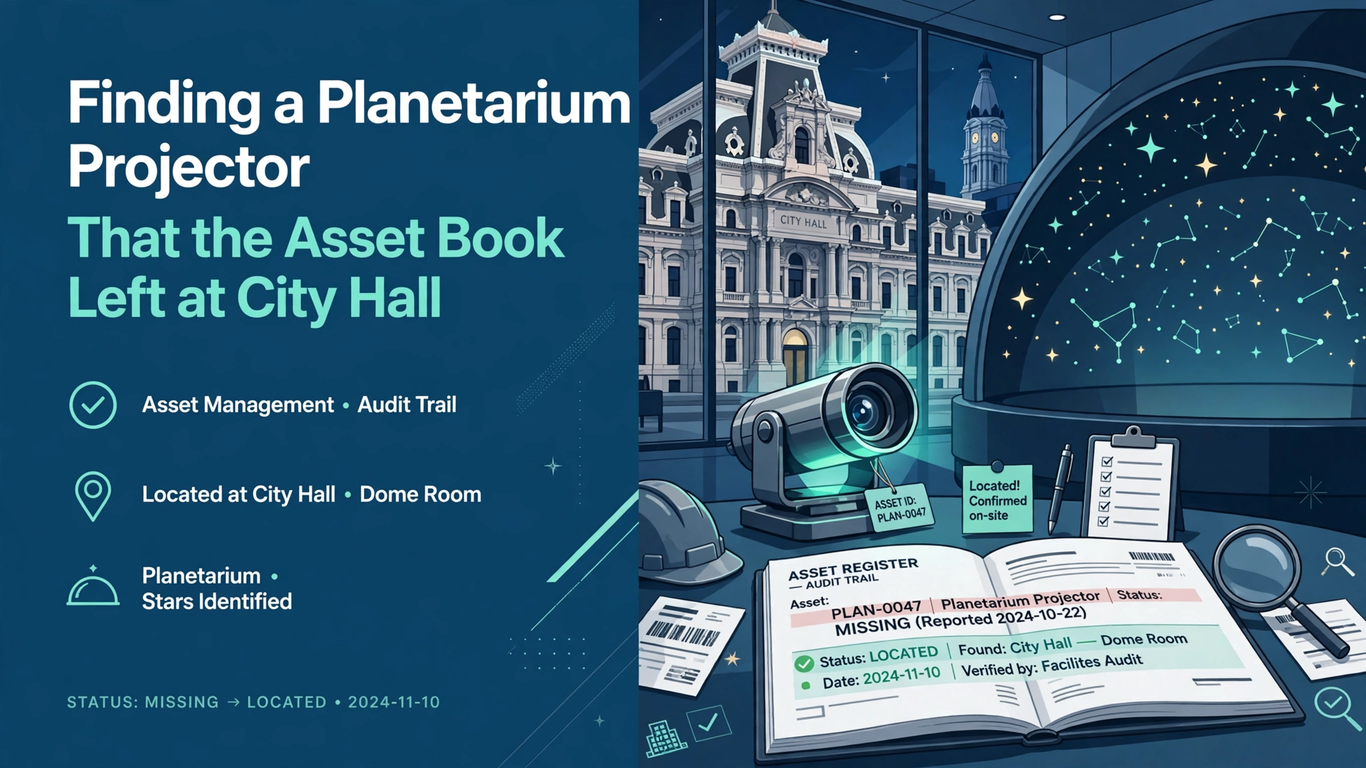
Oracle Cloud Financials Training Online works best when it begins with a decision rather than a tour of screens. At Tech Leads IT, we begin with this case. A city science service owns a portable star projector used inside inflatable planetariums, and the asset book places it at city hall with an outreach coordinator.
During the annual inspection, the tagged case turns up at a school-equipment depot, held by a technician. The projector works and hasn’t vanished. The accountant must decide whether the record is wrong, the move was temporary, or the equipment should return. In Oracle Cloud Financials Online Training, learners see why a sighting never proves a transfer.
Freeze the Observation Before Explaining It
Start with what the inspection team can establish directly: the inventory date, asset tag, serial number, observed location, number of units, condition, and the name of the person who produced the equipment. A photo can back up the observation if local policy allows it, but it never replaces the identifiers. The team should also keep the route sheet for the mobile planetarium, the depot sign-in log, and any approved equipment-movement request.
That gives you a dated set of facts before anyone’s memory or any record gets adjusted. Ask the custodian what happened, by all means, but keep the answer apart from the physical observation until something corroborates it.
What Oracle Cloud Financials Online Training Should Say About Scope
A good session on this topic spends real time on scope, because that’s where reviews quietly go wrong. Confirm the correct asset book. Confirm the projector is actually marked for inclusion in physical inventory. Check that the scanner didn’t capture the transit case while the book describes a projector mounted inside it, and that two similar units don’t share an informal nickname around the office.
The comparison should involve one identifiable asset, not a visual guess. A second reviewer should verify the tag and serial against the acquisition records. If the label is damaged, use controlled alternative evidence. Never assign the nearest available tag just to make the row match.
Use the Documented Comparison Boundary
Oracle’s overview of physical inventory explains that the feature exists to confirm that assets in an asset book physically exist and are in use. The relevant observations are existence, location, employee assignment, and number of units. Recorded physical details are compared with asset-book information so that discrepancies can be reconciled. Location and number of units are required comparison fields, and employee number or name can be compared too when it’s entered. Only assets selected for physical inventory are considered at all.
Those limits matter. The output is a discrepancy list. It is not a verdict on fault or ownership.
For uploaded observations, Oracle describes entries that arrive with a New status and a unique identifier, which can be the asset number, tag number, or serial number. So check the intake row before you interpret any result. A mistyped serial, a location written differently from the book, or a duplicate observation can all look like a real exception when they’re just noise. Optional descriptive notes help reviewers recognise an asset, but they shouldn’t override the required comparison fields. Keep the inventory name and cut-off date so a later reviewer can see exactly which observations were compared.
Decide Whether the Asset or the Record Must Move
For a location mismatch, the documented choice is simple: correct the record to match reality, or move the asset to the location in the record. The hard part is knowing which one applies, and that comes down to business intent.
Suppose the depot has become the approved base for all school visits. Then a supported update to location and assignment may be right. Suppose instead the projector was due back after a single programme and is sitting at the depot only because the transport slipped. Then returning it keeps the intended custody model intact. The comparison can’t choose between these. Authorisation and operating evidence have to.
Any transfer should state its effective date, the sending and receiving locations, the old and new custodians where relevant, and the approval required by the city’s asset policy. Don’t backdate the effective date just to make the comparison come out clean. If the evidence shows the permanent move happened months ago, follow the approved correction process and look at what that does to downstream reporting. If the evidence is still incomplete, leave the exception open with a named owner and a due date. A temporary note is not a resolved asset record, and a working projector should never be retired because its location is inconvenient.
Test the Plausible Wrong Answers
A review earns trust when it tries to break its own conclusion. Scan the second portable projector to confirm the identifiers don’t cross. Search for the observed serial number in retired, transferred, and current records. Check that the depot and city hall resolve to two distinct, valid locations, and that the unit wasn’t split into components when it was capitalised.
Then ask the human questions. Does the person named in the book still work in outreach? Did a temporary loan form expire? Was a route-sheet reference reused? Each test goes after one specific explanation, which is far more useful than recounting the original count a second time.
Look beyond the one visible exception, too. Other mobile exhibits rode the same vehicle, so sample their tags for unrecorded moves. In the other direction, inspect the equipment listed at the depot, in case the projector’s discovery is hiding a swap. Finally, reconcile the uploaded observation total to the field sheets, the rejected rows, and the accepted comparison rows. Any line corrected after upload should keep its original evidence and review. A perfectly resolved projector doesn’t make up for another device that never made it into the inventory population.
Why Oracle Cloud Financials Training Online Should End With Evidence
Closing the case takes more than editing a location field. The file should tie together the physical observation, the unique identifier, the book record, the movement evidence, the approval, the effective date, and the final action. A reviewer then confirms that the comparison no longer shows an unexplained mismatch and that the custodian can actually find the equipment.
One last check is easy to forget: compare the next mobile-tour schedule against the resolved base location, so operations and accounting don’t drift apart again. And if the same kind of exception keeps showing up, treat that as a signal. Maybe movement approvals are too slow, or custodians don’t realise when a temporary journey has become a permanent transfer.
Conclusion
A projector found in the wrong building isn’t automatically missing, stolen, transferred, or correctly recorded. It’s an observed difference that has to be tied to identity, scope, custody, business intent, and an authorized action. The documented comparison can surface mismatches in location, units, and assignment, while field records and approvals explain what should change. Good Oracle Cloud Financials Online Training should leave learners able to preserve the original observation, reject convenient guesses, choose between moving the asset and correcting the record, and prove that the final asset book matches accountable physical custody.