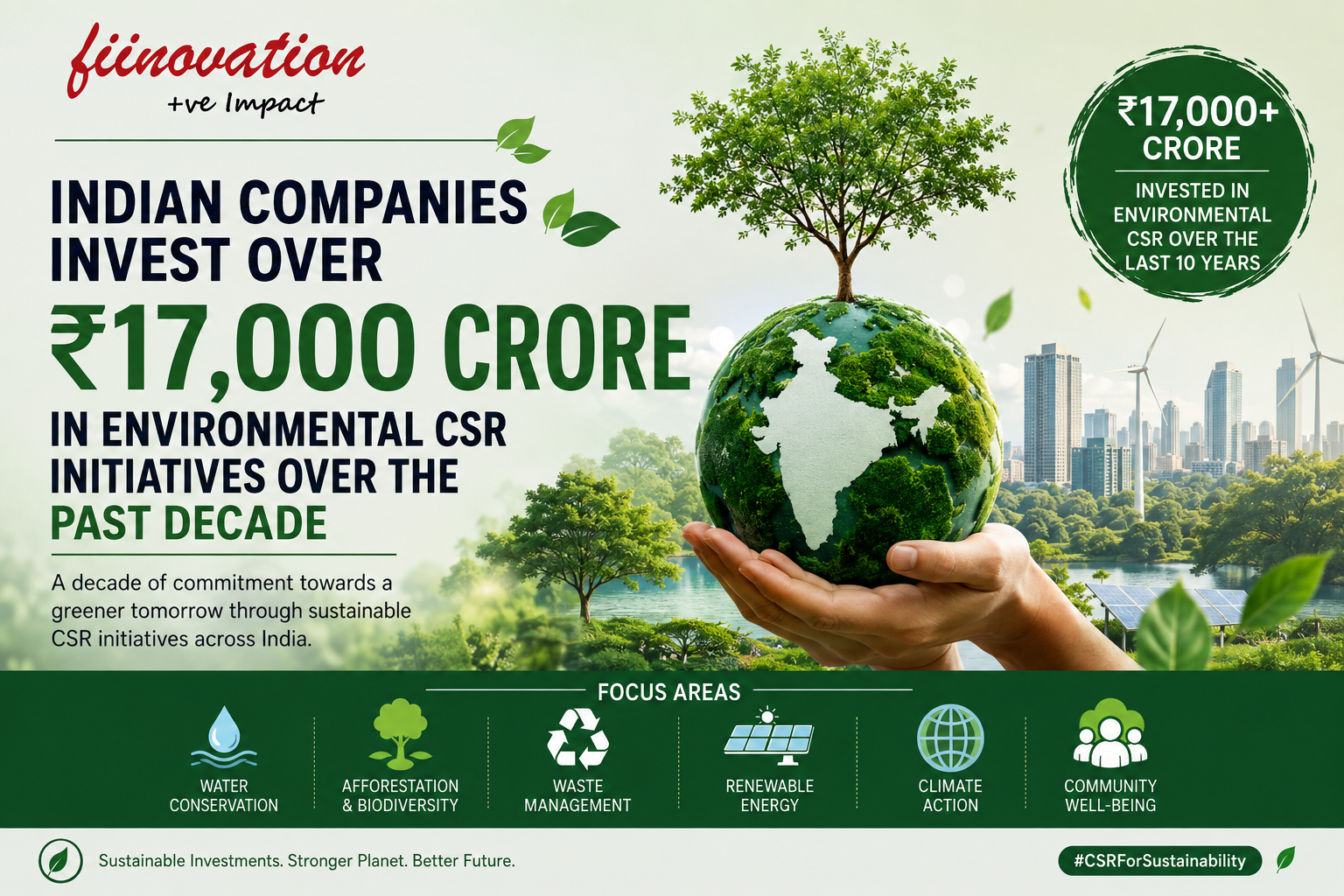
Environmental sustainability has become an increasingly important part of Corporate Social Responsibility (CSR) in India. Over the past decade, Indian companies have directed substantial resources toward environmental initiatives, with corporate spending on environmental CSR reportedly crossing ₹17,000 crore. This growing investment reflects the changing role of businesses in addressing climate-related challenges, conserving natural resources and supporting sustainable development.
The increasing focus on environmental CSR also demonstrates how companies are moving beyond traditional philanthropic activities and integrating sustainability into their broader social responsibility strategies. From water conservation and afforestation to renewable energy, waste management and biodiversity protection, corporate investments are supporting a wide range of environmental programmes across India.
Growing Importance of Environmental CSR in India
India faces several environmental challenges, including water scarcity, air pollution, deforestation, waste generation, declining groundwater levels and the impacts of climate change. These challenges require coordinated action from governments, communities, civil society organisations and the private sector.
CSR provides companies with an opportunity to contribute to solutions while creating measurable social and environmental value. The reported investment of more than ₹17,000 crore over the last decade indicates that environmental sustainability has become an important area of corporate engagement.
Companies are increasingly recognising that environmental protection is closely connected to community well-being. Clean water, healthy ecosystems, sustainable agriculture and effective waste management directly influence people’s quality of life.
Key Areas of Environmental CSR Investment
Environmental CSR covers a broad range of activities. Corporate funding is often directed toward projects that address specific environmental and community needs.
Water conservation is one important area. Companies and implementing organisations may support watershed development, rainwater harvesting, groundwater recharge and restoration of local water bodies. Such projects can improve water availability while strengthening the resilience of communities facing water stress.
Afforestation and biodiversity conservation are also significant components of environmental CSR. Tree plantation programmes, forest restoration, habitat protection and biodiversity initiatives can help restore ecosystems and improve ecological resilience.
Another growing area is waste management. CSR programmes can support waste segregation, recycling, plastic waste management, sanitation infrastructure and awareness campaigns designed to encourage responsible consumption.
Renewable energy and energy efficiency are additional areas where corporate investments can contribute to environmental sustainability. Solar-powered infrastructure, clean-energy solutions and energy-efficient community facilities can help reduce dependence on conventional energy sources.
CSR and Climate Change
Climate change has increased the urgency of environmental action. Rising temperatures, irregular rainfall, extreme weather events and pressure on natural resources can affect agriculture, livelihoods, health and infrastructure.
Corporate environmental CSR can complement broader climate action by supporting projects that improve community resilience. For example, water conservation programmes can help communities prepare for periods of water stress, while sustainable agriculture projects can promote efficient resource use.
Companies can also contribute through projects that promote renewable energy, carbon reduction, ecosystem restoration and climate awareness.
However, environmental CSR should not be limited to short-term activities. Long-term planning, scientific assessment and continuous monitoring are important for ensuring that CSR investments generate sustainable outcomes.
Need For Impact-Oriented Environmental CSR
The growth in environmental CSR expenditure highlights the importance of measuring what these investments achieve. Simply reporting the amount spent does not provide a complete picture of environmental impact.
Companies and CSR implementing organisations can use indicators such as the number of trees surviving after plantation, volume of water conserved, groundwater levels, waste diverted from landfills, renewable energy generated and communities benefiting from environmental programmes.
Impact assessment of CSR projects can help companies understand whether their interventions are delivering the intended results. It can also identify areas where programmes need improvement.
For CSR consultants and NGOs, evidence-based monitoring can strengthen programme design and improve transparency for corporate partners.
Role of CSR Consultants and NGOs
The effective implementation of environmental CSR projects often requires specialised knowledge. CSR consultants can support companies with need assessments, project identification, programme design, implementation planning, monitoring and impact assessment.
NGOs and community-based organisations also play an important role because they often have direct knowledge of local environmental challenges. Their grassroots presence can help companies design projects that respond to actual community requirements.
Collaboration between corporations, NGOs, technical experts and local communities can therefore make environmental CSR programmes more effective and sustainable.
Environmental CSR and Sustainable Development
Environmental CSR is closely connected to India’s broader sustainable development priorities. Protecting natural resources can contribute to healthier communities, stronger livelihoods and more resilient local economies.
For example, watershed development can improve agricultural productivity while conserving water. Waste management programmes can create cleaner communities while encouraging recycling. Renewable energy projects can improve access to reliable electricity while supporting the transition toward cleaner energy sources.
This interconnected approach demonstrates why environmental CSR should be viewed not simply as an expenditure category but as an investment in long-term community and ecological well-being.
The Way Forward For Corporate Environmental Responsibility
The reported ₹17,000 crore-plus investment over the past decade represents significant corporate participation in India’s environmental development. Going forward, the focus should increasingly shift toward quality, scalability and measurable impact.
Companies can strengthen environmental CSR by conducting detailed baseline studies before starting projects, establishing measurable objectives and monitoring outcomes over multiple years. Greater use of technology and data can also improve monitoring of environmental indicators.
CSR programmes can additionally focus on local ownership. When communities participate in planning, implementation and maintenance, environmental projects are more likely to remain sustainable after the initial corporate funding period.
Conclusion
The investment of more than ₹17,000 crore in environmental CSR by Indian companies over the past decade highlights the growing importance of sustainability within India’s corporate responsibility landscape. From water conservation and afforestation to waste management, renewable energy and biodiversity protection, companies are contributing to a wide range of environmental priorities.
As environmental challenges become increasingly interconnected with social and economic development, responsible corporate participation can play an important supporting role. However, the future of environmental CSR will depend not only on the amount of money invested but also on how effectively those resources are planned, implemented and measured.
With stronger partnerships between corporates, NGOs, CSR consultants , government institutions and local communities, environmental CSR can become a powerful mechanism for creating measurable and lasting impact. India’s journey toward sustainable development will require collective action, and corporate investment in environmental initiatives can be an important part of that journey.