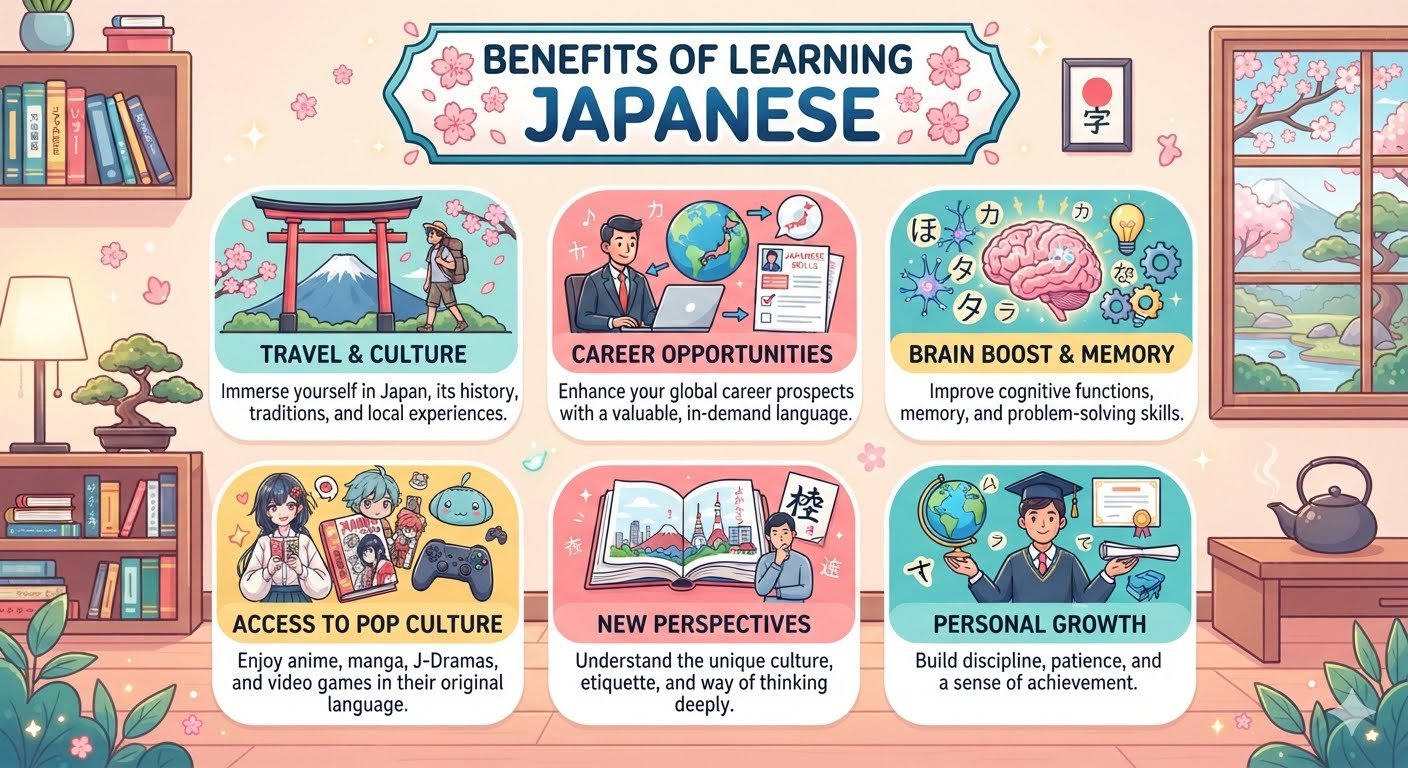
Japanese is one of the most rewarding languages a learner can pursue, not just because of its rich culture and global influence, but because of what the learning process itself does for the mind. When that learning is built around practical speaking lessons rather than rote memorization, the payoff multiplies. Speaking-first methods turn an abstract system of grammar and characters into a living skill you can use immediately and that shift changes everything about how fast you progress and how much you retain.
Why Speaking-Focused Lessons Matter
Traditional language classes often front-load grammar rules, vocabulary lists, and writing systems before a learner ever says a full sentence out loud. This approach can work, but it’s slow, and it leaves many students able to read a textbook page while struggling to order food in a restaurant. Practical speaking lessons flip that order. From the first session, learners are producing real sentences, responding to real prompts, and building the muscle memory needed for natural conversation.
This matters especially for Japanese, a language with a very different sentence structure, honorific system, and pronunciation pattern than English. Hearing and repeating phrases in context greeting a shopkeeper, asking for directions, making small talk with a coworker trains your ear and your mouth simultaneously. Grammar rules that seem confusing on paper often become intuitive once you’ve used them a dozen times in conversation.
The Educational Benefits of Learning Japanese
Beyond communication skills, there are substantial educational benefits of learning Japanese that extend into other areas of academic and cognitive development. Studies on bilingualism consistently show that people who learn a second language develop stronger working memory, improved multitasking ability, and sharper problem-solving skills. Japanese, in particular, challenges the brain in unique ways: switching between three writing systems (hiragana, katakana, and kanji), tracking context-dependent pronoun use, and interpreting layered levels of politeness all demand flexible thinking.
Students who study Japanese often report improvements in focus and pattern recognition, skills that transfer directly to subjects like mathematics and computer science. Kanji study, for instance, involves recognizing and reproducing complex visual patterns, a task that strengthens visual memory and attention to detail. These cognitive gains are one of the most under-appreciated reasons to start learning, especially for students still building academic skills in school.
Building Real-World Confidence
One of the most immediate benefits of practical speaking lessons is confidence. Learners who practice speaking early get comfortable with imperfection stumbling over a phrase, asking someone to repeat themselves, correcting a mistake mid-sentence. This comfort with trial and error is a transferable life skill. It reduces the fear of being wrong, a fear that often holds people back not just in language learning but in professional and social settings generally.
Speaking practice also accelerates listening comprehension. Japanese speech, especially in casual settings, moves quickly and often drops words that are “understood” from context. Learners who only study from textbooks are frequently caught off guard by real conversations. Regular speaking lessons, especially with native speakers or trained instructors, expose learners to natural speed and rhythm from day one, so real-world conversations feel far less intimidating.
Career and Travel Advantages
Japan remains a major global economic power, and Japanese is the language of business in one of the world’s most innovative markets. Professionals who can speak Japanese confidently not just read it have a distinct advantage in negotiations, client relationships, and cross-cultural collaboration. Fluency in speaking, rather than just reading comprehension, is what employers in international business, tourism, translation, and diplomacy actually value.
For travelers, the difference is even more direct. Being able to speak even at a basic level transforms a trip to Japan from a series of pointing-and-nodding interactions into genuine cultural exchange. Locals consistently respond warmly to visitors who make the effort to speak, and that warmth often opens doors to experiences tourists who don’t speak the language never get to have.
A Deeper Cultural Connection
Language and culture are inseparable, and Japanese carries centuries of nuance in its structure. The way politeness levels shift depending on who you’re speaking to reflects deep-rooted social values around respect and hierarchy. Understanding these patterns through speaking practice gives learners insight into Japanese culture that vocabulary lists alone can’t provide. You start to notice why certain phrases exist, why silence is sometimes as meaningful as speech, and how much can be communicated through tone and context.
Getting Started
The most effective path into Popular japanese language learning is one built around consistent, practical speaking practice rather than isolated grammar drills. Pairing structured lessons with real conversation whether through a tutor, a language exchange partner, or immersive practice builds both fluency and confidence far faster than passive study alone.
Whether your goal is career advancement, travel, cognitive development, or a genuine love of Japanese culture, speaking-focused lessons offer the fastest, most durable route to real fluency and along the way, you’ll pick up cognitive and educational benefits that reach well beyond the language itself.