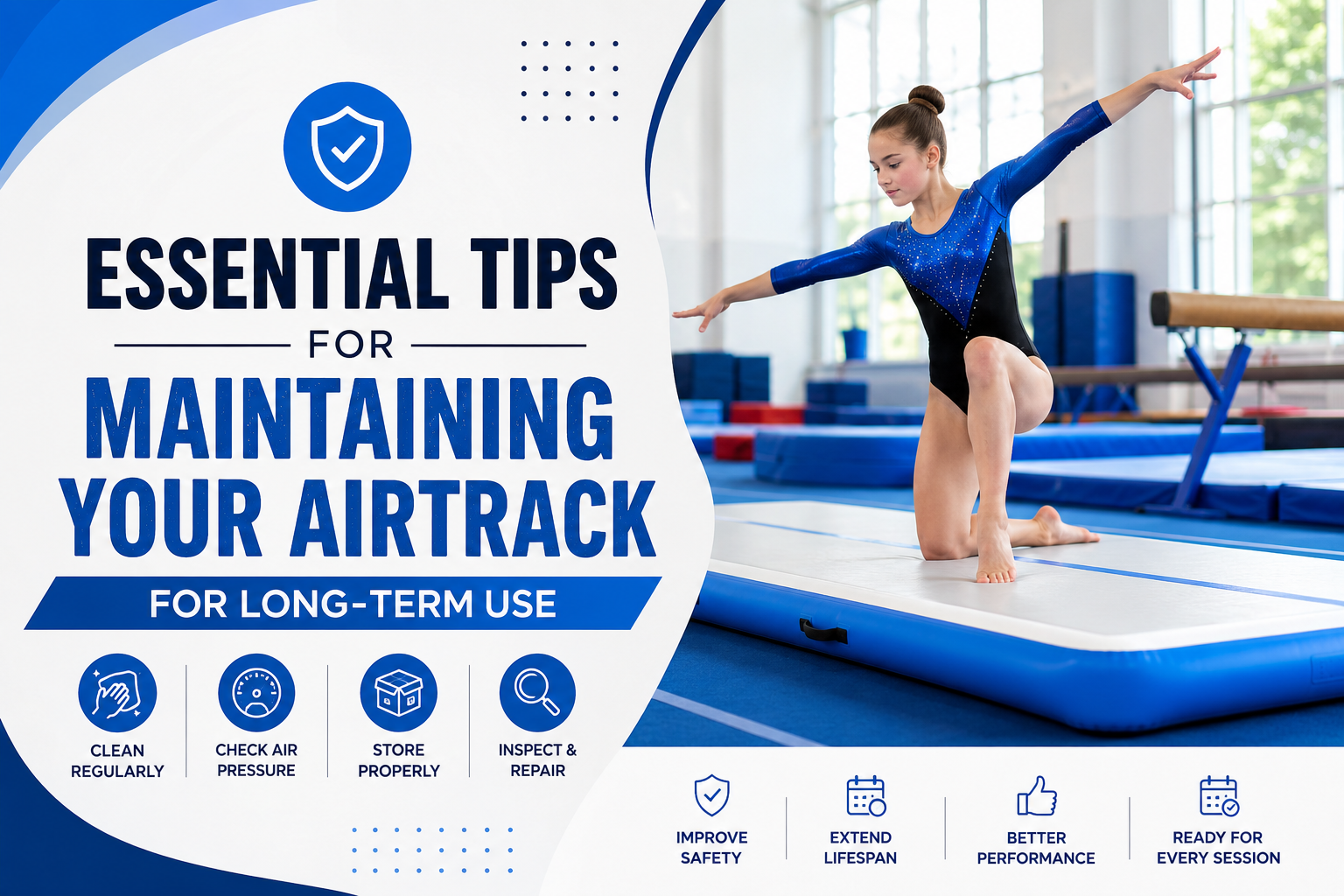
An inflatable gymnastics mat is a valuable investment for athletes, coaches, schools, and families who want a safe and comfortable training surface. However, like any piece of sports equipment, it performs best when it is properly maintained. Regular care not only protects the material but also helps preserve its bounce, stability, and overall performance for years to come.
Whether the mat is used indoors for daily practice or outdoors during warmer months, following a few simple maintenance habits can significantly extend its lifespan. Manufacturers also recommend regular inspections, proper storage, and timely repairs to keep inflatable gymnastics equipment in excellent condition.
Why Regular Maintenance Matters
A well-maintained gymnastics mat provides consistent cushioning, dependable air pressure, and improved safety for every training session. Dirt, moisture, improper storage, or unnoticed punctures can gradually reduce performance and shorten the life of the equipment.
Routine maintenance offers several advantages:
- Preserves the material and seams
- Maintains consistent air pressure
- Improves user safety
- Reduces repair costs
- Extends the overall lifespan of the equipment
Spending a few minutes after each training session can prevent many common problems from developing later.
Keep the Surface Clean
Cleaning is one of the easiest yet most effective ways to maintain an Airtrack.
Dust, chalk, grass, and small debris can collect on the surface during use. If left unattended, these particles may slowly wear the protective coating.
For routine cleaning:
- Wipe the surface with a soft cloth after every session.
- Use mild soap mixed with clean water for stubborn marks.
- Avoid harsh chemicals, bleach, or abrasive cleaners.
- Allow the surface to dry completely before storing it.
Regular cleaning helps maintain both appearance and durability.
Inflate to the Recommended Pressure
Correct inflation plays a major role in performance.
Too much air increases stress on seams, while too little air reduces stability and cushioning. Always follow the manufacturer’s recommended pressure guidelines and check the firmness before every training session.
Many modern inflatable mats include pressure recommendations that vary depending on the athlete’s weight and training style.
Inspect Before Every Training Session
A quick inspection can identify minor issues before they become expensive repairs.
Check for:
- Small punctures
- Loose valves
- Air leaks
- Worn seams
- Surface damage
If pressure drops unexpectedly, manufacturers recommend checking the valve first before looking for punctures. A simple water spray test around the seams can help locate slow leaks by revealing bubbles where air escapes.
Store It Correctly
Proper storage is one of the biggest factors affecting long-term durability.
Before storing:
- Fully clean the surface.
- Allow it to dry completely.
- Deflate slowly.
- Fold carefully without creating sharp creases.
- Store in the supplied storage bag whenever possible.
The storage area should be cool, dry, and protected from excessive heat, direct sunlight, and moisture.
Avoid placing heavy objects on top of the folded mat, as prolonged pressure may damage the material.
Protect It During Outdoor Use
Outdoor practice is popular because inflatable mats are portable and easy to transport. However, outdoor environments require additional care.
Choose a location that is:
- Flat
- Clean
- Free from sharp stones
- Away from branches
- Clear of glass or metal objects
Using a protective groundsheet underneath the mat provides an additional layer of protection against abrasion.
Handle the Valves Carefully
Inflation valves are designed for repeated use, but rough handling can eventually cause leaks.
Always:
- Tighten the valve securely after inflation.
- Replace valve caps after use.
- Avoid forcing connectors.
- Keep dirt away from valve openings.
If air escapes around the valve, tightening it with the supplied valve tool may resolve the issue before further repairs become necessary.
Repair Small Problems Immediately
Tiny punctures rarely fix themselves.
Fortunately, many inflatable gymnastics mats include repair kits for minor damage. Addressing small holes quickly prevents them from expanding into larger repairs.
If a puncture is discovered:
- Fully deflate the mat.
- Clean the damaged area.
- Apply the repair patch according to the manufacturer’s instructions.
- Allow sufficient curing time before reinflating.
Prompt repairs help preserve structural integrity.
Avoid Excessive Sun Exposure
Extended exposure to strong sunlight may gradually weaken PVC materials and fade colours.
Whenever possible:
- Train in shaded areas.
- Avoid leaving the mat inflated outdoors all day.
- Store indoors after use.
These simple habits help reduce unnecessary UV exposure and improve long-term durability.
Use Appropriate Footwear
Footwear can have a surprisingly large impact on the lifespan of gymnastics equipment.
Users should avoid:
- Shoes with hard soles
- Football boots
- Cleats
- Dirty trainers
Bare feet or clean gymnastics footwear help keep the surface in excellent condition while reducing unnecessary wear.
Rotate Usage Areas
If the same section of the mat is used repeatedly, certain areas may experience greater wear than others.
Changing the training direction occasionally helps distribute impact more evenly across the surface.
This simple practice reduces concentrated stress and helps the mat age more uniformly.
Follow Manufacturer Recommendations
Every inflatable gymnastics product has specific maintenance instructions based on its design and materials.
Brands such as AirTumble provide user guidance covering inflation, cleaning, storage, leak detection, and repairs. Following these recommendations ensures users achieve the best long-term performance from their equipment.
Invest in Long-Term Care
Routine maintenance requires very little time but delivers significant long-term benefits.
Athletes, coaches, and families who care for their equipment properly often enjoy many years of reliable use. Regular inspections, gentle cleaning, careful storage, and prompt repairs all contribute to maintaining safety and consistent performance.
Choosing high-quality equipment from trusted suppliers such as AirTumble is only the first step. Consistent maintenance ensures that every practice session continues to deliver the same dependable experience from an Airtrack for years to come.
Continue Learning
For more gymnastics equipment care tips, read our related blog:
Signs It’s Time to Replace Your Gymnastics Beam
FAQs
1. How often should an Airtrack be cleaned?
It should be wiped down after each use and given a more thorough cleaning whenever dirt, chalk, or outdoor debris builds up.
2. What should be done if the mat starts losing air?
Check the inflation valve first, then inspect the seams and surface for leaks or punctures before carrying out any repairs.
3. Is it safe to leave an Airtrack inflated outdoors?
Short-term outdoor use is generally suitable, but prolonged exposure to sunlight, rain, or extreme temperatures should be avoided.
4. Can small punctures be repaired at home?
Yes. Most inflatable gymnastics mats include repair kits that can safely fix minor punctures when the manufacturer’s instructions are followed.
5. What is the best way to store an Airtrack?
Clean and dry the mat completely, deflate it carefully, fold it without sharp creases, and store it in a cool, dry place away from direct sunlight.