Introduction
Modern turbine systems rely on highly precise control and monitoring infrastructure to ensure safe, efficient, and continuous operation. Whether in gas or steam turbines, the ability to accurately capture field signals such as temperature, pressure, and vibration is fundamental to maintaining performance stability.
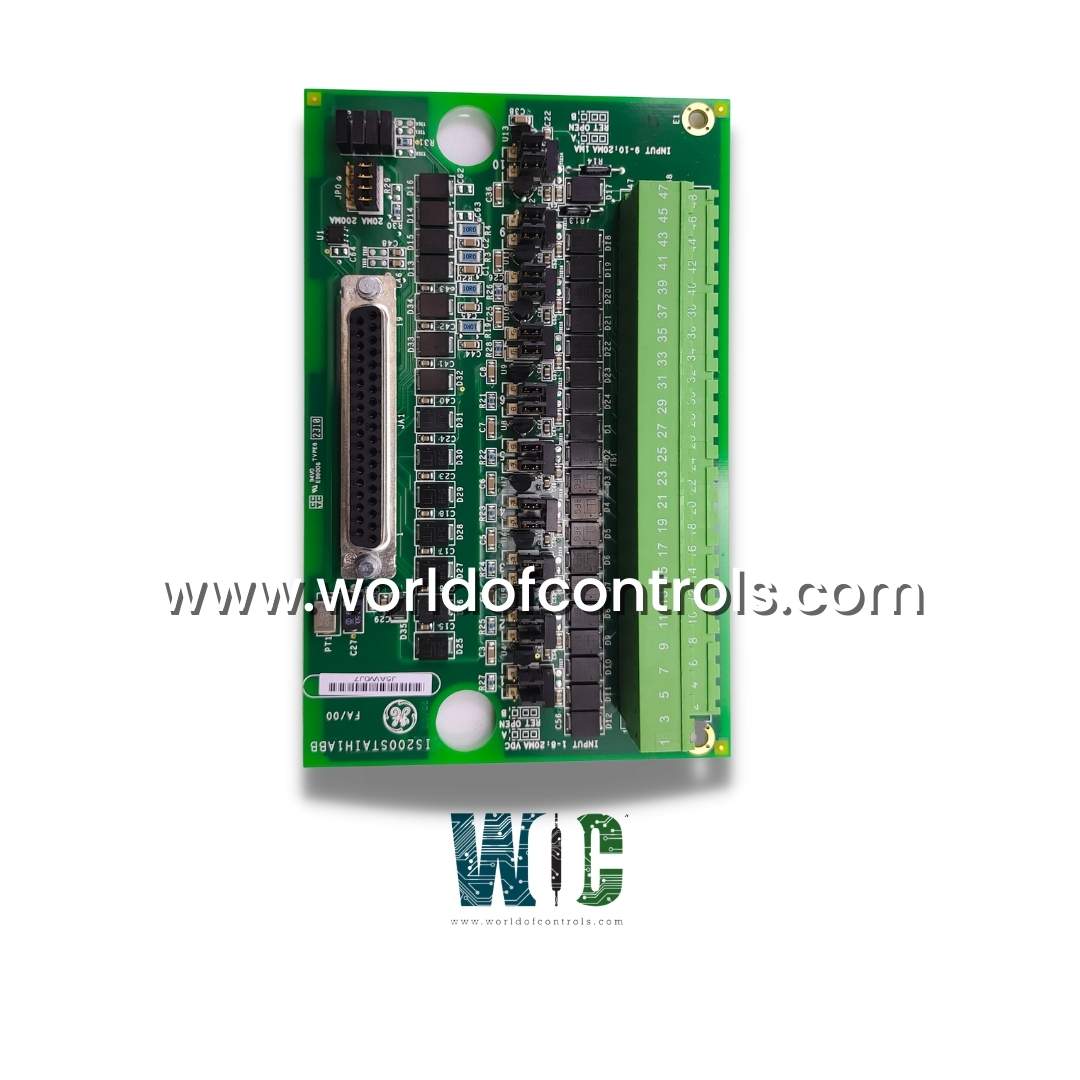
Within this control architecture, analog input boards play a crucial role by converting real-world sensor data into actionable digital information. In GE turbine control environments, especially simplex configurations used in industrial power generation, these modules are critical for real-time decision-making and system protection. Understanding their function and design is essential for engineers working with OEM turbine components and industrial automation systems.
Role of Analog Input Boards in Turbine Control Systems
Analog input boards act as the interface between field instrumentation and the turbine control processor. They continuously receive signals from sensors installed across the turbine system, ensuring that operational parameters are accurately monitored.
In simplex turbine control configurations, these boards are particularly important because they support a single-channel control path. Therefore, system reliability depends heavily on the consistent performance of each input channel.
Moreover, these modules ensure that turbine controllers receive clean, stable, and properly scaled signals, which are then used for combustion control, speed regulation, and protective shutdown logic. As a result, they contribute directly to both operational efficiency and equipment safety.
Key Features of GE Simplex Analog Input Boards
High-Accuracy Signal Conversion
One of the defining features of GE analog input boards is their ability to convert analog signals with high precision. Turbine environments are electrically noisy and mechanically harsh, which makes accurate signal conditioning essential. These boards are designed to minimize distortion and maintain measurement integrity.
OEM-Grade Compatibility and Integration
These boards are engineered for seamless integration within GE turbine control systems. Their OEM design ensures full compatibility with existing Mark-type control architectures, allowing for straightforward installation, replacement, and system upgrades without extensive reconfiguration.
In addition, this compatibility reduces engineering complexity during maintenance cycles and helps maintain system standardization across turbine fleets.
Industrial-Grade Durability
Turbine control systems often operate in extreme conditions involving heat, vibration, and electromagnetic interference. GE simplex analog input boards are built using industrial-grade components to withstand such environments.
Therefore, they maintain stable performance over long operational periods, even in demanding power plant conditions where continuous uptime is required.
Multi-Channel Input Capability
These modules typically support multiple input channels, allowing simultaneous monitoring of various turbine parameters. This enhances operational visibility and reduces the need for additional hardware.
Furthermore, multi-channel architecture improves diagnostic efficiency by enabling engineers to analyze multiple data points in parallel, supporting faster troubleshooting and system optimization.
Importance of Proper Identification in Turbine Systems
Accurate identification of turbine control components is critical in industrial environments. Each analog input board variant is defined by specific configuration codes that determine its compatibility, functionality, and system role.
In turbine maintenance operations, correct identification ensures that replacement parts match the required specifications. Moreover, it prevents integration errors that could lead to signal mismatches or control instability.
For engineers, understanding these identification structures is essential not only for installation but also for lifecycle management, inventory control, and predictive maintenance planning.
Maintenance and Operational Reliability
Regular inspection and maintenance of analog input boards significantly improve turbine reliability. Engineers typically focus on signal calibration accuracy, connector integrity, and environmental protection to ensure consistent performance.
In addition, diagnostic testing helps detect early signs of signal degradation or component fatigue. As a result, maintenance teams can implement corrective actions before failures occur, reducing unplanned downtime and improving operational efficiency.
Moreover, adopting preventive maintenance strategies contributes to longer equipment lifespan and more stable turbine performance under continuous load conditions.
Conclusion
GE simplex analog input boards are essential components in modern turbine control systems, enabling precise signal acquisition and reliable data conversion. They support critical industrial processes by ensuring that turbine controllers receive accurate and stable input from field instrumentation.
In high-performance industrial environments, these modules contribute significantly to system safety, efficiency, and operational continuity. Therefore, understanding their features and role within turbine architecture is fundamental for engineers responsible for maintaining and optimizing power generation systems.