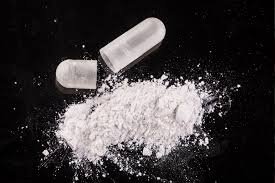
Did you know that a single “point” on a digital scale can represent the difference between a personal evening and a legal felony in many jurisdictions? Navigating the world of illicit substance measurements is often confusing because it mixes the metric system with old fashioned imperial units and a heavy dose of street slang. If you are reading news reports or research papers, you might see terms that don’t match the standard math you learned in school. Understanding these specific labels is vital for accurate communication in forensic, medical or legal contexts.
The Basics of Weight in Street Transactions
Many illicit substances move through a chain that starts with large kilograms and ends with tiny fractions of a gram. Because accuracy is difficult without professional laboratory equipment, buyers and sellers often rely on standardized slang to describe specific amounts – this shorthand prevents confusion during quick exchanges where time and discretion are priorities. You will notice that as the quantity increases, the terminology shifts from metric milligrams to imperial ounces.
The metric system is the global standard for most chemical compounds. In the United States and parts of the United Kingdom, the “ounce” remains a stubborn fixture in the trade of heavier quantities – this creates a messy overlap where a person might buy a gram (metric) but find that eight of those units are referred to as a fraction of an ounce (imperial). Keeping track of these shifts is the first step in understanding the broader vocabulary of the market.
Accuracy is often a point of contention – Because digital scales are now cheap and portable, the margin for error has shrunk. “street weight” often accounts for the packaging itself, which can lead to discrepancies between what a scale shows and what a slang term implies. Users and researchers must distinguish between “net weight” of the powder and the “gross weight” of the entire package.
From Points to Grams – Small Scale Terminology
At the lowest end of the spectrum, we find the “point” This term is a direct reference to the decimal point on a scale. One point is equal to 0.1 grams. If you hear someone discussing a “half-gram” they are talking about 0.5 grams or five points – this level of measurement is most common for substances with high potency where small amounts produce significant effects. It is a precise way to handle products that are expensive by weight.
The full gram is the “gold standard” for individual portions. It is roughly the weight of a standard paperclip. In many circles, a gram is the baseline for pricing and quality comparisons. For those interested in the logistical side, a detailed overview of powder measurements shows how the small units are bagged and distributed to maintain consistency across different regions.
- Point 0.1 grams (one-tenth of a gram).
- Half-G 0.5 grams.
- Gram 1.0 gram (the primary unit for retail sales).
- Teenth 1.75 grams (half of an eighth).
The Eight Ball & Mid Range Measurements
One of the most persistent terms in drug culture is the “eight ball” This refers to an eighth of an ounce. An ounce is approximately 28.35 grams. An eight ball should weigh roughly 3.5 grams – this quantity represents a middle ground between a casual user’s portion and a bulk supply. It is enough for a group setting or an extended period of use, making it a high volume seller in the illicit economy.
Why the name? The “eight” comes from the fraction 1/8th – The “ball” part of the slang is a bit more mysterious, likely originating from the way the powder is tied off in the corner of a plastic bag, forming a small, round sphere. When people discuss mid range amounts, they are often calculating how many of these “balls” fit into larger wholesale units. For instance, a deeper explanation of weight ratios clarifies that exactly eight of these units make up a full ounce.
Beyond the eight ball, you might hear the term “quarter” which refers to a quarter ounce (7 grams) – these weights are common for individuals who are looking to save money – purchasing slightly larger volumes, as the price per gram typically drops as the weight increases – this “bulk discount” logic mirrors legitimate retail markets, though the risks involved are significantly higher.
Moving to Ounces & Bulk Quantities
When the conversation moves to ounces, the environment changes from retail to wholesale. A “zip” is a common slang term for an ounce, derived from the fact that an ounce of many substances fits perfectly into a standard “Ziploc” brand sandwich bag – this is a significant amount of material, often carrying much harsher legal penalties for possession. In the world of high volume trade, an ounce is the foundational unit for redistribution.
For the navigating digital marketplaces or looking for additional reading on secure directories, understanding bulk weights is essential. Large scale operations deal in “bricks” or “kilos” A kilogram is 1 000 grams or roughly 2.2 pounds – these are the units transported across borders and between major cities before they are broken down into the smaller ounces and grams seen on the street.
- Half-Ounce 14 grams (often called a “half-zip”).
- Ounce (Zip) 28 grams (rounded down from 28.35 for ease of trade).
- Pound 16 ounces (roughly 448 grams).
- Kilo (Brick) 1 000 grams or 35.2 ounces.
Regional Slang & Cultural Differences
Language evolves differently depending on where you are – In some cities, a “nickel bag” or “dime bag” refers to the price ($5 or $10) rather than a specific weight – this can be deceptive because if the purity of the substance is high, the “dime bag” might weigh much less than a gram. In areas with lower supply, the weight of the “price-point bags” shrinks while the price stays the same, a phenomenon similar to “shrinkflation” in grocery stores.
You might also encounter terms like “a piece” which in some West Coast circles refers specifically to an ounce of black tar heroin or a “button” which can refer to specific small amounts of synthetic tablets or pills. Because these terms change so quickly, professionals in law enforcement and healthcare have to constantly update their dictionaries to stay relevant. Using the wrong term can immediately mark someone as an outsider or “narc” in certain subcultures.
Ultimately, while the slang is colorful, the math is what stays constant. If you call it a “zip” an “O” or an “onion” an ounce is still 28 grams. Staying informed about these terms is not just about linguistics – it is about understanding the mechanics of a hidden economy that operates right alongside our daily lives. If you need a research overview of specific products and their standard weights, consulting specialized resources is often the best way to get accurate, current data.
FAQ
How many grams are in an eight ball?
An eight ball is exactly 3.5 grams – This represents one eighth of a standard ounce, which is usually rounded to 28 grams in street transactions.
What does the term “zip” mean?
A “zip” is slang for one ounce of a substance – The name comes from the Ziploc bags used to store this specific quantity of material.
Is a “point” the same as a milligram?
No. A point is 0.1 grams, which is equal to 100 milligrams. It is a common unit for measuring small, potent doses of powders.
Why do people use the term “brick”?
A “brick” refers to a kilogram (1 000 grams) of a substance. It is called a brick because the vacuum sealed packaging creates a hard, rectangular shape similar to a construction brick.
What is a “teenth”?
A “teenth” is a sixteenth of an ounce, which is 1.75 grams. It is exactly half of an eight ball (3.5 grams).