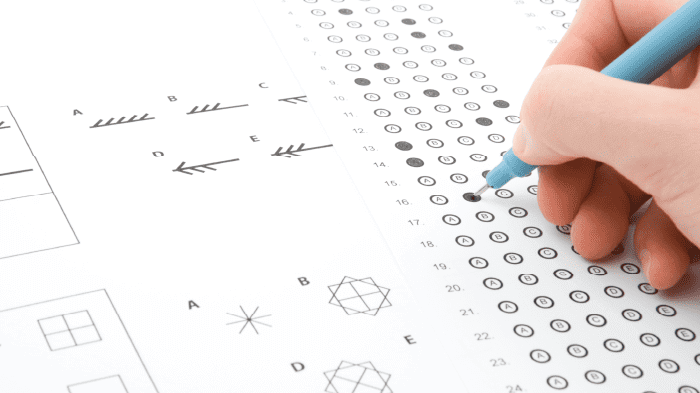
Online IQ tests have become one of the easiest ways to explore cognitive abilities. With a few clicks, anyone can answer questions involving patterns, numbers, logic, memory, and problem solving and receive an estimated IQ score. The process is convenient, quick, and often free, which explains why millions of people are curious about their results.
However, convenience raises an important question: do online IQ tests actually measure intelligence? When people ask how accurate are online IQ tests, the answer depends on the quality of the assessment, how it was developed, and what the final score is intended to represent.
Some online tests may provide useful information about specific reasoning abilities. Others are little more than entertaining quizzes. Understanding the difference can help you decide whether an online IQ score deserves your trust.
What Does Intelligence Mean?
Before discussing online IQ tests, it helps to understand what intelligence actually means.
Intelligence is a broad concept that can include the ability to reason, learn, solve problems, recognize patterns, understand complex ideas, remember information, and adapt to new situations. Psychologists have developed different theories of intelligence, and no single test captures every aspect of human mental ability.
IQ tests are designed to measure specific cognitive skills rather than every quality associated with intelligence.
Depending on the assessment, these skills may include logical reasoning, working memory, processing speed, verbal comprehension, visual-spatial reasoning, and fluid reasoning.
This distinction is important. A person can perform exceptionally well on certain cognitive tasks while having strengths that are not fully captured by an IQ test.
What Online IQ Tests Usually Measure
Many online IQ tests contain questions involving visual patterns, number sequences, analogies, logical relationships, classifications, and spatial problems.
These questions can genuinely require reasoning. Solving them may provide information about how someone approaches particular types of problems.
For example, a pattern question may require you to identify a relationship between shapes or numbers. A logical reasoning question may require you to determine which conclusion follows from a set of conditions.
These are legitimate forms of cognitive activity.
The issue is not necessarily whether the questions involve intelligence. The bigger question is whether the test has been designed and validated well enough for its final score to represent an IQ measurement.
Why Some Online Tests Are Less Reliable
The quality of online IQ tests varies enormously.
Some are developed using established principles of psychological measurement. Others are created primarily for entertainment, website traffic, advertising, or commercial purposes.
A test can contain challenging questions and still fail to provide a scientifically meaningful IQ score.
For an assessment to be trustworthy, developers need to establish that the questions work properly, that the scoring system is appropriate, and that the test measures what it claims to measure.
Without this evidence, a numerical score may look more authoritative than it really is.
The Importance of Standardization
One of the biggest differences between professional IQ assessments and casual online tests is standardization.
Professional assessments are administered according to carefully established procedures. Instructions, timing, scoring, and testing conditions are controlled as much as possible.
Online tests are usually taken in uncontrolled environments.
One person might complete a test in a quiet room after sleeping well. Another might take the same test while tired, distracted, or interrupted by phone notifications.
Someone might follow the instructions carefully, while another person might use outside assistance or spend more time than intended on difficult questions.
These differences can affect performance and make results less comparable.
Reliability and Consistency
Reliability refers to how consistently a test measures something.
Suppose you take an online IQ test today and receive a score of 120. If you take a comparable assessment under similar conditions, you would generally expect your performance to be reasonably consistent.
Some variation is normal. Human performance changes depending on sleep, attention, stress, motivation, and other factors.
However, if scores fluctuate dramatically without a clear explanation, the test may not be a dependable measurement.
Professional intelligence assessments are evaluated for reliability. Many casual online tests provide little or no information about whether their results have undergone similar evaluation.
Validity Is Equally Important
A test can be consistent without accurately measuring what it claims to measure.
This is where validity becomes important.
Imagine an online test that consistently measures someone’s ability to identify visual patterns. It might be reliable at measuring that particular skill, but that does not automatically make it a comprehensive measure of general intelligence.
A credible intelligence assessment needs evidence that its tasks and scoring system relate meaningfully to the cognitive abilities it claims to assess.
This is one of the most important questions to ask when evaluating an online IQ test.
Scoring and Comparison Groups
An IQ score is meaningful partly because it compares an individual’s performance with an appropriate reference population.
Professional assessments are standardized using data collected from large groups. This helps establish norms that allow individual scores to be interpreted.
Some online tests provide little information about how their scores were developed.
A website might tell you that your IQ is 128, but what does that number actually mean? Was the test standardized using a suitable population? How large was the sample? Was the sample representative? How was the scoring scale created?
Without answers to questions like these, the score may not have the same meaning as a score from a standardized professional assessment.
Why Your Online Score Can Change
Your score can change for reasons unrelated to any real change in intelligence.
Sleep is one example. Being tired can make it more difficult to concentrate and solve challenging problems.
Stress and anxiety can also influence performance, especially when the assessment is timed.
Distractions can have an impact as well. Taking a test while receiving messages or dealing with background noise is different from taking it in a quiet, controlled environment.
Motivation matters too. Someone who treats the test as a game may perform differently from someone who is intensely focused on achieving the highest possible score.
All of these factors mean that an online IQ score should generally be viewed as a measurement of performance under specific circumstances.
Practice Effects Can Influence Results
Another issue is familiarity.
Many online IQ tests use similar question formats. If you complete several assessments, you may become better at recognizing common patterns and solving familiar problems.
Your score could therefore increase with practice.
This does not necessarily mean your general intelligence has changed. You may simply have learned how to approach the types of questions used by these tests.
This is why repeatedly taking online IQ tests and comparing the highest score can create a misleading impression of cognitive ability.
Do Online Tests Measure the Whole Person?
No IQ test, online or professional, measures every aspect of a person.
IQ assessments focus on specific cognitive abilities. They do not necessarily measure creativity, emotional intelligence, social understanding, practical decision making, motivation, persistence, curiosity, or many other characteristics.
Consider someone who is highly creative but performs only moderately on traditional pattern questions. An online IQ score might not reflect their creative strengths.
Similarly, someone who performs exceptionally well on abstract puzzles may not automatically excel in every real-world situation.
Intelligence is multidimensional, and an IQ score should be interpreted within that context.
How Accurate Are Online IQ Tests?
So, how accurate are online iq tests
There is no universal answer. Accuracy depends on the individual assessment.
A carefully designed online test that has been researched, standardized, and validated may provide useful information about cognitive performance. A casual quiz that has no evidence of reliability or validity may be much less meaningful.
This is why the phrase “online IQ test” does not describe one consistent type of assessment.
Some tests are closer to recreational brain games. Others attempt to approximate standardized cognitive assessments.
The best approach is to investigate the test before trusting its score.
What Makes an Online IQ Test More Credible?
Several characteristics can indicate a higher-quality assessment.
First, the test should clearly explain what it measures. If it claims to measure general intelligence, its content should reflect more than one narrow ability.
Second, developers should provide information about reliability and validity.
Third, the scoring system should be based on appropriate norms.
Fourth, questions should be carefully written and tested. Ambiguous or poorly constructed questions can reduce accuracy.
Finally, the website should be transparent about limitations.
A responsible assessment does not need to promise a perfect or exact measurement. Instead, it should explain what its results mean and how much confidence users should place in them.
Warning Signs of a Poor Online IQ Test
Certain claims should make you skeptical.
Be cautious if a website promises to determine your exact IQ in only a few minutes without providing evidence about its methodology.
Be careful if the test contains very few questions but claims to provide an extremely precise score.
You should also question websites that offer dramatic interpretations without explaining how the results were calculated.
A professional-looking interface is not evidence of scientific validity. Attractive graphics, countdown timers, rankings, and impressive claims cannot replace proper research.
Online IQ Tests vs. Professional Testing
Professional intelligence assessments generally offer a higher level of scientific and procedural rigor.
A qualified professional can select an appropriate assessment, provide standardized instructions, monitor the testing process, and interpret the results in context.
Professional testing can also provide information about different areas of cognitive functioning. Instead of focusing only on an overall number, the results may reveal patterns of strengths and weaknesses.
Online tests are more accessible and convenient, but they have less control over testing conditions and may provide limited interpretation.
For casual curiosity, an online test can be perfectly reasonable. For important educational or psychological decisions, a professional assessment is a more appropriate option.
Can an Online IQ Score Be Useful?
Yes, as long as you understand its limitations.
An online assessment can give you an opportunity to explore logical reasoning, pattern recognition, and other cognitive skills. It can also be an enjoyable mental challenge.
If the test has a strong scientific foundation, its result may provide a reasonable estimate of certain abilities.
However, users should avoid treating an online score as an absolute statement about intelligence.
The most useful question is not simply whether the number is high or low. It is whether the assessment behind the number deserves confidence.
What Should You Do With Your Result?
If you receive an online IQ score, start by considering the quality of the test.
Look for information about its developers, methodology, validation, reliability, and scoring norms.
Then consider the conditions in which you took it. Were you rested and focused? Were you distracted? Did you follow the time limits? Had you taken similar tests before?
If the result is significantly different from what you expected, do not immediately assume that it represents your true intellectual ability.
If you need a reliable assessment for an important purpose, consider consulting a qualified professional instead of relying on multiple online quizzes.
Final Thoughts
Do online IQ tests actually measure intelligence? Some measure aspects of cognitive ability, but their ability to provide a meaningful overall IQ score varies considerably.
The answer to how accurate are online IQ tests depends on test quality, standardization, reliability, validity, scoring norms, question design, and testing conditions.
A carefully developed online assessment can provide useful information and may be a worthwhile tool for personal exploration. A poorly designed quiz may be little more than entertainment.
Most importantly, no IQ score should be treated as a complete definition of intelligence. Human cognitive ability is complex and includes far more than performance on a collection of online puzzles.
If you are taking an online IQ test for fun, enjoy the challenge. If you need a dependable measurement for an educational or psychological purpose, choose a professionally developed and administered assessment.
An online IQ score can be interesting, but the quality of the test behind the number matters far more than the number itself.