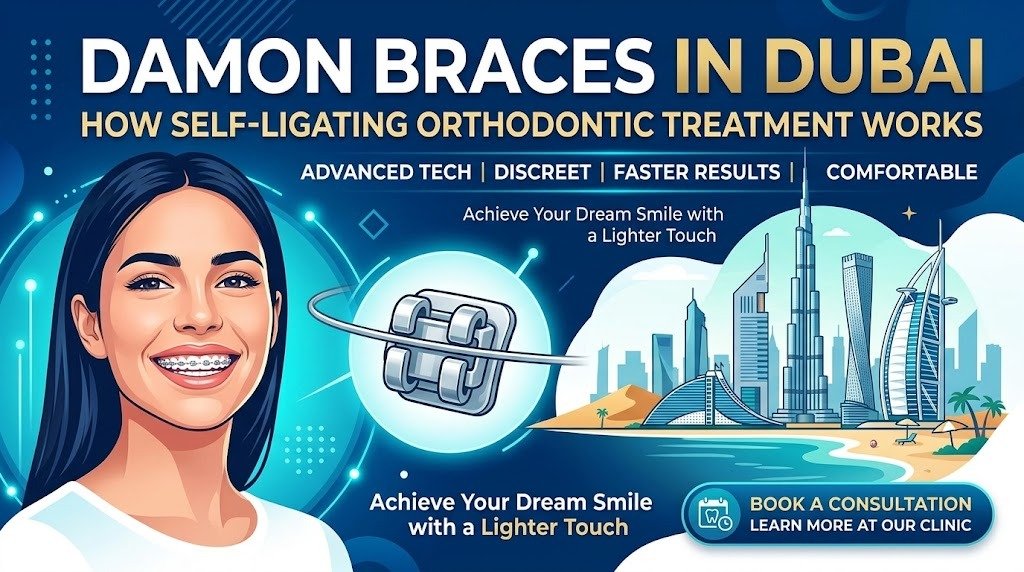
Choosing orthodontic treatment involves more than deciding how to straighten teeth. Patients need to understand how different braces work, how long treatment may take, and what daily care involves. Damon braces in Dubai are an option for teenagers and adults who want to correct dental alignment using a self-ligating braces system. Unlike conventional braces, this system uses a built-in mechanism to hold the orthodontic wire in place rather than relying on elastic ties.
For patients across Dubai, including Jumeirah, understanding the differences between orthodontic systems can make treatment decisions more informed. The most suitable option depends on the position of the teeth, the bite, gum health, and the individual’s treatment goals. A professional orthodontic assessment helps determine whether Damon braces are appropriate or whether another method would offer better results.
Understanding How Damon Braces Work
Damon Braces Dubai are a type of fixed orthodontic appliance designed to move teeth gradually into improved positions. They use brackets with a sliding or self-ligating mechanism that holds the archwire without the small elastic ligatures commonly associated with traditional braces.
The archwire applies controlled forces to the teeth. Over time, these forces stimulate changes in the surrounding bone, allowing teeth to move into their planned positions. The orthodontist adjusts or replaces the wire as treatment progresses.
One distinction is that conventional braces often use elastic ties to secure the wire to each bracket, whereas Damon systems use a built-in closure mechanism. Some Damon systems feature metal brackets, while others offer clear bracket options for patients who prefer a less noticeable appearance.
However, self-ligating technology does not eliminate the need for regular orthodontic appointments. The orthodontist still needs to monitor tooth movement, evaluate the bite, and make adjustments when necessary.
Treatment suitability also varies. A patient with mild crowding may have different requirements from someone with a significant overbite, crossbite, or complex tooth-positioning concerns.
Who May Benefit from Damon Braces in Dubai?
Orthodontic treatment is not limited to teenagers. Many adults seek treatment to improve dental alignment, correct bite problems, or address changes in tooth position that have developed over time.
Damon braces may be considered for several common orthodontic concerns.
- Crowded teeth: When there is insufficient space for teeth to align properly, orthodontic treatment can help create a more organised dental arch.
- Gaps between teeth: Braces can gradually close spaces where clinically appropriate.
- Overbite and underbite: Depending on the severity and cause, orthodontic treatment may help improve the relationship between the upper and lower teeth.
- Crossbite: Selected cases can benefit from treatment that corrects the way opposing teeth meet.
- Misaligned teeth: Teeth that overlap, rotate, or sit outside the expected arch position may be treated with fixed braces.
For example, an adult working in a professional environment may want to address crowded front teeth that make cleaning difficult. Damon braces could be one option after an examination confirms that fixed orthodontic treatment is suitable.
Patients should understand that the appliance alone does not determine the outcome. The treatment plan, the orthodontist’s clinical judgement, the complexity of the case, and the patient’s cooperation all contribute to progress.
Age, existing dental restorations, gum health, and previous orthodontic treatment can also influence the recommended approach. People with active gum disease or untreated decay may need to address these problems before braces are fitted.
Finding Damon Braces in Jumeirah: What Should Patients Consider?
Patients researching Damon braces in Jumeirah may find several orthodontic options available across Dubai. Comparing providers involves more than reviewing prices or choosing a clinic close to home. Clinical experience, diagnostic procedures, treatment planning, and follow-up arrangements are important considerations.
An orthodontic assessment usually begins with a discussion of the patient’s concerns and dental history. The clinician examines the teeth, bite, gums, and jaw relationship. Photographs, dental scans, X-rays, or other diagnostic records may be recommended when clinically necessary.
These records help the orthodontist determine how much movement is required and whether additional procedures may be needed. For example, moderate crowding may be managed differently from a case involving impacted teeth or a substantial skeletal discrepancy.
Patients can ask several practical questions during an initial consultation:
- What orthodontic problems need to be corrected?
- Are Damon braces appropriate for this particular case?
- What alternatives are available, and how do their advantages differ?
- Is tooth extraction or another preparatory procedure likely to be necessary?
- How frequently will appointments be required?
- What is included in the quoted treatment fee?
- How will retainers and post-treatment reviews be managed?
AQR Orthodontics is one name patients may encounter when researching orthodontic care in Dubai. As with any provider, prospective patients should evaluate the proposed treatment plan, understand the clinical reasoning behind it, and clarify the arrangements for monitoring progress and maintaining results.
The goal of a consultation is to establish a realistic, personalised plan rather than assume that one braces system is ideal for everyone.
Damon Braces Compared With Traditional Braces
The main difference between Damon braces and conventional fixed braces is the mechanism used to hold the orthodontic wire. Traditional braces generally use elastic ligatures or other ligation methods, while self-ligating brackets have a built-in closure.
This difference can influence certain aspects of treatment, but it should not be confused with proof that one system is universally faster, more comfortable, or more effective.
Traditional braces remain a well-established option for correcting a broad range of alignment and bite problems. They also allow orthodontists to manage complex tooth movements through appropriate bracket selection, wire changes, and treatment planning.
Damon braces may appeal to patients who prefer a self-ligating system or want to compare different bracket designs. However, the actual experience depends on the individual case and the treatment protocol.
Claims about shorter treatment times should be assessed carefully. Research has not established that self-ligating braces consistently produce substantially faster overall treatment than conventional braces. The severity of the malocclusion, the need for additional procedures, appointment attendance, and biological differences between patients can all affect the duration.
Comfort is another consideration. Some patients report differences in pressure or irritation between systems, but discomfort can occur with any fixed appliance, particularly after fitting or adjustments.
The most useful comparison is therefore based on clinical suitability, expected outcomes, maintenance requirements, cost, and the orthodontist’s explanation of the available choices.
What to Expect During Damon Orthodontic Treatment
Damon orthodontic treatment generally follows several stages, from the initial assessment to retention after the braces are removed. Understanding these stages helps patients prepare for the practical responsibilities involved.
Initial examination and planning
The orthodontist evaluates dental alignment, bite relationships, oral health, and treatment objectives. Diagnostic records support the development of a treatment plan tailored to the patient’s needs.
Braces placement
Once the teeth and gums are sufficiently healthy, the brackets are attached to the teeth and the archwire is positioned. The appointment is usually straightforward, although the patient may need time to become accustomed to the appliance.
Adjustment and monitoring
Follow-up appointments allow the orthodontist to assess movement, check the appliance, and make any necessary changes. Teeth may feel tender for several days after fitting or an adjustment. Soft foods can help during this period.
Oral hygiene and daily care
Brushing carefully around brackets and along the gumline is essential. Interdental brushes or other recommended cleaning aids can help remove food debris from difficult-to-reach areas. Patients should also maintain regular dental check-ups and professional cleaning as advised.
Hard, sticky, or very chewy foods may damage brackets or wires, so dietary precautions are important. If a bracket becomes loose or a wire causes persistent irritation, the orthodontic practice should be contacted for guidance.
Retention after treatment
When the desired tooth positions have been achieved, the braces are removed and retainers are prescribed. Retainers help maintain alignment while the surrounding tissues adapt. Following the prescribed wearing schedule is an important part of protecting the treatment result.
Overall treatment duration varies considerably. Some cases require a relatively short course, while complex alignment or bite problems may take longer. An individual estimate should be based on the clinical assessment rather than a general marketing claim.
Cost, Expectations, and Long-Term Results
The cost of Damon braces in Dubai can vary according to the complexity of treatment, the type of brackets used, the expected duration, diagnostic requirements, and the services included in the treatment package.
Patients comparing fees should check whether the quotation covers records, routine adjustments, emergency visits, removal of the braces, and retainers. A lower initial price may not represent the same overall service as a more comprehensive quotation.
It is equally important to understand what orthodontic treatment can realistically achieve. Braces can improve tooth alignment and bite relationships, but they do not automatically correct every underlying jaw discrepancy. Some patients may require additional orthodontic or dental procedures.
Long-term results also depend on retention and continued oral care. Teeth can shift after treatment, even when the original alignment was excellent. Retainers, good hygiene, and recommended follow-up appointments help reduce the risk of unwanted movement.
Patients should also discuss possible limitations and risks, including temporary discomfort, gum inflammation, enamel decalcification if oral hygiene is inadequate, and root changes that may occur during orthodontic movement. The likelihood and significance of these issues vary between individuals.
Conclusion
Damon Braces in Dubai offer a self-ligating approach to fixed orthodontic treatment for patients who need help correcting crowded, spaced, or misaligned teeth. For people considering Damon Braces Dubai, the most important factors are the nature of the dental problem, the quality of the clinical assessment, and the suitability of the proposed treatment plan.
Patients exploring Damon braces in Jumeirah should compare options based on professional assessment, realistic expectations, ongoing care, and long-term retention rather than relying on claims about speed or comfort alone. Damon orthodontic treatment can be a useful option for selected cases, but successful outcomes depend on individual anatomy, sound clinical planning, and consistent patient care.