Custom food packaging is packaging made to fit your food product, meet food-safety needs, and carry your brand. A good design keeps food fresh, protects it in transit, and gives customers a clear reason to remember you. If you’re comparing options, you can browse food packaging at Packaging Ship and use this guide to work out what your product needs.
What Is Custom Food Packaging?
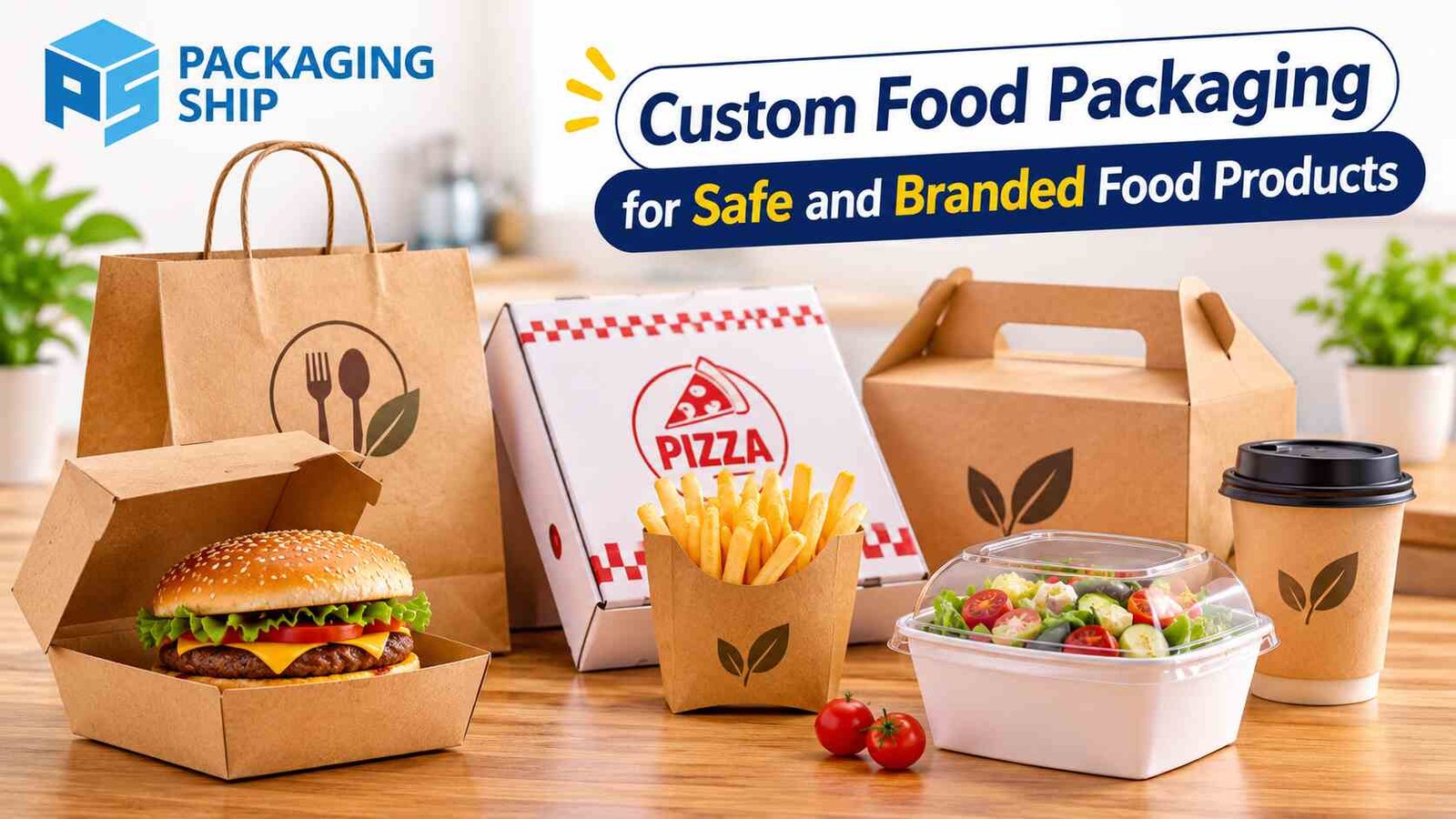
Custom food packaging is any box, bag, carton, or container built around a specific food item, with your own size, printing, and materials. Instead of picking a stock container and adding a sticker, you choose a shape and design that suits the product.
It covers a wide range of items:
- Bakery boxes for cakes, cookies, and pastries
- Folding cartons for dry goods like pasta, cereal, and snacks
- Mylar bags for coffee, tea, spices, and granola
- Takeout boxes and clamshells for restaurant meals
- Gift boxes for chocolates, candy, and holiday treats
- Sleeves, inserts, and window panels for display
Small bakeries, cafes, meal-prep companies, specialty food makers, and larger food brands all use custom packaging, though their order sizes differ.
Why Do Food Brands Choose Custom Over Stock Packaging?
Stock boxes are cheaper for small runs, but they rarely fit the food well or say anything about your brand. Custom packaging lets you control the fit, which reduces crushing and spoilage, and it lets you print your logo, ingredients, and story right on the package. For a new food brand, that often makes the difference between looking like a hobby and looking like a business.
What Makes Food Packaging Safe?
Safe food packaging uses materials approved for food contact and keeps the product protected from moisture, air, grease, and contamination. In the United States, the FDA regulates materials that touch food, so your packaging should meet those requirements.
Here’s what to look into:
- Food-grade materials. Board, films, coatings, and adhesives suited to the type of food.
- Grease resistance. Important for baked goods, fried foods, and anything oily.
- Moisture and oxygen barriers. Key for coffee, snacks, and dry mixes that go stale.
- Tamper-evident closures. Seals or stickers that show the package hasn’t been opened.
- Clean production. Boxes and bags should arrive free of dust, odors, and damage.
Always ask your supplier to confirm food-contact suitability in writing. Don’t rely on a general “food safe” label without details.
What Information Has to Go on the Package?
Most packaged foods sold in the US need certain label information, including the product name, net quantity, ingredients, allergen details, and the business name and address. Many products also need a Nutrition Facts panel, though some small businesses may qualify for exemptions. The FDA publishes guidance on food labeling, so check the current rules for your product, and leave space on your design for the required text.
Which Materials Are Best for Custom Food Packaging?
The best material depends on the food. Dry goods do well in paperboard cartons, baked goods need grease-resistant board, and coffee or snacks need barrier bags that block air and moisture.
| Material | Best For | Strength | Things to Watch |
|---|---|---|---|
| Folding carton (paperboard) | Dry foods, candy, cereal, snacks | Prints well, lightweight | Needs a liner for oily or wet foods |
| Kraft board | Bakery items, natural-look brands | Sturdy, earthy look | Dark color mutes bright ink |
| Corrugated board | Pizza, large trays, shipped meals | Very strong | Bulkier to store |
| Rigid board | Gourmet gifts, chocolate sets | Premium feel | Higher cost |
| Mylar bags | Coffee, tea, spices, granola | Strong air and moisture barrier | Not meant for fragile items |
| Grease-resistant lined board | Fried food, pastries, sandwiches | Holds up to oils | Check recycling rules in your area |
Should You Add a Window?
A window lets customers see the food, which helps on shelves and in bakery displays. It adds a small cost and a bit of complexity at recycling time. If the product travels far or looks better wrapped, a solid box with a strong printed design may work better.
How Does Custom Packaging Help Build a Food Brand?
Custom packaging builds a food brand by making products recognizable on the shelf, showing quality at a glance, and giving customers something to remember and share. For many food businesses, the box or bag is the only marketing a customer touches.
Ways packaging supports your brand:
- A clear logo and color scheme make your products easy to spot
- A short story or tagline builds a connection with the buyer
- A neat, well-fitted package signals care and quality
- A strong unboxing moment encourages photos and reviews
- Consistent packaging across products makes a whole product line look related
How Much Printing Do You Need?
Less than you’d think. A one-color or two-color design on kraft board looks clean and costs less than full-color printing. Premium finishes like foil stamping, embossing, and spot UV are worth it for gift boxes and higher-priced products, but not for every item.
How Much Does Custom Food Packaging Cost?
Custom food packaging often costs somewhere between $0.25 and $3.00 per unit, depending on size, material, printing, and quantity. Simple printed cartons sit near the low end, while rigid gift boxes with finishes cost more.
| Cost Factor | Effect on Price |
|---|---|
| Order quantity | More units lower the price per unit |
| Material and thickness | Rigid and barrier materials cost more |
| Coatings and linings | Grease or moisture barriers add cost |
| Printing and finishes | Full color and foil cost more than one color |
| Windows and inserts | Small added cost per piece |
| Shipping | Free shipping lowers your total |
Ask for the full delivered price, including setup fees and freight. Packaging often ships flat, but case counts can still take up storage space.
What Hidden Costs Should You Watch For?
Setup or die fees, shipping charges, and wasted stock from a wrong size are the usual ones. A proof before production helps you catch errors early, and a supplier who includes design help and shipping in the quote makes the final number easier to predict.
How Do You Order Custom Food Packaging Step by Step?
Ordering is simple once you know your product details. Most suppliers follow the same path.
- Decide what you’re packaging and how it will be sold, such as shelf, takeout, or shipped.
- Measure the product and choose a box or bag style.
- Pick a food-safe material that suits the food.
- Prepare your logo, colors, and required label text.
- Review a proof and fix any mistakes.
- Approve the order and plan for production and delivery time.
A small test batch is smart if you’re launching a new product, since it lets you check fit, freshness, and customer reaction before you commit to a large run.
What Should You Look for in a Food Packaging Supplier?
Look for a supplier who can confirm food-safe materials, offer design help, show a proof, and deliver on time. A late packaging order can stop sales, so reliability matters as much as price.
Questions to ask:
- Can you confirm food-contact suitability in writing?
- What’s the minimum order quantity?
- Will I see a proof or sample first?
- Is shipping included?
- Is design support available?
- How long does production take, and is rush service possible?
Packaging Ship is a US-based custom packaging company in Valley Stream, New York, producing food packaging, mailer boxes, rigid boxes, tuck boxes, cosmetic boxes, and mylar bags to order. They offer free design support, free shipping, and wholesale pricing without needlessly high minimums, which helps new food businesses start small and grow.
Can Custom Food Packaging Be Sustainable?
Yes, if you choose materials carefully and make honest claims. Kraft paperboard and plain cartons are often recyclable, but coatings, plastic windows, and heavy grease can limit recycling depending on your local program. If you print terms like “recyclable” or “compostable,” follow the FTC’s Green Guides so the claim is accurate.
Simple steps that help:
- Use only as much material as the product needs
- Avoid extra layers that don’t protect or sell the food
- Ask your supplier what the board and coatings are made of
- Tell customers how to dispose of the package, if it’s clear and true
Frequently Asked Questions
What is custom food packaging?
It’s food packaging made to fit a specific product, with your own size, material, and printed design. It includes boxes, bags, cartons, and takeout containers.
Is custom food packaging safe for direct food contact?
It can be, as long as the materials are approved for food contact under FDA rules. Ask your supplier to confirm this in writing for your exact product.
How much does custom food packaging cost?
It often ranges from about $0.25 to $3.00 per unit, depending on size, material, printing, and quantity. Larger orders and simpler designs bring the price down.
What is the minimum order quantity for custom food packaging?
It varies by supplier, and many start between 100 and 500 units for custom printed food packaging. Confirm the number before you finalize your design.
How long does it take to make custom food packaging?
Production and shipping usually take two to four weeks, depending on quantity and printing. Rush options may be available for an extra fee.
Where can I order custom food packaging in the USA?
US-based suppliers such as Packaging Ship make custom food packaging, with free design support and free shipping. Ask for a sample or proof before placing a large order.
What material is best for baked goods and snacks?
Grease-resistant paperboard or kraft board works well for baked goods, while barrier bags like mylar suit snacks, coffee, and dry mixes. The right choice depends on how oily, wet, or fragile your product is.
Ready to Package Your Food Products?
Good custom food packaging keeps your product safe, shows off your brand, and fits the way you sell. When you’re ready to compare styles and pricing, request a quote from Packaging Ship’s food packaging page with your product details, box or bag size, and quantity.