A healthy smile is an important part of everyday life. It helps you speak comfortably, chew food properly, and feel confident in social situations. However, damaged, weakened, or missing teeth can affect both oral health and the appearance of your smile. Modern restorative dentistry offers effective solutions to address these concerns, including dental crowns and bridges.
For patients exploring crown and bridge treatment in Chitradurga, understanding the available treatments, materials, benefits, and procedures can help them make informed decisions. Whether a tooth has been weakened by decay or a missing tooth has affected your ability to chew comfortably, a dentist can evaluate your condition and recommend a suitable restorative option.
Why Are Dental Crowns and Bridges Important?
Teeth can become damaged because of tooth decay, accidental injuries, cracks, worn enamel, or previous dental procedures. When a tooth loses a significant amount of its natural structure, it may require additional protection to restore its strength and function.
Missing teeth can create other challenges, including difficulty chewing, changes in speech, and movement of neighbouring teeth in some cases. Dental crowns and bridges are designed to address these different concerns.
A crown covers and protects a damaged tooth, while a bridge replaces one or more missing teeth. Both treatments aim to improve oral function and restore the appearance of a smile. The right option depends on the condition of the teeth, gum health, bite alignment, and the patient’s individual dental needs.
What Is Tooth Crown Treatment?
Tooth crown treatment involves placing a custom-made restoration over a damaged or weakened tooth. The crown covers the visible portion of the prepared tooth, helping restore its shape, size, strength, and appearance.
A dentist may recommend this treatment when a tooth has extensive decay, a large filling, a crack, or significant structural damage. Crowns may also be recommended for certain teeth following root canal treatment to help protect the remaining tooth structure.
The process usually begins with a dental examination. Depending on the condition of the tooth, the dentist may recommend X-rays before preparing the tooth for the restoration. An impression or digital scan is then taken so that the crown can be designed to fit comfortably.
Once the final crown is ready, the dentist checks its fit, bite, and appearance before securing it in place. Proper planning helps the restoration function comfortably and blend with the surrounding teeth.
Understanding Dental Crown Restoration
Dental crown restoration is more than simply covering a damaged tooth. It involves assessing the remaining natural tooth structure, evaluating the surrounding gums, selecting suitable materials, and creating a restoration that supports everyday chewing.
During treatment planning, the dentist considers several factors, including the tooth’s location, the amount of damage, the patient’s bite, and aesthetic preferences. These details help determine the most appropriate crown design.
A well-fitted crown can help protect a weakened tooth and improve its appearance. However, a crown cannot eliminate every dental problem. If the tooth has extensive infection, insufficient supporting structure, or other complications, additional treatment may be necessary before restoration.
Patients should discuss the expected treatment duration, available materials, cost, and maintenance requirements with their dentist before proceeding.
Dental Crowns for Damaged Teeth: Restoring Strength and Appearance
Dental crowns for damaged teeth can provide an effective restorative option when a tooth is too weak for a conventional filling or requires additional structural support.
Crowns may be recommended for teeth affected by extensive decay, fractures, large existing fillings, or certain root canal procedures. They can also improve the appearance of some teeth that are severely worn or misshapen when a crown is clinically appropriate.
Some potential benefits include:
- Protection: Covers the prepared tooth and helps protect its remaining structure.
- Improved chewing: Restores the shape and function of a tooth when appropriately fitted.
- Natural appearance: Tooth-coloured materials can be selected to complement surrounding teeth.
- Structural support: Helps reinforce certain weakened teeth.
- Long-term functionality: With appropriate care, crowns can remain functional for many years.
The outcome depends on the condition of the original tooth, the material used, the quality of the restoration, and the patient’s oral hygiene habits.
Types of Dental Crowns: Understanding Your Options
The different Types of dental crowns available today offer varying combinations of strength, appearance, and durability. Selecting a suitable material is important because teeth experience different levels of biting pressure and have different aesthetic requirements.
1. Porcelain Dental Crowns
Porcelain dental crowns are popular for restorations where a natural-looking appearance is important. Their colour and translucency can resemble natural tooth enamel, making them suitable for selected front teeth and other visible areas.
Benefits may include a tooth-like appearance, good colour matching, and the ability to complement the surrounding smile. However, the strength and fracture resistance depend on the particular ceramic material and restoration design.
Your dentist can assess whether a porcelain restoration is suitable based on the tooth’s position, bite forces, and functional requirements.
2. Zirconia Dental Crowns
Zirconia dental crowns are made from a strong ceramic material that is used for a variety of restorative procedures. Depending on the design and type of zirconia selected, these crowns may be appropriate for front or back teeth.
Potential benefits include high strength, resistance to fracture, and a tooth-coloured appearance. Zirconia can be particularly useful when a restoration must withstand substantial chewing forces.
Different zirconia materials offer different aesthetic and strength characteristics. The dentist can explain which type is most suitable for the affected tooth.
3. Porcelain-Fused-to-Metal Crowns
Porcelain-fused-to-metal crowns combine a metal framework with an outer ceramic layer. This design offers structural support while providing a tooth-coloured exterior.
These crowns may be considered in selected situations, although the ceramic surface can sometimes chip, and the metal framework may become visible near the gumline over time.
4. Metal Crowns
Metal crowns are known for their durability and resistance to wear. They may be suitable for certain back teeth where strength is a priority and the metallic appearance is acceptable.
The final choice should be based on clinical suitability rather than material preference alone. Your dentist can explain the advantages and limitations of each option.
What Is Dental Bridge Treatment?
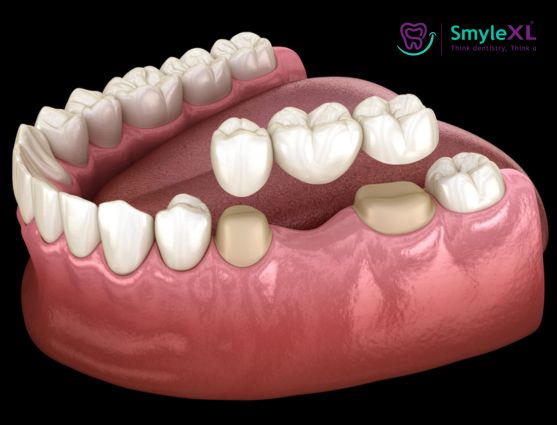
A dental bridge is a fixed restoration designed to replace one or more missing teeth. A traditional bridge generally uses crowns on neighbouring supporting teeth to hold an artificial tooth in the gap.
By filling the space left by missing teeth, a bridge can help restore chewing function, improve smile appearance, and reduce the likelihood of neighbouring teeth drifting into the gap.
Before recommending a bridge, the dentist evaluates the supporting teeth, gum condition, bite alignment, and available bone support. Traditional bridges may require reshaping the neighbouring teeth, so patients should understand the benefits and limitations before beginning treatment.
Depending on the clinical situation, other options may include removable partial dentures or dental implants.
Crown and Bridge Treatment in Chitradurga: What to Expect
Patients considering crown and bridge treatment in Chitradurga can begin with a dental consultation to identify the underlying problem and discuss suitable treatment options.
The process generally includes the following stages:
- Dental examination: The dentist assesses the damaged or missing teeth, gums, and bite.
- Treatment planning: Suitable restorative options and materials are discussed.
- Tooth preparation: The affected tooth or supporting teeth are prepared when required.
- Impressions or digital scans: Measurements are taken to help create a properly fitted restoration.
- Temporary restoration: A temporary crown or bridge may be placed if needed.
- Final fitting: The dentist checks the restoration’s fit, bite, comfort, and appearance before securing it.
The number of appointments and overall duration depend on the complexity of the case, the restoration type, and whether other dental procedures are necessary.
Patients should ask about the expected costs, material options, treatment alternatives, and follow-up care during the consultation.
How to Maintain Dental Crowns and Bridges
Proper oral hygiene is essential after restorative treatment. Although crown and bridge materials do not develop tooth decay themselves, the natural teeth supporting them can still develop cavities. Plaque can also accumulate around the gumline and contribute to gum disease.
To help maintain your restoration:
- Brush twice daily with fluoride toothpaste.
- Clean carefully around the edges of crowns and along the gumline.
- Use dental floss or suitable interdental cleaning aids.
- Clean beneath a dental bridge with a floss threader or another recommended device.
- Avoid biting hard objects that could damage the restoration.
- Attend regular dental check-ups and professional cleanings.
- Contact your dentist if the restoration becomes loose, cracks, or causes persistent discomfort.
The lifespan of crowns and bridges varies depending on the material, oral hygiene, bite forces, and condition of the supporting teeth. Consistent care can help maintain their function.
Finding the Right Dentist for Crown and Bridge Treatment
When searching online for a Dentist Near Me, patients should look beyond convenience and consider the dentist’s qualifications, experience, proposed treatment plan, hygiene practices, and follow-up arrangements.
A dental consultation helps identify whether a crown, bridge, filling, implant, or another restoration is appropriate. Patients should also feel comfortable asking questions about treatment steps, material choices, expected results, and maintenance.
Those interested in improving the appearance of their teeth may also explore a
Cosmetic Dentistry Clinic that provides suitable restorative and aesthetic dental options. However, cosmetic considerations should always be balanced with oral health and functional requirements.
Choose SmyleXL Trusted Dental Clinic for Your Dental Care
Choosing a SmyleXL Trusted Dental Clinic can be a starting point for patients who want to understand their restorative dental options and receive guidance tailored to their needs.
SmyleXL Dental Clinic provides patients with an opportunity to discuss concerns involving damaged teeth, missing teeth, and smile restoration. During a consultation, patients can ask about dental crowns, bridges, available materials, and the maintenance required after treatment.
For individuals considering dental crown and bridge treatment in Chitradurga, a professional evaluation can help determine the most appropriate approach based on their oral health and treatment goals.
Whether the priority is restoring a weakened tooth, replacing a missing tooth, or improving the appearance of a smile, the right treatment plan should focus on comfort, function, and long-term oral health.
Frequently Asked Questions
1. What is the difference between a dental crown and a dental bridge?
A dental crown covers and protects an individual tooth, while a dental bridge replaces one or more missing teeth using suitable supporting structures.
2. Which is better: porcelain or zirconia dental crowns?
Both materials have advantages. Porcelain may be preferred for particular aesthetic requirements, while zirconia is valued for its strength. The appropriate choice depends on the tooth’s position, bite forces, and clinical condition.
3. How long do dental crowns and bridges last?
Their lifespan varies according to the material, oral hygiene, bite forces, and condition of the supporting teeth. Regular check-ups and proper cleaning help maintain restorations.
4. Is crown and bridge treatment painful?
Local anaesthesia is commonly used during tooth preparation when needed. Some temporary sensitivity or gum soreness may occur afterwards. Persistent or severe pain should be assessed by a dentist.
5. Can a dental bridge replace more than one missing tooth?
Yes, certain bridge designs can replace multiple missing teeth. The suitability depends on the number and location of missing teeth and the condition of the supporting structures.
6. How do I know whether I need a dental crown?
A dentist can examine the tooth and determine whether a crown, filling, onlay, or another treatment is appropriate. The recommendation depends on the extent of damage and the remaining natural tooth structure.
Conclusion: Rebuild Your Smile with the Right Dental Care
Damaged or missing teeth can affect everyday comfort, chewing, and confidence, but suitable restorative treatments can help address these concerns. Understanding the benefits and limitations of different crown materials and dental bridge options is an important step towards making an informed decision.
consider consulting SmyleXL Dental Clinic to discuss your dental concerns and learn about appropriate treatment options. With individualised treatment planning, good oral hygiene, and regular follow-up care, dental restorations can help support a healthier, more functional smile.
Source : Smylexl.com