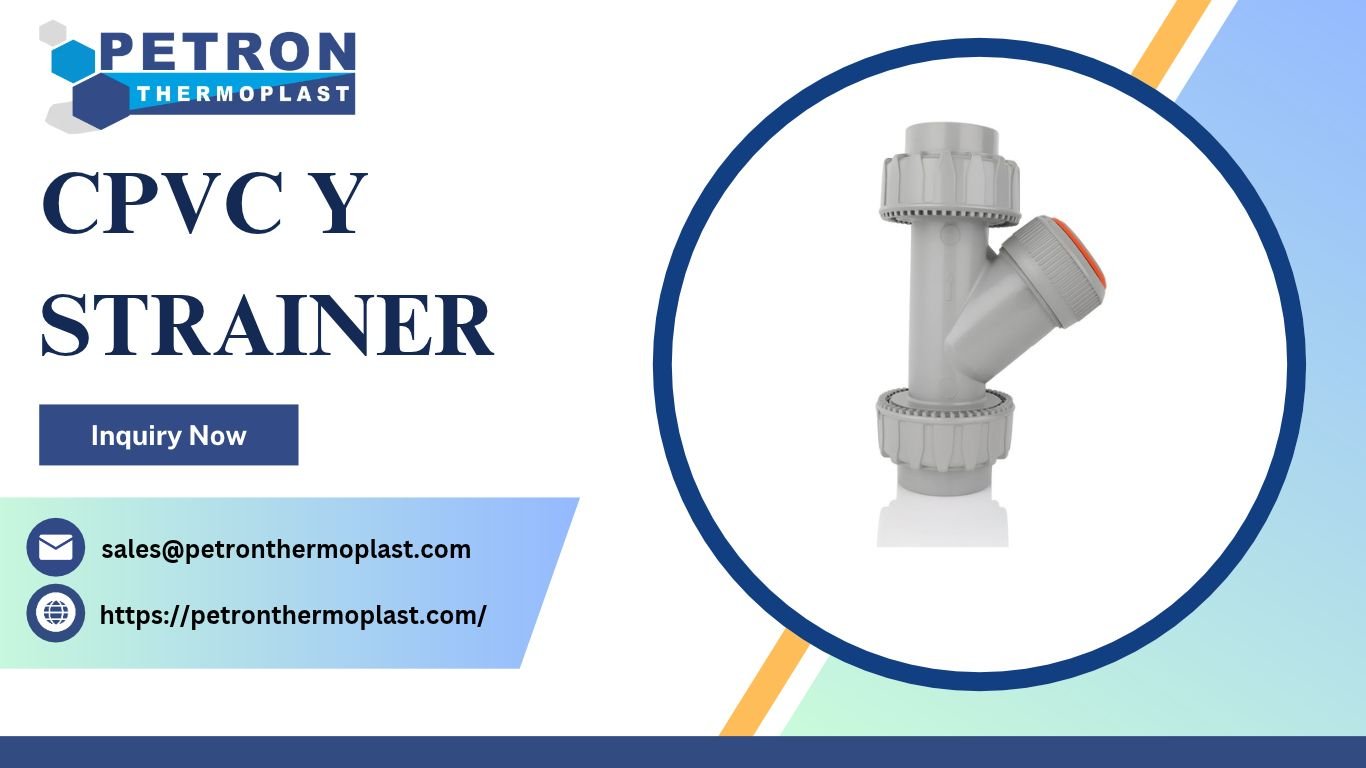
A CPVC Y Strainer is an important component in industrial piping systems where solid particles and debris need to be removed from a flowing liquid. It helps protect downstream equipment such as pumps, valves, and process components from unwanted particles. However, the performance of a CPVC Y Strainer depends not only on its material and screen size but also on its correct flow direction and installation position.
Incorrect installation may reduce filtration efficiency, create unnecessary pressure loss, or make maintenance difficult. For this reason, engineers and installation teams should understand the correct orientation of a Y Strainer before fitting it into a pipeline.
Petron Thermoplast manufactures industrial CPVC Y strainers for suitable piping applications. This guide explains CPVC Y Strainer flow direction, installation position, and important practices to consider during industrial pipeline installation.
What Is a CPVC Y Strainer?
A CPVC Y Strainer is a mechanical filtration component made from chlorinated polyvinyl chloride. It is designed to capture suspended particles from compatible fluid systems.
The strainer has a Y-shaped body with an internal screen or mesh. As liquid passes through the body, solid particles are retained by the screen while the filtered fluid continues through the pipeline.
CPVC is selected for suitable industrial applications because of its corrosion resistance and properties as an engineering thermoplastic. The correct material selection depends on the chemical composition, concentration, operating temperature, and pressure of the fluid.
Common components of a CPVC Y Strainer include:
- CPVC strainer body
- Removable screen or filter element
- Strainer cap or cover
- Sealing arrangement
- Inlet and outlet connections
Understanding CPVC Y Strainer Flow Direction
Flow direction is one of the most important factors during Y Strainer installation.
Most Y Strainers have an arrow or flow-direction marking on the body. This marking indicates the direction in which the fluid should travel through the strainer.
During installation, the pipeline flow should match the arrow marked on the strainer body.
If the strainer is installed in the opposite direction, the internal screen may not function as intended. Reverse installation can also affect pressure loss, filtration performance, and the way collected particles remain inside the strainer chamber.
Before installation, check the following:
- Identify the inlet and outlet connections.
- Locate the flow-direction arrow.
- Confirm the direction of fluid movement in the pipeline.
- Match the strainer arrow with the actual flow direction.
- Verify the manufacturer’s installation instructions.
Never assume that the direction of the Y-shaped body alone determines the correct flow direction. Always follow the product marking and technical documentation.
Correct Installation Position of a CPVC Y Strainer
The installation position depends on the pipeline layout, fluid type, strainer design, and maintenance requirements.
- Horizontal Pipeline Installation
A CPVC Y Strainer is commonly installed in a horizontal pipeline. In liquid applications, the strainer chamber is generally positioned downward so that collected particles can settle inside the screen area.
This arrangement helps retain debris in the strainer pocket and supports convenient inspection and cleaning.
Before installation, ensure that:
- The flow arrow points in the correct direction.
- The strainer pocket has sufficient clearance.
- The pipeline is properly supported.
- The cover can be accessed for maintenance.
- The installation follows the manufacturer’s instructions.
The exact orientation should always be confirmed against the specific strainer design.
- Vertical Pipeline Installation
A Y Strainer may also be installed in a vertical pipeline when the product design and application permit it.
For vertical installation, the direction of flow is particularly important. The arrangement should allow particles to collect in the strainer chamber rather than being carried directly into downstream equipment.
Vertical installation is not suitable for every piping arrangement. Before selecting this position, confirm the manufacturer’s guidance for the intended fluid and flow direction.
Avoid installing a strainer in a vertical line simply because the available space is limited. The installation must support proper filtration and safe maintenance.
- Installation Near Pumps and Valves
CPVC Y Strainers are often used upstream of equipment that requires protection from solid particles.
For example, a strainer may be installed before a pump, control valve, or other sensitive process component, provided the system design supports that arrangement.
The installation location should allow:
- Suitable access for inspection
- Space for screen removal
- Proper pipeline support
- Safe isolation during maintenance
- Adequate flow conditions
Step-by-Step CPVC Y Strainer Installation Guide
Correct installation helps support reliable filtration and reduces the risk of connection problems.
Step 1: Check the Product Specifications
Before installation, verify the strainer size, material, connection type, pressure rating, temperature limit, and screen specification.
Confirm that the selected CPVC Y Strainer is suitable for the fluid and operating conditions.
Step 2: Inspect the Strainer
Check the body, screen, sealing components, and connections for visible damage.
Do not install a cracked, damaged, or contaminated fitting without technical evaluation.
Step 3: Prepare the Pipeline
Clean the pipeline and remove loose debris that may enter the strainer during installation.
Ensure that the pipe ends and connection surfaces are suitable for the selected joining method.
Step 4: Confirm the Flow Direction
Locate the arrow on the strainer body and compare it with the pipeline flow direction.
Install the strainer so that the fluid enters and exits through the correct connections.
Step 5: Select the Suitable Position
Choose a horizontal or vertical installation position according to the manufacturer’s instructions and the piping layout.
For many liquid systems, a horizontal installation with the strainer pocket facing downward is commonly used. Confirm this arrangement for the actual product.
Step 6: Connect the Strainer Correctly
Use the approved connection method, such as socket, threaded, or flanged connection, according to the product design.
Follow the recommended joining procedure and avoid excessive force during installation.
Step 7: Support the Pipeline
Provide suitable supports to prevent unnecessary loads on the strainer body and connections.
The strainer should not be used to support unsupported pipe sections or heavy equipment.
Step 8: Inspect Before Commissioning
Before starting the system, check the connection, flow direction, support arrangement, and maintenance clearance.
Follow the plant’s approved commissioning and leak-testing procedures.
Common CPVC Y Strainer Installation Mistakes
Incorrect installation may affect the performance and maintenance of the piping system.
Common mistakes include:
- Installing the strainer against the marked flow direction
- Positioning the strainer pocket incorrectly
- Ignoring manufacturer installation instructions
- Using an incompatible connection method
- Applying excessive tightening force
- Leaving the pipeline unsupported
- Installing the strainer where screen removal is difficult
- Operating beyond the approved pressure or temperature limits
Maintenance Considerations After Installation
A CPVC Y Strainer requires periodic inspection because collected particles can gradually restrict the screen.
Maintenance teams should monitor:
- Pressure drop across the strainer
- Changes in flow rate
- Unusual operating conditions
- Leakage around connections
- Screen condition and accumulated debris
Before cleaning, isolate the relevant pipeline section and follow the plant’s safety procedure. Depressurise and drain the system as required.
Remove and clean the screen only according to the manufacturer’s instructions. Inspect the sealing components before reassembly and ensure that the strainer is correctly installed after maintenance.
The cleaning frequency depends on the amount of debris in the fluid and the operating conditions of the system.
Why Choose Petron Thermoplast for CPVC Y Strainers?
Petron Thermoplast manufactures industrial thermoplastic products for suitable piping and process applications.
Our CPVC Y Strainer product range is intended for industrial buyers looking for filtration components for compatible piping systems.
When enquiring about a CPVC Y Strainer, provide the required size, connection type, screen specification, fluid details, operating pressure, and temperature.
This information helps the product requirements be reviewed more accurately for your industrial project.
Conclusion
Correct CPVC Y Strainer flow direction and installation position are essential for effective filtration and reliable piping operation.
Before installation, check the flow arrow, select a suitable position, confirm the connection method, and provide adequate maintenance clearance. Horizontal installation with the strainer pocket facing downward is commonly used in liquid systems, but the final orientation must follow the manufacturer’s instructions and actual product design.
Regular inspection and cleaning help maintain the strainer’s performance and reduce the risk of blockage. Petron Thermoplast manufactures industrial CPVC Y strainers for suitable piping applications. Contact the team with your project specifications to discuss your product requirements.
Frequently Asked Questions
- What is the correct flow direction for a CPVC Y Strainer?
The fluid should flow in the direction indicated by the arrow marked on the strainer body. Always follow the manufacturer’s installation instructions.
- Can a CPVC Y Strainer be installed vertically?
Vertical installation may be possible when permitted by the product design and application. Confirm the correct flow direction and orientation before installation.
- Should the Y Strainer pocket face downward?
For many horizontal liquid piping applications, the strainer pocket is positioned downward to help collect debris. Confirm the correct orientation for the specific product.
- Where should a CPVC Y Strainer be installed?
It is commonly installed upstream of equipment that needs protection from solid particles, such as pumps or valves, where the system design permits.
- What happens if a Y Strainer is installed in the wrong direction?
Incorrect flow direction may affect filtration performance, pressure loss, and debris collection. The strainer should be installed according to the marked flow direction.
- How often should a CPVC Y Strainer be cleaned?
Cleaning frequency depends on the fluid’s particle content, operating conditions, and pressure drop. Inspect the screen according to the plant maintenance schedule.
- How can I request a CPVC Y Strainer quotation from Petron Thermoplast?
Send your required size, quantity, connection type, screen specification, and application details to sales@petronthermoplast.com or submit an enquiry through the website.