Introduction
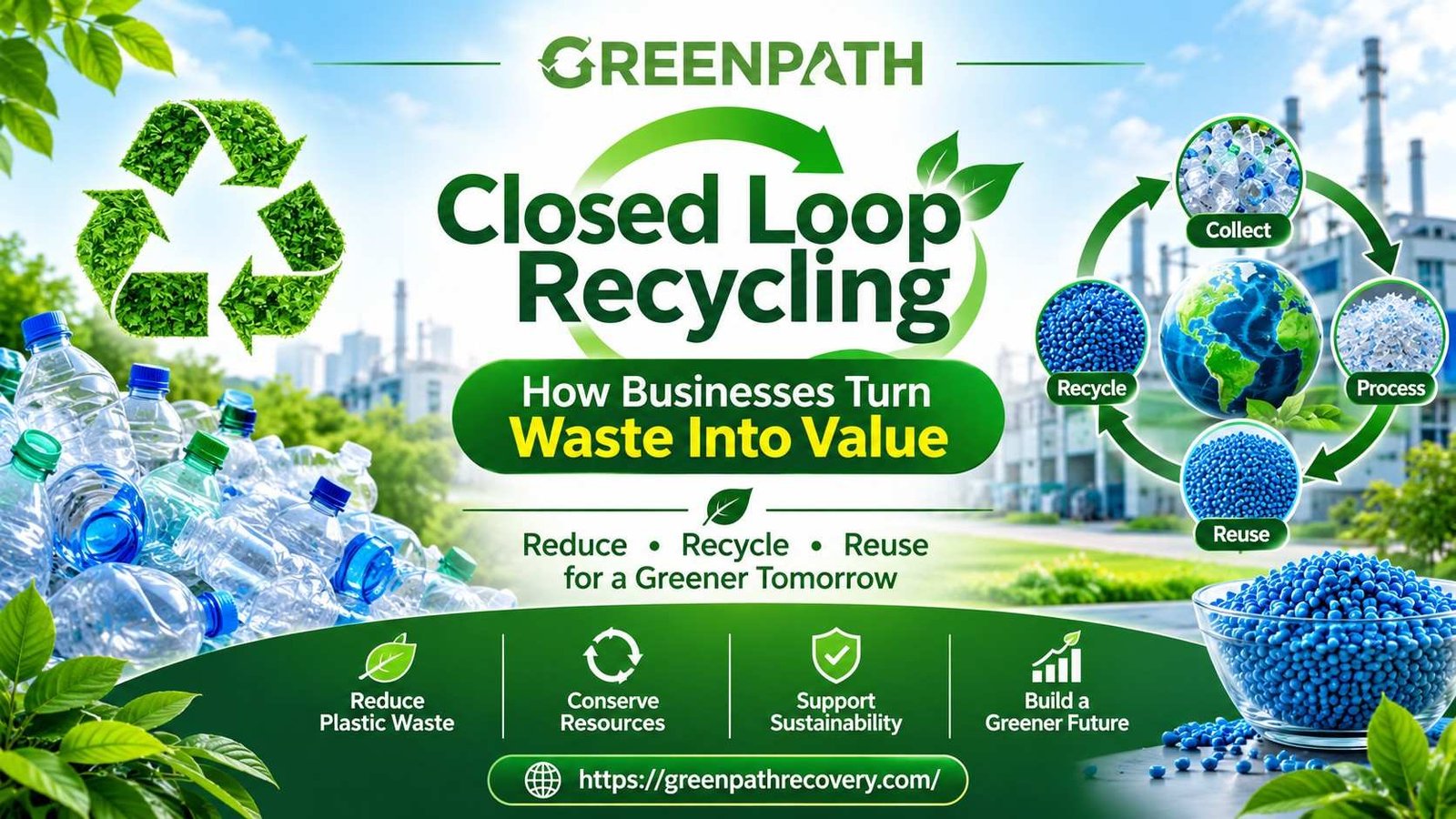
Closed Loop Recycling is a sustainable waste-management process in which used materials are collected, processed, and reused to manufacture new products. It helps businesses reduce plastic waste, conserve raw materials, and support a circular economy by keeping valuable resources in use for longer. Through the recovery of materials such as Recycled PP Plastic, Recycled HDPE Plastic, and PCR rHDPE, manufacturers can incorporate suitable recycled materials into their production processes instead of relying entirely on virgin plastics.
For commercial businesses, this approach goes beyond traditional waste disposal. It creates opportunities to improve resource efficiency, strengthen sustainability initiatives, and recover value from discarded materials. With an effective recycling program and the right recycling partner, businesses can build more responsible supply chains while contributing to a more sustainable manufacturing industry.
What Is Closed Loop Recycling?
Closed Loop Recycling is a process in which recovered materials are collected, processed, and reused to manufacture new products, ideally within the same or a similar production cycle.
Unlike traditional disposal methods, this system aims to prevent valuable resources from becoming waste. For example, used plastic packaging can be collected, sorted, cleaned, and processed into recycled resin. Manufacturers can then use that material to produce new packaging or other suitable plastic products.
The process generally involves five stages:
- Collection: Used materials are collected from businesses, consumers, or commercial facilities.
- Sorting: Materials are separated according to their type, composition, and recycling requirements.
- Processing: Recovered materials are cleaned, shredded, and prepared for further processing.
- Manufacturing: Processed materials are converted into usable recycled raw materials or products.
- Reuse: Manufacturers incorporate these materials into new products, helping maintain the resource cycle.
The main objective is to extend material lifecycles, reduce unnecessary disposal, and support more responsible resource management.
Why Is Closed Loop Recycling Important for Businesses?
Businesses generate different types of waste through packaging, manufacturing, distribution, and everyday operations. Without a structured recovery system, many reusable materials may be sent for disposal instead of being returned to productive use.
Closed Loop Recycling provides an organized way to recover these materials and create opportunities for reuse.
Some important benefits include:
1. Reducing Plastic Waste
Plastic waste is a major challenge for businesses that rely on packaging and plastic-based manufacturing materials. Recycling programs help recover suitable plastic materials and redirect them toward productive applications.
By improving collection and material separation, companies can reduce the quantity of recoverable plastic sent to landfills or other disposal facilities.
2. Supporting Resource Efficiency
Manufacturing new products often requires virgin raw materials. Recovered plastics can provide an alternative source of material when they meet the required quality and performance standards.
For example, Recycled PP Plastic and Recycled HDPE Plastic can be incorporated into suitable manufacturing applications, depending on their specifications and intended use.
3. Supporting Corporate Sustainability Goals
Many organizations establish sustainability targets related to waste reduction, recycled content, and responsible sourcing.
A properly managed recycling strategy can help businesses measure material recovery, improve waste-management practices, and demonstrate progress toward their environmental objectives.
4. Creating Value From Recoverable Materials
Materials that were previously considered waste may have value when properly collected and processed.
Businesses can explore opportunities to recover suitable plastic streams and redirect them toward recycling markets. This changes the way organizations view waste management, making material recovery an important part of operational planning.
How Do Recycled PP Plastic and Recycled HDPE Plastic Support Circular Manufacturing?
Different plastic polymers have different properties, making material identification and separation essential for successful recycling.
Two commonly recovered plastic materials are polypropylene (PP) and high-density polyethylene (HDPE).
Recycled PP Plastic
Recycled PP Plastic is produced by recovering and processing polypropylene products. PP is commonly used in packaging, containers, caps, automotive components, household products, and industrial applications.
After collection and sorting, suitable polypropylene materials can be cleaned, shredded, and processed into recycled flakes or pellets.
Manufacturers may use Recycled PP Plastic in applications where its properties meet the required technical specifications.
Its potential benefits include:
- Recovering valuable polypropylene materials.
- Supporting recycled-content manufacturing.
- Reducing dependence on virgin polypropylene.
- Providing alternative material options for suitable products.
- Helping businesses improve plastic waste recovery.
Recycled HDPE Plastic
HDPE is a durable thermoplastic commonly used in bottles, containers, pipes, packaging, and industrial products.
Recycled HDPE Plastic is created by recovering used HDPE products and processing them into material suitable for further manufacturing.
Depending on the quality and processing requirements, recovered HDPE can be converted into flakes, regrind, or recycled pellets.
For manufacturers, Recycled HDPE Plastic can support applications that require suitable strength, durability, and chemical resistance.
What Is PCR rHDPE and Why Does It Matter?
PCR rHDPE refers to recycled high-density polyethylene derived from post-consumer sources. These materials originate from plastic products that have already been used by consumers and subsequently collected for recycling.
The process generally includes collection, polymer identification, sorting, washing, size reduction, and reprocessing.
PCR rHDPE is valuable because it provides manufacturers with an opportunity to incorporate post-consumer recycled content into suitable products.
However, material quality is essential. Factors such as contamination, color consistency, processing conditions, and mechanical properties influence whether the recovered resin is suitable for a particular application.
Businesses should evaluate supplier specifications and conduct appropriate material testing before introducing PCR rHDPE into production.
How Can Businesses Implement an Effective Recycling Program?
Establishing a successful recycling program requires proper planning, material identification, and collaboration with experienced recycling partners.
Here are some practical steps businesses can follow:
1. Conduct a Waste Assessment
Identify the types of plastic materials generated throughout your business operations. Review packaging waste, production leftovers, containers, and other recoverable materials.
2. Separate Materials Correctly
Different polymers should be separated to minimize contamination. Keeping polypropylene and HDPE streams distinct can improve material recovery and processing efficiency.
3. Establish Collection Procedures
Introduce clearly identified collection points and communicate sorting requirements to employees, suppliers, and relevant stakeholders.
4. Work With Experienced Recycling Partners
Choose a recycling partner with the appropriate capabilities for handling, sorting, and processing your specific material streams.
5. Monitor and Measure Results
Track the volume of materials collected, the quantity recovered, contamination levels, and the amount successfully directed toward recycling.
These measurements help businesses identify opportunities to improve their recycling performance over time.
What Should Businesses Look for in a Recycling Partner?
Selecting the right recycling partner is essential for maintaining a consistent and effective material recovery program.
Businesses should evaluate several factors before choosing a provider:
- Experience in commercial plastic recycling.
- Knowledge of different polymer types.
- Appropriate sorting and processing capabilities.
- Material quality-control procedures.
- Collection and transportation arrangements.
- Transparent documentation and reporting.
- Ability to support long-term recycling requirements.
A reliable partner should understand the specific needs of a business and help identify practical opportunities to recover valuable materials.
For companies handling polypropylene and HDPE waste, access to suitable processing solutions can help improve the recovery of Recycled PP Plastic and Recycled HDPE Plastic.
The Future of Closed Loop Recycling in Commercial Industries
The future of sustainable manufacturing depends partly on how effectively businesses manage resources throughout their supply chains.
Advancements in plastic sorting, recycling technologies, and material processing are creating new opportunities to recover and reuse different polymer types.
As manufacturers explore recycled-content alternatives, materials such as PCR rHDPE, polypropylene, and HDPE can contribute to more resource-efficient production systems when properly processed and matched to application requirements.
Businesses that invest in structured recovery programs can also strengthen relationships with suppliers and customers who prioritize responsible material management.
Ultimately, Closed Loop Recycling is not simply about disposing of less waste. It is about creating a system in which recoverable materials retain their value and continue serving useful purposes.
Frequently Asked Questions (FAQs)
1. What is the main purpose of Closed Loop Recycling?
The main purpose of Closed Loop Recycling is to recover used materials and return them to manufacturing or other productive applications. This helps reduce waste, conserve resources, and support a circular material economy.
2. What materials can businesses recycle through a closed-loop system?
Businesses can recover various materials, including polypropylene, HDPE, cardboard, metals, glass, and certain packaging materials. The available options depend on material condition, local infrastructure, and recycling capabilities.
3. What is the difference between Recycled PP Plastic and Recycled HDPE Plastic?
Recycled PP Plastic comes from recovered polypropylene products, while Recycled HDPE Plastic comes from recovered high-density polyethylene products. Both have different chemical and physical properties and are used in different manufacturing applications.
4. Is PCR rHDPE suitable for manufacturing?
Yes, PCR rHDPE can be suitable for various manufacturing applications when its quality, consistency, and technical properties meet the requirements of the intended product.
5. How can a business start a closed-loop recycling program?
A business can begin by assessing its waste streams, separating recyclable materials, establishing collection procedures, selecting a qualified recycling partner, and monitoring material recovery results.
Conclusion
Modern businesses need practical approaches to reduce waste while making better use of available resources. Closed Loop Recycling offers a structured solution by connecting material recovery with manufacturing and reuse.
From Recycled PP Plastic to Recycled HDPE Plastic and PCR rHDPE, recovered materials can support more sustainable production when they are properly collected, processed, and evaluated.
GreenPath Recovery supports the broader goal of responsible commercial recycling by helping businesses recognize the value of recoverable materials and explore opportunities for improved resource management.
Building a more sustainable business starts with changing how materials are managed. By investing in effective recycling programs and responsible material recovery, organizations can turn waste into an opportunity for long-term environmental and operational value.