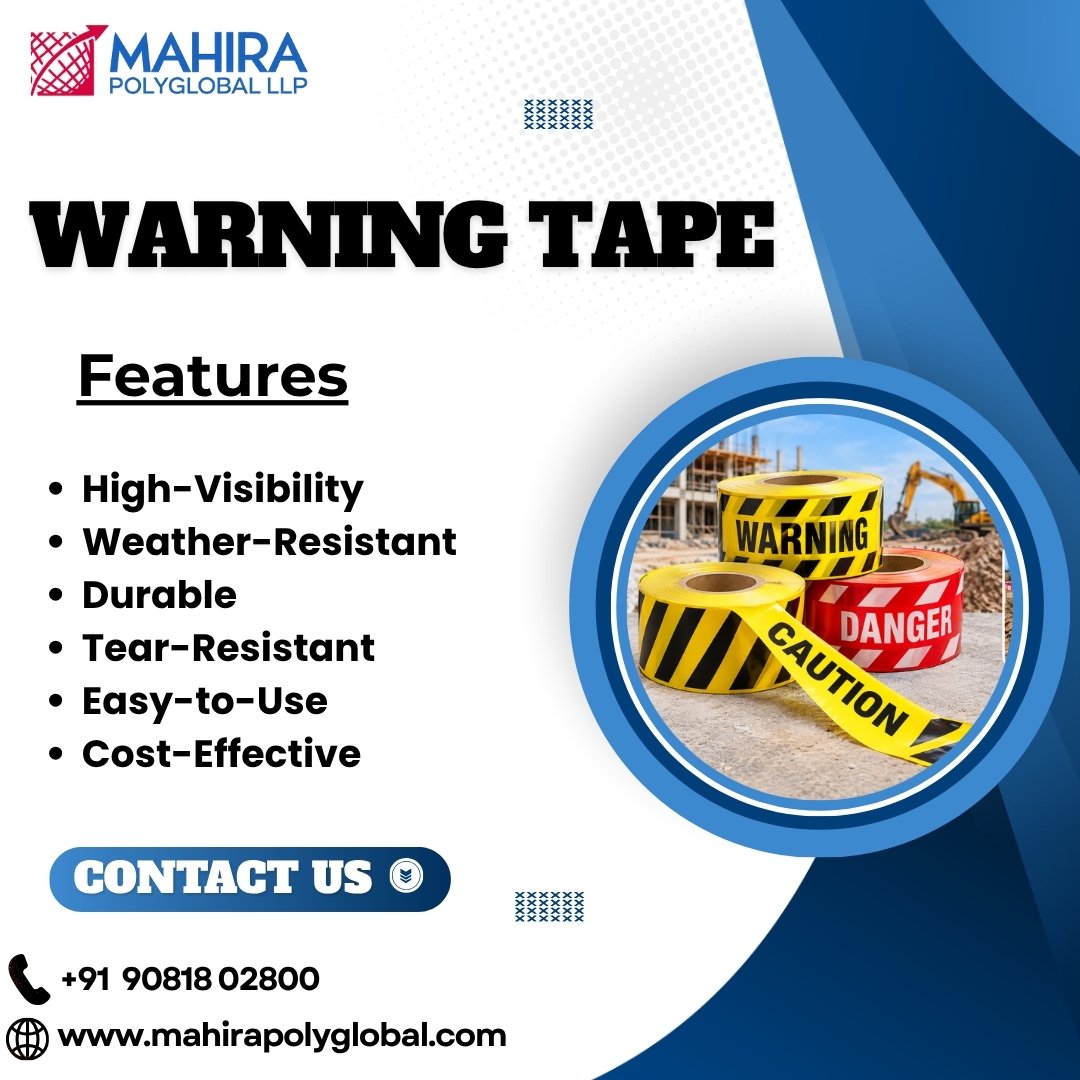
Warning tape is an essential product used for identifying dangerous sites, areas that are off limits, areas that have underground utilities, and other places that need extra care. This product enables individuals to see whether there are some hazards in a certain location. It can be used in a variety of areas including construction projects, industrial facilities, public areas, and electrical installations among others. Warning tapes are made of flexible and water-resistant plastics such as polyethylene. The colors of the tapes vary depending on the hazards they want to warn people about. Red color, for instance, is used to signify electrical hazards, and yellow is used to denote general caution. Users can choose different colors depending on the needs of the project including blue and others. Warning tapes may seem very simple products but they are actually essential for accident prevention.
Manufacturing Process and Quality Factors
The manufacturing process of Warning Tape usually includes materials preparation, extrusion, printing, and cutting. During manufacturing, it is necessary for manufacturers to check thickness, surface quality, color homogeneity, clarity of printing, and rolling. All these factors can be important to make sure the manufactured product will comply with all requirements for its use. Companies looking for Warning Tape Manufacturer Gujarat may consider the specifications of the product, its size, material quality, and printing features before making their decision. The film is cooled down and prepared for printing. Information concerning safety, signs or any other required information is printed on the surface using adequate printing techniques. After printing, the tape is cut and wound into rolls in accordance with the required size.
Various Kinds of Warning Tape for Safety Purposes
There are various kinds of warning tape available to cater to the needs of construction, industrial, electrical, and infrastructure projects. Non-detectable warning tape is the most common one which is used for marking underground pipelines, cables, and utilities. It offers visibility during excavation process and ensures no accidental damage occurs to them. The detectable warning tape is provided with a metallic strip or conductive strip which is detected through proper detecting tools. Such kind of warning tape becomes appropriate for those projects where it becomes necessary to identify underground utilities. The barricade tape is yet another widely preferred kind of warning tape which is mostly used for preventing access to hazardous areas and temporary sites. Printed messages like Caution, Danger, or Do Not Enter are usually printed on it.
Materials and Features that Contribute to Good Performance
The material of the Warning Tape directly influences its durability and longevity. The most common material used is polyethylene due to its lightness, flexibility and applicability both indoors and outdoors. The warning tape must be able to endure the forces applied to it during usage and should be strong enough not to tear apart. Its print and color should be retained during normal operation. In case the tape will be used outdoors, it should also be resistant to sunlight, moisture and other weather conditions. The UV-resistance of the warning tape can help to prevent fading of print under exposure to sunlight for long periods.
Common Applications within Construction and Industrial Sectors
Warning Tape finds application at construction sites, road construction, factories, warehouses, electrical work, and infrastructure projects. In construction, warning tapes are used in order to demarcate restricted areas, zones of excavations, and areas that require caution while working. In road construction projects, warning tape could be used to segregate zones of construction from movement of pedestrians or vehicles. Electrical contractors could use customized tapes to mark underground cable routes. Warning tapes could also be used for water supply projects, gas pipelines, and communications networks to mark presence of buried services.
Choosing the Right Warning Tape for Project Requirements
While choosing the proper Warning Tape for your project requirements, there are several factors to consider such as the application of the tape, location where it will be installed, and the conditions to which the Warning Tape will be exposed. In case of underground utility marking, it is important to find out whether detectable or non-detectable tape is needed. If the application is temporary barricading, flexibility, visibility, printing on the tape, and roll length could be important. Wider tape could provide good visibility in certain cases, whereas specific thickness is required in other instances. Those companies that need a reliable Warning Tape Supplier Gujarat should examine samples and other aspects of the products including printing. The outdoor projects may require Warning Tapes that are suitable to specific UV and weather conditions. At the same time, other conditions may be relevant to indoor applications.
Storage, Handling, and Installation Procedures
Correct storage and installation ensure the quality and efficiency of Warning Tape. It is necessary to store rolls of the tape in a clean and dry area and protect them from direct sunlight and extreme heat. They need to be stored in an environment free of dust, punctures, and pressure. It is crucial to determine the exact area of tape installation and consult project specifications prior to installation. When it comes to underground use of the tape, it is necessary to install it at a specified point above the utility line, considering the relevant project specifications. It must not be used as an alternative to the official means of marking or safe excavation procedures.
Conclusion
Warning tape is a useful safety product to be used for construction, infrastructure, electrical, industrial, and utility works. Bright colors and printed messages on the tape will help in informing about hazards, designating restricted areas, and labeling underground utilities. There are several kinds of such products available – from detectable tape to barricade tape. However, it is crucial to choose the suitable tape depending on such characteristics as quality, visibility, durability, printing, and surrounding environment. It is also important to store, handle, and install the tape correctly in order to achieve better results.
Frequently Asked Questions (FAQs)
1. What are some uses of Warning Tape?
Warning tape is useful in identifying areas which might pose risks such as hazardous, restricted, underground facilities, construction, and caution areas.
2. What material types are used for Warning Tape manufacturing?
Polyethylene is the most popular one because of its lightness, flexibility, and ability to use indoors or outdoors. Selection of the material is defined by application needs.
3. What is the difference between detectable and non-detectable Warning Tape?
Detectable warning tape has a metal or conductive component that allows it to be detected using the proper equipment while non-detectable warning tape lacks the metal component and is only used for underground utility identification.
4. How do businesses know they are getting quality Warning Tape?
Businesses should consider material strength, thickness, width, consistency of colours and prints, UV resistance and length of the roll among other aspects.
5. Who is the largest manufacturer of Warning Tape?
There is no verified global information available which claims any one particular company to be the biggest manufacturer of warning tape. Mahira Polyglobal LLP is a company located in India which manufactures warning tapes for various applications like construction sites, infrastructure works, utility markings, etc. The following parameters should be kept in mind while choosing the right manufacturer of warning tape.