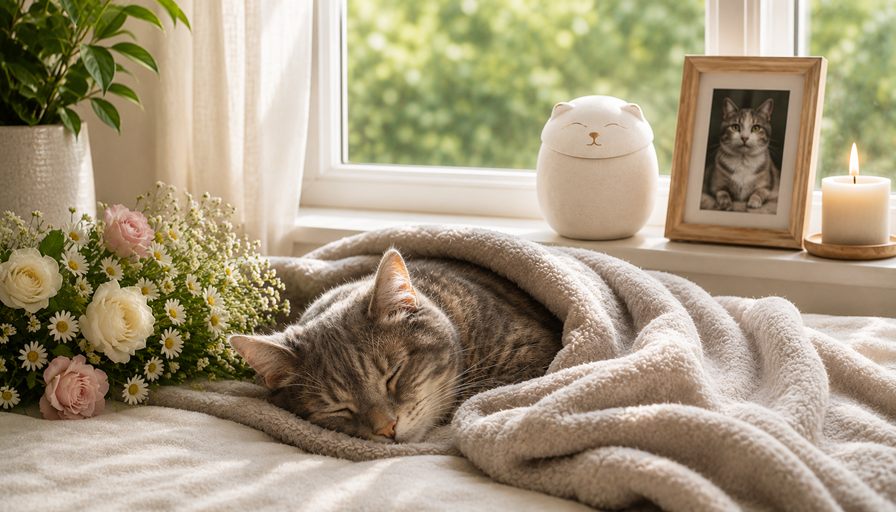
Cats are quietly woven into our daily lives, from the greeting at the door to the warm weight on the sofa. When one dies, the house can feel strangely empty. Whether your cat has died at home, at the vets or after an accident, this guide explains what to do first and how a cat funeral crematorium can help you plan a dignified farewell.
What to do first if your cat has died at home
It can be a shock, and you do not need to rush. These simple steps can help:
- Handle your cat gently, and consider wrapping them in a clean towel or blanket.
- Place them in a cool, quiet room away from radiators and direct sunlight, particularly in warm weather.
- Remember that the body will become stiff within a few hours, which is natural.
- Contact your vet or a cat funeral crematorium, who can explain the next steps and arrange collection if you wish.
If you have found a cat who is not yours, take them to a vet, who can scan for a microchip so the owner can be contacted.
If you are deciding about euthanasia
Making the decision to euthanise an ill or elderly cat is one of the hardest choices an owner faces. Your vet can discuss your cat’s quality of life and the options, including a home visit so that your cat can be in a familiar place. Once the decision has been made, the crematorium can usually collect from your home or vet.
How a cat funeral crematorium helps
A cat funeral crematorium gives you a respectful way to say goodbye and a choice about what happens next. When comparing providers, ask:
- Is the cremation individual, so the ashes are only your cat’s?
- Can you collect from my home or vet, and how quickly?
- Can I spend time with my cat before the cremation?
- What casket, urn or keepsake options are available for a smaller pet?
- What will the total cost be, including any out-of-hours charges?
Because cats are smaller than most dogs, the amount of ashes is smaller too, and compact urns, caskets and keepsake boxes are often the best fit.
Choosing a way to remember your cat
- Keep the ashes at home in a casket or urn near their favourite spot.
- Scatter or bury them in a garden or a place your cat loved.
- Plant a shrub or flowers as a living memorial.
- Ask about a paw print, a clipping of fur or paw print jewellery.
- Consider a personalised engraving with your cat’s name.
Practical things to remember
- Update your cat’s microchip database so that your details are current.
- Let your vet and pet insurance provider know.
- Be mindful of other cats in the household, who may look for their companion or seem unsettled.
Talking with children
Be clear and kind. Simple, honest words usually work better than euphemisms, which can confuse young children. Let them draw a picture, share a memory or help choose a keepsake if they would like to be involved.
An example of a personal service for cats
Phoenix Pet Cremations provides personal, individual, same-day cremations, with collection from your home or vet seven days a week and a private farewell room for owners who wish to bring their cat in. You can read how we care for cats on its website, or phone the team between 8.30am and 8.30pm to talk things through.
Grieving for a cat is real grief
Some people do not realise how deeply losing a cat can affect you. Grief for a pet is valid, and it is perfectly normal to feel sad, tearful or lost. Be patient with yourself, lean on people who understand and take the time you need. A thoughtful farewell, arranged with a cat funeral crematorium you trust, is a fitting tribute to a much-loved companion.