Introduction
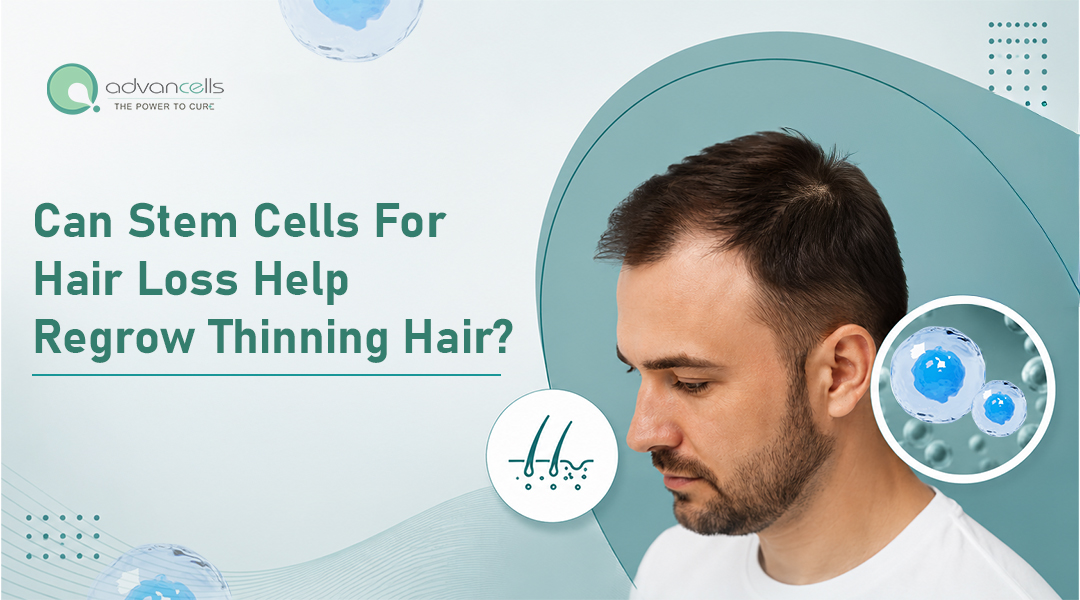
Hair loss is a common problem faced by millions of individuals globally. For some individuals, it becomes part of normal life, while for others, it causes psychological stress. For instance, a few extra strands on the pillow, or a widening part on the scalp appear.
Individuals opting for treating hair loss look for effective measures. Conventional treatment includes medications, PRP, and hair transplants, which are well established. In recent times, advanced regenerative medicine in the form of Stem Cell for Hair Loss has evolved as an effective measure. Hereby, let’s explore what science says about an innovative approach.
Why Does Hair Thin Over Time?
Common Causes of Hair Loss Include:
- Alopecia aerata
- Androgenetic alopecia
- Telogen effluvium
- Hormonal changes
- Nutrition deficiencies
- Side effects of medication or harsh products
How Hair Growth Cycles Affect Hair Density
Hair naturally follows hair cycles, that is, anagen (growth), catagen (transition), telogen (resting), and exogen (shedding). Disruption of these cycles and shifting of hair from the anagen to the telogen phase increases hair fall. Over time, this can make hair appear thinner and less dense.
This is where regenerative therapies aim to make a difference by helping create conditions that support healthier follicle activity.
What Are Stem Cells for Hair Loss?
Stem cells are often described as the body’s natural repair system. They have the unique ability to support tissue regeneration and healing, which is why researchers have become interested in their potential role in hair restoration.
Stem cell-based therapies do not magically create hair overnight. Instead, they work by releasing growth factors and signaling molecules that may help stimulate weakened or dormant hair follicles. The intent is to stimulate dormant hair follicles, support cellular communication, establish and improve the scalp environment, encourage follicle function, and support healthier hair growth. While research is still ongoing, early findings have shown promising potential in the field of regenerative hair restoration.
How Stem Cell Injections Are Administered?
The procedure is generally straightforward and minimally invasive. A stem cell-based product is carefully injected into areas of the scalp affected by thinning hair. In an outpatient setting the procedure is done and requires negligible downtime.
Patients can usually return to their normal activities soon after the session, making it an appealing option for those looking for alternatives to surgery.
Can Stem Cell Treatment Help Regrow Thinning Hair?
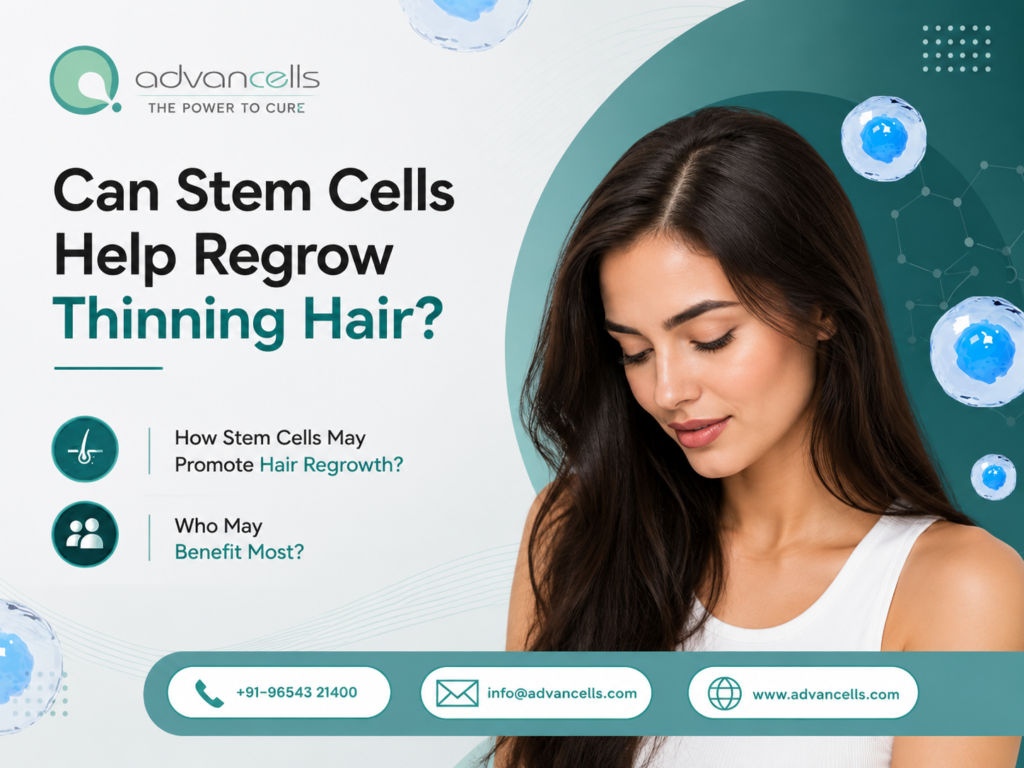
How Stem Cells May Promote Hair Regrowth?
The outcome of Stem Cell Treatment for Hair Loss in India varies among individuals. It depends on hair fall severity, stage, individual’s response, quality of the stem cell injected, cell source, or isolation procedure. Although results vary from person to person, stem cell therapy may help support hair growth in several ways. It can encourage inactive follicles to become more active, improve blood flow to the scalp, and create a healthier environment for hair-producing cells.
Who May Benefit Most?
Stem cell therapy is often considered for people in the early to moderate stages of hair loss. Those who still have active follicles may be more likely to benefit than individuals with extensive baldness, where follicles are no longer present.
It can also appeal to people who want a less invasive option than a hair transplant and are interested in regenerative approaches to hair restoration.
Umbilical Cord Stem Cells for Hair Loss: An Emerging Approach
Among the newer developments in regenerative medicine is the use of Umbilical Cord Stem Cells for Hair Loss. These stem cell-derived products come from donated umbilical cord tissue collected after healthy births. They are rich in bioactive molecules like growth factors, cytokines, signalling molecules, proteins, etc. that support tissue repair and regeneration.
Potential Benefits for Hair Regeneration
- Support regenerative signals, activate hair follicle stem cells
- Stimulates dormant hair follicles
- Promotes cellular communication and signalling activities
- Activates the repair mechanism, modulates the immune response and anti-inflammatory signalling
- Creates a healthier scalp microenvironment, promotes stronger, healthier and thicker hair
PRP and Stem Cell for Hair Loss: Why Are They Often Combined?
If you’ve been researching hair restoration treatments, you’ve probably come across PRP and stem cells for hair loss being offered together. PRP is derived from a patient’s own blood. After processing, the concentrated platelets contain growth factors that can help support healing and tissue repair. PRP stimulates follicles and improves scalp health.
Combination of PRP and Stem Cells
Dermatologists recommend PRP and stem cell-based therapies for their synergistic effect in hair restoration. Stem cells induce regenerative potential and facilitate repair of the damaged hair follicle. PRP delivers additional growth factors that support hair regrowth.
Stem Cell Treatment for Hair Loss in India: What to Know
India has become a hub for medical tourism globally, including the aesthetic sector, due to the availability of world-class infrastructure and experienced clinicians. Currently, stem cell treatment for hair loss in India has grown steadily, where individuals are exploring advanced hair restoration options. Regenerative therapies are now being offered by specialized clinics across the country, making these treatments more accessible than ever before. However, it is important to build realistic expectations and not fall for big promises. Consult the renowned clinic and discuss with experienced clinicians for possible outcomes and a personalized treatment plan.
Conclusion
Hair thinning experience can be overwhelming, but advanced regenerative medicine has created new possibilities for hair restoration. Stem cell injections for hair loss have emerged as a potential option to facilitate hair restoration naturally. The combination of PRP and stem cells for Hair Loss can enable a long-lasting outcome in hair restoration.