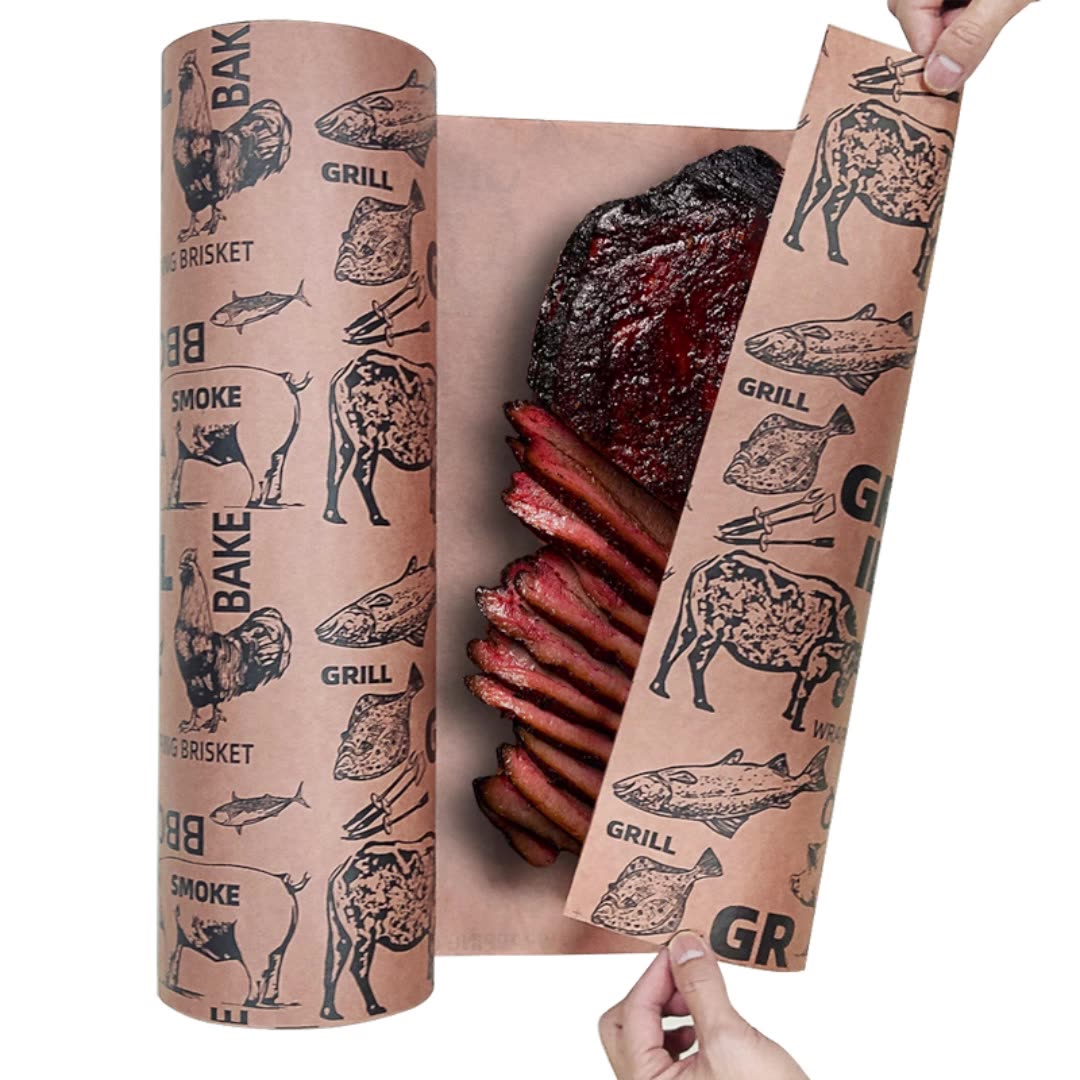
Some materials earn their place in professional kitchens through decades of reliable, unglamorous performance. No viral moment. No trend cycle. No influencer campaign. Just consistent, practical results across every context they are used in — until one day, the rest of the world catches up and realizes what serious food professionals have known all along. Butcher paper is exactly that kind of material.
From the worn wooden counters of old-school neighborhood butcher shops to the smoke-blackened prep tables of championship BBQ pitmasters, from the marble surfaces of Michelin-starred charcuterie stations to the stainless-steel prep benches of high-volume catering operations — butcher paper has been doing its job quietly, reliably, and brilliantly for longer than most modern packaging formats have existed.
And now, in 2025, it is having a moment. Not because anything about it has changed. Because everything around it has — and businesses are rediscovering that sometimes the oldest solution is still the best one.
What Is Butcher Paper and Why Does It Perform So Well?
Butcher paper is a heavyweight, food-grade kraft paper manufactured specifically for direct contact with raw and cooked meat, fish, and food products in professional butchery, food service, and food preparation environments. Its defining functional characteristics — high tensile strength, controlled moisture management, food-safe material composition, and reliable performance under the demanding conditions of professional food handling — are the product of a manufacturing process optimized over generations of practical use.
The paper is produced from virgin or recycled kraft pulp processed to a weight and density that gives it the structural robustness to handle wet, heavy food products without tearing, collapsing, or losing integrity under prolonged moisture exposure. This strength-to-weight ratio is what separates quality food grade butcher paper from lighter alternatives — it holds up under conditions that would destroy lesser materials.
White butcher paper and pink butcher paper are the two most widely recognized variants, and they serve meaningfully different purposes that experienced food professionals understand intuitively.
White butcher paper — manufactured from bleached kraft pulp — presents a clean, neutral surface that communicates hygiene and professionalism in retail display and food service contexts. It is the format of choice for deli counters, fish markets, specialty food retail, and any application where food presentation and visual cleanliness are primary considerations alongside functional wrapping performance.
Pink butcher paper — sometimes called peach butcher paper — is manufactured from unbleached or lightly processed kraft that gives it its characteristic warm, natural tone. This is the variant that BBQ culture has elevated to near-legendary status, and for genuinely good functional reasons that go far beyond aesthetics.
Pink Butcher Paper and the BBQ Revolution
The story of pink butcher paper and competitive BBQ is one of the most compelling examples of a traditional food material finding unexpected new relevance through genuine functional performance rather than marketing.
The technique of wrapping brisket and other large beef cuts in BBQ butcher paper during the smoking process — rather than aluminum foil, which had been the standard wrapping method for decades — emerged from Texas BBQ culture and spread through the competition circuit before reaching mainstream awareness. The reason was not tradition for tradition’s sake. It was results.
Aluminum foil wrapping, while effective at accelerating the cooking process and retaining moisture, creates a sealed environment around the meat that traps steam — softening the bark, the prized crispy exterior crust that represents hours of careful smoke management. Pink butcher paper wraps the meat, retains the majority of the moisture and heat that accelerates cooking through the notorious temperature stall, but remains breathable enough to allow the bark to maintain its integrity.
The result is smoked meat with the internal moisture and tenderness that foil wrapping produces, combined with the bark texture and smoke penetration that foil wrapping destroys. For pitmasters who spend twelve to sixteen hours managing a single brisket cook, that difference is not a minor technical detail — it is the entire point of the exercise.
This functional discovery traveled from competition pits to backyard smokers to restaurant kitchens to social media feeds, and BBQ butcher paper became one of the most searched and discussed food preparation materials among home cooks and professional chefs simultaneously. The material itself did not change. The audience that discovered its capabilities expanded dramatically.
Custom Butcher Paper: Brand Identity Meets Food Service Performance
The transition from generic butcher paper rolls to custom butcher paper printed with brand identity represents one of the most accessible and commercially effective packaging upgrades available to food businesses operating in butchery, deli, restaurant, and specialty food retail contexts.
Branded butcher paper bearing a business logo, brand colors, or signature design pattern transforms the functional wrapping material into a brand communication tool that works at every point of the customer journey. At the deli counter, custom butcher paper wrapping a freshly cut cheese or charcuterie portion communicates the shop’s identity and quality positioning at the moment of maximum customer engagement. On the restaurant table, branded butcher paper used as a tray liner or table covering creates an immersive brand environment that customers photograph and share. In delivery packaging, custom butcher paper wrapping a meal kit or specialty food order creates an unboxing moment that distinguishes the brand from competitors whose products arrive in anonymous generic packaging.
The print surface of custom butcher paper rolls accommodates a wide range of design treatments — from simple single-color logo prints on natural kraft backgrounds to full-color illustrated designs that communicate brand personality across every wrapped surface. The natural texture of kraft butcher paper creates a distinctive print aesthetic that no synthetic material can replicate — warm, tactile, and authentically artisan in a way that modern consumers respond to with genuine enthusiasm.
For food businesses building social media content strategies, branded butcher paper is a genuine asset. Food photography featuring products wrapped or presented on custom printed butcher paper generates organic engagement that generic packaging cannot. The combination of great food, distinctive custom wrapping, and natural material aesthetic creates imagery that performs across every social platform where food content drives discovery and purchase behavior.
Butcher Paper Rolls: Operational Efficiency Across Food Service
Butcher paper rolls are the standard supply format for professional food service operations — and for good operational reasons. Roll format delivers continuous sheet material that can be cut to any required dimension for any wrapping application without the waste that pre-cut sheet formats generate when product dimensions vary.
For high-volume butchery and deli operations processing hundreds of portions daily, wholesale butcher paper supplied in large-diameter rolls on dispenser systems allows rapid, efficient wrapping that keeps pace with peak service demand without creating material handling bottlenecks. The roll format also minimizes storage footprint relative to the total material volume supplied — a meaningful operational advantage in professional kitchen and food preparation environments where storage space is perpetually at a premium.
Roll width specification matters for operational efficiency. Standard roll widths accommodate the majority of individual portion wrapping applications encountered in butchery and deli service. Wider rolls serve table covering, large-format food preparation surface lining, and catering platter presentation applications where narrower formats require awkward overlapping that compromises both functional performance and visual presentation quality.
Sustainability Credentials of Modern Butcher Paper
The environmental profile of food grade butcher paper is genuinely strong relative to the plastic and foil wrapping alternatives it competes with in food service applications. Kraft paper is biodegradable under composting conditions, widely recyclable through standard paper recycling infrastructure, and produced from a renewable wood pulp resource that — when sourced from FSC-certified forest management programs — carries verified sustainable sourcing credentials.
For food businesses communicating environmental values to customers — artisan butchers, farm-to-table restaurants, organic food retailers, specialty food producers — wholesale butcher paper sourced from certified sustainable suppliers provides packaging credentials that align authentically with the brand values these businesses are built on. Customers who care about where their food comes from care equally about what it is wrapped in — and butcher paper from responsible sources answers both questions with the same honest, natural material.
Unbleached pink butcher paper carries particularly strong sustainability credentials — the absence of chlorine bleaching in its manufacturing process reduces both chemical inputs and effluent outputs relative to bleached white alternatives, making it the preferred specification for food businesses with rigorous environmental standards.
Choosing the Right Butcher Paper for Your Business
Selecting butcher paper at the right specification for your specific application requires honest evaluation of functional requirements before aesthetic or brand considerations are applied.
Weight specification — measured in grams per square meter — directly determines the paper’s strength, moisture resistance, and handling performance under your actual use conditions. Heavier weights handle wet, heavy products with greater confidence. Lighter weights wrap delicate items more easily without the bulk that heavier papers add to portion presentation.
For BBQ butcher paper applications, ensure the paper is certified food-safe for cooking contact applications — not all butcher papers are manufactured to the standard required for oven and smoker use where the paper is exposed to sustained high temperatures. This certification distinction matters for both food safety and cooking performance.
For custom food wrapping paper with logo applications, verify that printing inks and coatings are certified food-safe for your specific food contact context — direct meat contact applications have stricter requirements than packaging applications where the paper does not directly touch the food surface.
Conclusion
Butcher paper is one of those rare materials whose longevity in professional food service is not the product of inertia or habit. It has survived every wave of packaging innovation, every new synthetic alternative, and every shift in food service operational practice because it genuinely performs — reliably, consistently, and across a broader range of applications than any single-purpose packaging format can match.
In 2025, as food businesses rediscover the value of natural materials, authentic brand presentation, and sustainable packaging credentials, butcher paper stands as compelling evidence that the most enduring solutions are often the simplest ones — materials that do exactly what food businesses need, without complication, without compromise, and without apology.
Wrap with confidence. Present with authenticity. And trust the material that professional food businesses have relied on for generations — butcher paper that performs as honestly as the food it protects.