
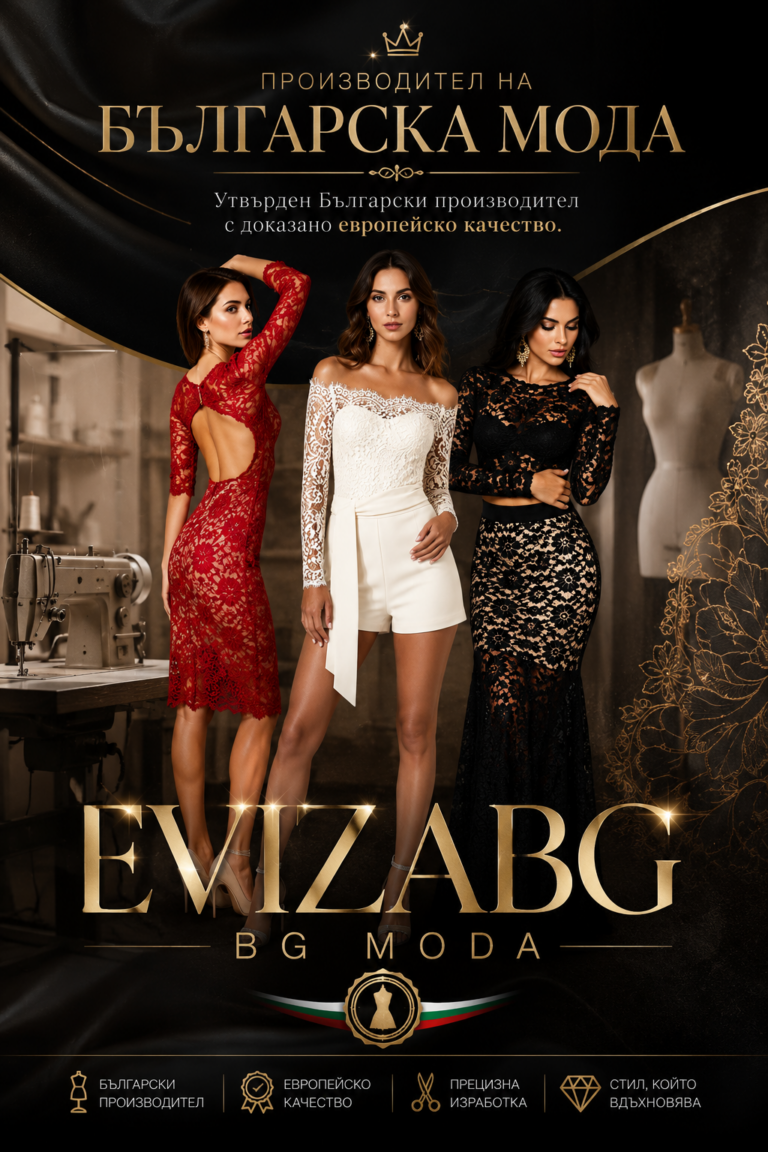
Introduction: The Unseen Magic Behind Bulgarian Fashion
When we stroll through the shops or browse fashion marketplaces, our attention is often drawn to the glamor of the display windows. We buy new clothes with ease, but rarely do we think about how much labor, precision, and large-scale coordination go into creating them. An elegant dress that we pass by after a quick glance, or a pair of trousers that we leave in the fitting room because they don’t fit, actually carry behind them the story of a long and complex creative journey.
Before reaching consumers and taking their place on the racks, clothes pass through a strictly mapped-out production process consisting of numerous stages. In modern Bulgarian manufacturing, this journey uniquely combines the traditional craftsmanship of local specialists with modern, high-tech automation. Behind the “EvizaBG” brand stands a perfectly oiled machine of dozens of professionals. Designers, patternmakers, garment technologists, cutters, and tailors work in absolute sync. Every department in the factory must be flawlessly coordinated so that the production cycle can run without a second’s delay, while the final product meets the highest European quality standards.
Bulgarian clothing manufacturers have long proven that Bulgarian fashion is in no way inferior to global brands. It offers the market not just apparel, but a combination of style, comfort, and sustainability. To understand the true value of what we wear every day, it is worth taking a look behind the scenes. Let us walk step by step through this exciting sewing process and trace how clothes are born in the factory – from the first stroke of a pencil on a sketch to the final seam on the finished product.
Stage 1: Design
To ensure that the clothing will be in demand, every new season begins with the creation of fashion collections. Designers work on sketches while considering the latest fashion trends and market demands. At this stage, the style, color scheme, and overall look of the future garment are defined.
Stage 2: Documentation
When you sew clothes at home, you can use ready-made patterns, estimate how much fabric you will need, and start sewing right away. However, in manufacturing, it is crucial to calculate everything with precision so you can purchase the exact amount of fabric, thread, and accessories for a production run. This is where clothing designers step in, creating patterns in various sizes, alongside technologists who develop the production process.
Stage 3: Sample Making
To ensure the accuracy of the calculations, a single sample garment is sewn. At this stage, the designer can make adjustments, add elements, or remove unnecessary details. The garment must fit well while maintaining the correct proportions and length. Samples from a new collection must be approved by a factory committee—typically consisting of fashion designers, technologists, and patternmakers—before moving into mass production.
Stage 4: Fabric and Accessories Purchasing
Once the sketch is approved and the required amount of fabric and accessories for the product is calculated, the procurement of all necessary materials begins. Purchasing managers usually work with wholesale fabric suppliers to buy high-quality materials and branded hardware at competitive prices.
The most popular types of fabrics by intended use are:
- Everyday wear;
- Evening wear;
- Sportswear;
- Outerwear;
- Underwear;
- School uniforms;
- Linings, etc.
In addition to fabric, garment sewing requires hardware, trimmings, and consumables: buttons and press studs, zippers and velcro, care labels and brand tags, lace, sequins, crystals, needles, and sewing threads. Once everything needed is in stock, the cutting department gets to work.
Stage 5: Cutting
While fabric used to be cut by hand, in modern garment manufacturing cutting is carried out automatically using specialized CNC machines. The operator loads the pattern program, secures the roll of fabric, and the cutting machine automatically slices the fabric according to the template. This process eliminates defects caused by human error, minimizes fabric waste, and requires less manual labor.
Stage 6: Assembly and Sewing
Only at the sixth stage does the most critical part of clothing manufacturing begin – the sewing process. The cut fabric pieces are sent to the sewing department, where all operations are also carried out on specialized machinery. Machine operators oversee the process and add the required materials. The machines do not only stitch the fabric together, but also perform finishing operations such as overlocking, buttonhole stitching, sewing on buttons and zippers, pleating, and more.
Stage 7: Quality Control
After sewing, every single unit undergoes quality control. Inspectors check the fit, seams, lining, color, patterns, and size conformity. This stage is essential for ensuring high product quality before shipping. Any defects found are corrected. If they cannot be fixed, the garment is rejected.
Stage 8: Steaming and Packaging
To ensure that the clothes are presented in market-ready condition, they pass under a steam press. After pressing, brand labels and hang tags indicating the brand, size, fabric composition, and batch number are attached. The garments are then packaged in bags, sorted by size, and boxed.
Stage 9: Marketing and Logistics
Customers will not know about a new clothing collection without promotion. Marketers send wholesale buyers promotional brochures with batch pricing and launch mailings to retail clothing stores to generate interest. Once contracts with wholesalers are signed, the packaged goods are delivered to their destination.
As you can see, the process of manufacturing clothing in a factory is a coordinated effort by many specialists. Every stage of garment production is important and directly impacts the final result. Ultimately, consumers receive high-quality, stylish, and comfortable clothing that leaves them satisfied with their new purchases.
What Methods and Equipment Are Used in Modern Clothing Production?
- Automated CAD/CAM Pattern Design Systems: Specialized software improves cutting accuracy and speeds up sewing preparation, which is especially vital for large production batches.
- Automated Sewing Workstations: Mechanical manipulators handle material feeding, automated stitching of components, and finishing operations, including attaching hardware like buttons and zippers.
- Automated Quality Control Systems: Enable rapid identification of defects at any production stage and their correction before the finished garment is shipped to the customer.
- High-Precision Hot Steam Pressing Technology: Used to eliminate creases and shape the garment flawlessly.
- Use of Eco-Friendly Materials: Fabrics made from recycled and organic materials, such as organic cotton or recycled polyester, are rapidly gaining popularity.
Who Works on Creating Clothes from Sketch to Finished Product?
- Fashion Designer: Conceptualizes the collection and creates the artistic vision for the garments and accessories.
- Patternmaker (Garment Construction Specialist): Transforms the designer’s ideas into technical drawings: creates technical sketches, constructs patterns, and adjusts them after fittings.
- Garment Technologist: Formulates the manufacturing sequence, determines sewing methods, and oversees the entire production cycle – from material quality inspection to final labeling.
- Spreader: Responsible for unrolling and laying out fabric in layers on the cutting table, marking them according to pattern dimensions, and monitoring ply height.
- Cutter: Cuts out fabric pieces and auxiliary materials based on the specified patterns (templates).
- Seamstress / Machine Operator: Operates specialized industrial equipment to stitch and assemble garments on an assembly line.
- Bespoke Tailor: Cuts, designs, and sews custom garments based on specific measurements and personal preferences of an individual client.
- Embroidery Machine Operator: Decorates fabrics and finished products with automated machine embroidery.
- Presser: Performs iron/steam operations: pressing, seam flattening, and final shaping of garment components.
- Quality Control Inspector: Examines textiles and finished garments at various production stages to ensure full compliance with standards.
Bulgarian Fashion: Specialized Areas in Bulgarian Garment Manufacturing
1. Dress Manufacturing (Formal, Evening, Everyday, and Winter Dresses)
Dress manufacturing is the most iconic and complex area in the factory, demanding mastery across a wide spectrum of technological processes. Collections are divided into four main pillars, each with specific material and structural requirements. Formal and evening gowns represent the pinnacle of tailoring craftsmanship; they utilize delicate, luxury fabrics such as chiffon, lace, tulle, and taffeta. Constructing them involves building in hidden corsets, complex boning, hand-pleated gathers, and precise detailing to ensure a flawless silhouette for special occasions. This process is slow and requires extreme precision during cutting to prevent delicate yarns from distorting.
On the opposite spectrum are everyday and winter dresses, where the top priorities are maximum comfort and freedom of movement. Casual designs rely on lightweight, breathable, and stretch fabrics like cotton jersey and viscose, stitched on high-speed production lines using flexible overlock seams. Winter dresses, on the other hand, undergo specialized processing of dense materials—heavy interlock, fine wool, cashmere, and knitted fleece. For these, technologists pay special attention to thermal insulation, collar and cuff finishes, as well as seam reinforcement to prevent fabric stretching during long-term wear.
2. Tunic Manufacturing (Classic and Beach Tunics)
Tunic production blends functionality with elegance, with the product range strictly divided between classic urban models and lightweight beach options. Classic tunics are designed as versatile apparel for everyday workwear or leisure, which is why they are crafted from durable, long-lasting materials like linen, viscose, denim, and low-elastane cotton. Their construction often includes more complex technical features such as side slits, plackets, decorative yokes, and refined collars that require precise pressing and interlining reinforcement.
In stark contrast, beach tunics follow an entirely different production workflow. They are sewn from ethereal, sheer, and quick-drying fabrics such as silk, chiffon, fine mesh, and lace. Cutting these slippery materials requires specialized vacuum tables to prevent layer shifting. Since these garments are worn directly over swimwear, final finishing calls for ultra-fine, soft threads and neat French or rolled hems that won’t irritate the skin and remain virtually invisible. Automated sewing machinery is calibrated to specific presser-foot tensions to prevent pucker along delicate seams during assembly.
3. Leather and Satin Goods Manufacturing
Handling specialized textile textures like faux leather and satin requires implementing fundamentally different technologies and machinery on the factory floor. Faux leather garment production (jackets, skirts, trousers, and accessories) is a unforgiving process where mistakes are unacceptable—every needle puncture leaves a permanent hole in the material. Therefore, pins are avoided, and pieces are fixed using specialized clips or adhesive tapes. Sewing machines are equipped with Teflon or roller presser feet to allow smooth feeding of the leather, utilizing thick, high-strength threads and specialized triangular cutting-point needles. Pressing operations are conducted at low temperatures with protective press cloths to avoid melting the polyurethane coating.
Conversely, satin manufacturing (luxury nightwear, pajamas, robes, and elegant blouses) is synonymous with delicate handling. Satin is a slick fabric that easily snags. Cutting is performed in low-ply stacks, and assembly relies on the finest micro-textured needles and threads. Operators work with heightened care to prevent staining or snagging the smooth surface, while finished items undergo gentle garment-steaming on dress forms.
4. Swimwear and Bodysuit Manufacturing
This production line is entirely driven by the requirements of high-stretch materials, demanding exceptional seam strength and ergonomics. Swimwear is produced using premium Lycra (elastane) and polyamide, which feature high resistance to chlorine, salt, and UV rays. Cutting here is fully automated via CNC systems that factor in the fabric’s stretch percentage across both length and width. Assembly utilizes specialized four-thread overlocks and flatlock machines (flat seams), making the seam stretchable along with the fabric without threads snapping under tension. The technology also incorporates edge-binding with silicone elastic bands and the precise installation of molded cups and underwires.
Bodysuit production follows similar standards, as these garments function like a second skin. They are sewn from fine cotton jersey, modal, or stretch lace. A critical phase is the bottom gusset processing—attaching the panel and accurately setting the closures (snap fasteners or hook-and-eye tapes). Leg opening and waist seams are finished with soft elastic bands, ensuring the product stays invisible under outer clothing while providing optimal comfort.
5. Blouse, Shirt, and Jumpsuit Manufacturing
This final major category encompasses casual and smart-casual fashion, where production volumes are highest and automation reaches its peak. Blouse and shirt production is characterized by quick style turnarounds and intricate detailing. For shirts, operators utilize automated conveyor setups for precise stitching of components like collars, cuffs, pockets, and plackets—which are pre-fused with high-grade interlinings. Specialized robotic units construct buttonholes and attach buttons in seconds with perfect accuracy. For blouses, depending on whether they are knitted or woven, distinct assembly lines handle sleeve setting and neckline binding.
Jumpsuit production, on the other hand, combines the structural characteristics of both tops and trousers into a single piece. This demands balanced proportioning at the waist and rise to guarantee comfort when sitting and moving. Technologists integrate systems of elastics, drawstrings, or concealed zippers into side seams or back panels. Every jumpsuit undergoes strict final inspections for leg and bodice symmetry, followed by comprehensive pressing under industrial steam presses prior to packaging.
6. Men’s and Women’s Bathrobe Manufacturing
The production of loungewear and spa bathrobes is a specialized discipline where the focus centers entirely on pattern ergonomics and the absorbent properties of the materials. Men’s and women’s bathrobe collections are developed using heavy, high-grade fabrics such as double-sided 100% cotton terry toweling, bamboo fibers, soft microfiber, and luxury velour. Cutting these bulky materials requires precise calibration of automated CNC cutters.
The process differs notably between genders: women’s robes often feature contoured silhouettes, soft hoods, delicate embroidery, and satin trims, whereas men’s designs focus on classic shawl collars, deep functional pockets, and a roomier, straight-cut construction suited to male anatomy. Assembly is performed on heavy-duty sewing machines using strong textured threads to ensure seam durability through frequent laundering and strain. Sewing belt loops and securing the tie belt is a critical structural step. All finished bathrobes pass through a final high-pressure steam treatment that opens up the fabric fibers, ensuring maximum softness and fluffiness prior to packaging.
Conclusion
Clothing manufacturing is a remarkable process where art meets engineering precision. Behind every successful model of the Bulgarian brand “EvizaBG” lies not just fabric and thread, but a complex chain of coordinated actions, high-tech innovations, and uncompromising quality control. From the delicate selection of fine satin and Lycra to the specific processing of heavy faux leather and winter textiles, the modern Bulgarian factory operates like a perfectly tuned machine.
Investing in automated CAD/CAM systems, CNC cutting machines, and laser-assisted quality control allows domestic production to set trends rather than merely follow them. Specializing across diverse sectors—from formal evening gowns to ergonomic swimwear and bodysuits—proves that Bulgarian fashion possesses the flexibility and capacity to satisfy even the most discerning tastes.
When we choose a garment labeled “Made in Bulgaria,” we invest in decades of tradition combined with modern environmental responsibility and European standards. Every finished detail, perfectly balanced jumpsuit, or delicately embroidered blouse is proof that the domestic fashion industry doesn’t just make clothing—it creates confidence, comfort, and lasting value for its customers.
Frequently Asked Questions (FAQ)
1. What is the difference between a fashion designer and a patternmaker?
A fashion designer creates the overall artistic concept, visual style, and initial sketch of the garment. A patternmaker takes that sketch and transforms it into a technical blueprint, drafting the exact patterns and measurements required to construct the piece.
2. Why is a sample garment sewn before starting mass production?
A sample is a test unit used to verify pattern accuracy, evaluate how the chosen fabric drapes, and ensure proportions are correct. It is reviewed by a factory committee to prevent costly mistakes and defects before releasing the garment into mass production.
3. What technologies are used in modern Bulgarian clothing factories?
Modern factories use specialized software for pattern drafting (CAD/CAM systems), automated CNC cutting tables with vacuum beds, robotic workstations for specific assembly steps, and high-precision steam presses for wet-thermal processing.
4. Why does processing faux leather and satin require special equipment?
Faux leather requires Teflon presser feet for smooth feeding and specialized triangular-point needles, as any mistake leaves a permanent hole in the material. Satin is extremely slippery and delicate, requiring fine micro-textured needles and threads to prevent thread pulling or snags.
5. How is garment quality guaranteed in the factory?
Quality control occurs in stages: incoming (inspecting raw materials), in-process (during sewing), inter-operational (checking semi-finished parts), and final acceptance (inspecting finished products using sensory and measurement techniques).
Challenges Facing Bulgarian Clothing Manufacturers
Despite high technological readiness and undisputed product quality, the survival and growth of Bulgarian garment manufacturers today are accompanied by several serious trials. The fashion industry in Bulgaria faces economic and administrative barriers that threaten its future.
Unfair Competition from Low-Quality Imports
One of the biggest blows to the domestic market is the massive influx of cheap, low-quality goods imported from China and Turkey. Bulgarian brands, such as “EvizaBG,” invest in certified materials, fair labor wages, and strict quality control, which shape the real cost of their products. At the same time, the market is flooded with textile items of questionable origin and lower standards, sold at unrealistically low prices. This dumping strategy puts Bulgarian enterprises at a severe competitive disadvantage.
Lack of State Protection and Support
Even though the textile sector is a traditional industry for the country providing thousands of jobs, Bulgarian manufacturers largely feel unsupported by the state. There are no adequate mechanisms to protect domestic production against the shadow economy and unchecked imports. Small and medium-sized sewing enterprises in Bulgaria receive no targeted state assistance, subsidies, or tax incentives—measures commonly applied in neighboring countries (such as Turkey) to boost local exports.
Overlooking the Social Contribution of Local Business
There is a stark paradox in the sector: Bulgarian factories create jobs, invest in the local economy, and pay taxes and social security contributions in Bulgaria, yet state policy does little to preserve this valuable capital. Rather than encouraging local entrepreneurship through streamlined procedures or preferential programs, Bulgarian manufacturers are frequently burdened by heavy administrative requirements.
Without a focused strategy to preserve domestic manufacturing, the Bulgarian fashion industry is forced into a daily struggle for survival, relying solely on customer loyalty and its own operational agility.
Advantages of Clothes Made in Bulgaria by Local Manufacturers
Against the backdrop of a dynamic fashion market and globalized mass production, choosing clothing labeled “Made in Bulgaria” offers a long list of undeniable advantages. Bulgarian manufacturers—prominently including the “EvizaBG” brand—successfully compete with global fashion giants by relying on three core pillars: centuries-old traditions, uncompromising material quality, and high social and environmental responsibility.
Rich Traditions and Craftsmanship
The textile and sewing industry in Bulgaria has deep historical roots. For generations, local master tailors, patternmakers, and seamstresses have passed down their expertise in precise cutting, flawless stitching, and balanced garment structure. Today, these traditions translate into exceptional technological know-how. Bulgarian patternmakers possess an intuitive understanding of the human body, allowing them to craft clothing with perfect, ergonomic fit. Buying a Bulgarian garment means receiving more than just a piece of fabric sewn on an assembly line—it is a product built on decades of craftsmanship and attention to detail.
Uncompromising Material Quality
Unlike cheap imports that rely on low-grade, synthetic, and often toxic fabrics, Bulgarian manufacturers source raw materials of proven origin and high quality. Factories work with premium organic cotton, fine viscose, high-strength Lycra for swimwear, and certified satin. These materials feel soft against the skin, offer maximum comfort all day long, and feature high durability. Garments maintain their color vibrancy, resist warping after repeated washes, and do not pill. Investing in Bulgarian clothing means investing in a sustainable wardrobe built to stand the test of time.
Ethical Production and High Responsibility
Choosing a domestic manufacturer is a conscious, responsible decision. Bulgarian factories operate under strict European regulations regarding labor safety and environmental protection. There is no labor exploitation—employees are provided with safe working conditions, regulated hours, and fair compensation.
Furthermore, purchasing locally made goods drastically reduces your carbon footprint, as transportation corridors to the end consumer are minimal. Last but not least, supporting Bulgarian brands directly stimulates the local economy, preserves jobs in the country, and helps foster a distinct Bulgarian fashion identity.