
Introduction
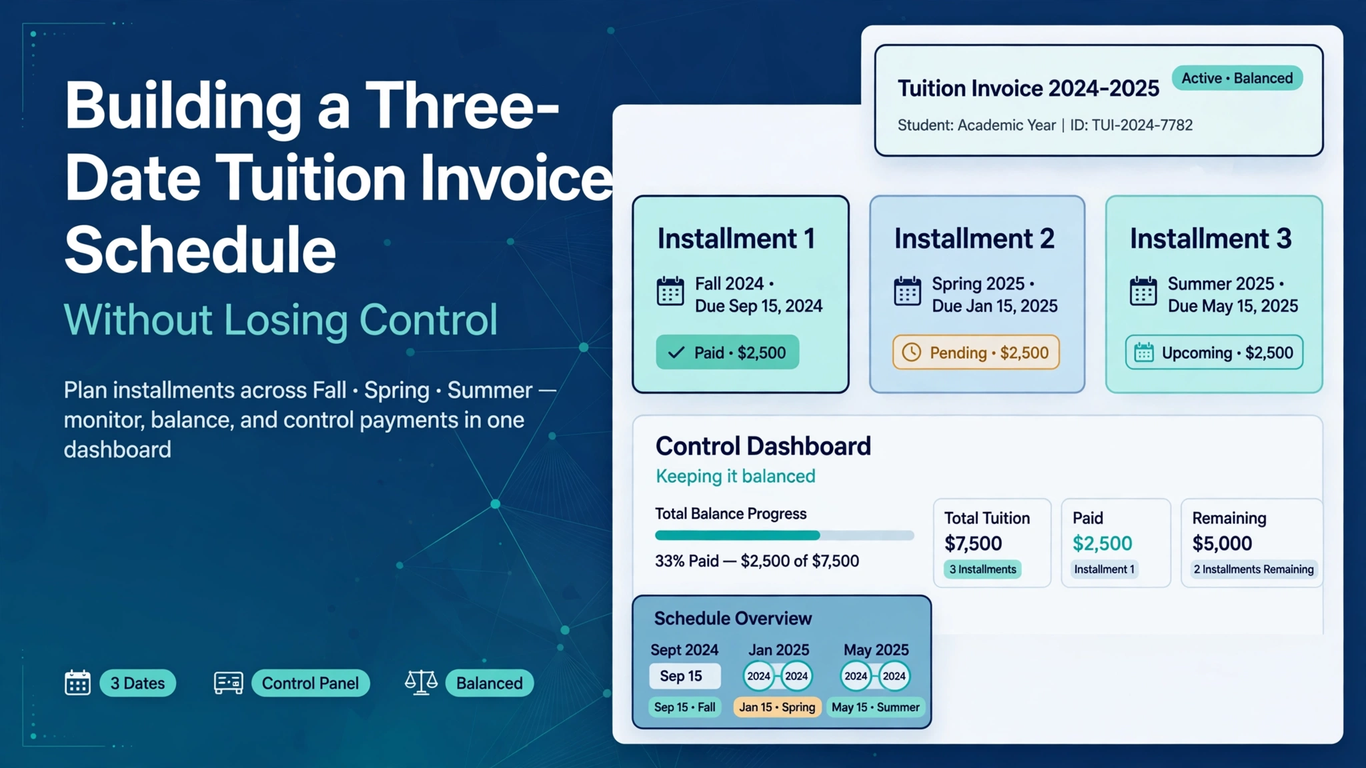
A university customer wants to pay one tuition invoice in three parts, matching grant releases in September, November, and January. At Tech Leads IT, we tell learners in our Oracle Fusion Financials Training sessions not to void the invoice or create three new ones. Keep the original amount and reshape the payment schedule through the REST interface instead.
The call is easy; the checks matter more. Whether you learn it through Oracle Fusion Financials Online Training or an Oracle Fusion Financials Course, get the customer’s written request, confirm the transaction date, review receipts and credits, and settle the three amounts.
Plan the Schedule First, the Way Oracle Fusion Financials Training Encourages
Say the invoice total is ninety thousand monetary units and the university proposes thirty thousand on each date. Treat that as a draft specification, not as permission to touch the record. The first job is arithmetic: the three amounts must add up to the transaction total exactly. Then check the calendar, because all three dates have to fall on or after the original transaction date. Write down which existing installment stays and which ones need to be created.
If the customer wants uneven amounts, keep the approved figures and run the same control-total check. And don’t quietly shove a rounding difference into the last installment unless someone has agreed to that rule. A single unit of mismatch can make the request fail. A wrong date is sneakier, because it can misstate when a balance should start showing up in collections follow-up.
Also ask who owns the decision. If the request came through a sales contact rather than the finance office, get written confirmation from someone who can actually commit the university to those dates.
Good Oracle Fusion Financials Training spends real time on this habit of defining the outcome before touching the system. It feels slow in a classroom exercise. On a live receivables ledger with a customer waiting, it is what separates a clean change from a cleanup project.
Why Rescheduling Is Not the Same as Reissuing an Invoice
It helps to be clear with everyone involved about what is actually happening. The university is not asking for a new bill. It is asking for a different rhythm of payment on a bill that already exists. That distinction shapes every decision after it. Voiding and recreating the invoice would break the history that auditors, collectors, and the customer’s own accounts payable team rely on. Creating three small invoices would split one agreement into separate debts, each with its own transaction number, and make reconciliation harder for everybody. Rescheduling keeps one invoice, one total, one trail. The installment schedule changes; the receivable doesn’t.
Explaining this to the customer early also saves trouble. A university finance office may match your invoice number against its grant records, and a new number can stall their own approvals. When the original number survives, their records still line up with yours, and the conversation stays about dates and amounts instead of paperwork.
Read the Current State Before You Write Anything
Start with a GET request that finds the invoice and returns its installment details. Don’t lean on the transaction number alone for the write. Keep the internal invoice identifier, each installment identifier, and the sequence information that comes back. Then compare the response with your schedule specification and with the balance the account shows on screen. Put the identifiers in your working notes right away; it is much easier to review a request later when the evidence of what you saw sits beside what you sent.
This read can surprise you. A receipt may have been applied after the university sent its request. An installment may have closed. Another user may already have nudged a due date. When the response doesn’t match your assumptions, stop and recalculate. Forcing the original plan onto a changed record is how small mistakes get made.
Timing matters too. Keep the retrieval and the proposed change close together. The interface may not offer a business lock that removes every concurrency risk, so an old snapshot can turn a valid-looking schedule into the wrong decision. Think of the GET as a photograph of a moving street: useful only if you act before the traffic changes.
Apply the Split with Explicit Controls in Oracle Fusion Financials Online Training
The Oracle guidance titled Receivables Invoice Installment Creation Using a REST API describes a two-stage pattern. Use GET to find the invoice, installment identifiers, and sequence. Then call the split Installments custom action, which can create a new installment or update an existing installment’s amount or due date. In the university case, build the request from verified identifiers, not hand-typed substitutes. Spell out each intended amount and date, and make sure every new installment amount is greater than zero. The whole schedule, retained installment included, must equal the invoice transaction amount. You are reshaping one controlled balance, not adding a second debt.
This is the kind of exercise that works well in Oracle Fusion Financials Online Training, because learners can see the request, the rules, and the result side by side. Before submission, have a second person or an automated rule compare outgoing amounts, dates, identifiers, and installment count with the approved three-part request.
Some conditions should make you stop. A closed installment can’t be changed or deleted. An existing installment amount can’t drop below what has already been applied, so if thirty thousand is partly settled, the revised amount still has to cover it. The split isn’t available for certain states or categories, including incomplete items, items pending approval, balance-forward bills, and bills receivable. And no created or revised due date can fall before the transaction date.
Don’t work around these limits by creating disconnected records just to satisfy the requested calendar. Explain that the current state blocks the REST change, identify the legitimate process to resolve the state, and reassess afterward. The controls protect accounting meaning, even when they delay a customer-friendly schedule.
Check With Collections Before You Change an Installment
Updating an existing installment can cancel open promises tied to it in advanced collections. Picture a collector who spoke with the university last month and logged a promise to pay in full in October. If the installment changes underneath that note, the promise may disappear without anyone telling her.
So before changing anything, ask the collection owner whether an open promise exists and whether the new written request replaces it. Keep evidence of that decision in the normal case record. Don’t assume the API response tells the whole business story.
Afterward, the collector may need to set up a new promise through the proper process, but only if policy and the customer’s commitment support it. This small conversation prevents a strange split: receivables show the new schedule while collection staff chase an arrangement that no longer exists. It keeps all three dates tied to one accountable conversation, so technical success doesn’t erase useful context.
Verify the Result, Not Just the Response
A successful response means the service accepted the request. It doesn’t mean every business requirement was met. Run a fresh GET and inspect every installment. Confirm that the three intended lines exist, that the sequence makes sense, and that each amount and due date matches what the university approved. Add up the returned values and compare the sum with the transaction amount. Check that applied amounts are still supported and that no closed line was disturbed. A simple habit helps: keep a small worksheet with the approved plan on the left and the returned installments on the right, then tick off each row.
If the service produced an unexpected sequence, or kept a line you assumed would disappear, investigate before telling the customer anything. Save the request reference, response status, and post-change verification in the audit record, without unnecessary personal or payment information. This read-back catches mapping errors and stale-data decisions that a technically successful action may not make obvious.
Then look at what the customer and your own team will actually see. The account should show September, November, and January obligations while the original invoice total stays the same. Confirm that collection work uses the revised dates, and alert the assigned collector if an open promise was canceled. The customer message should list the three agreed amounts and dates, refer to the existing invoice, and avoid suggesting the transaction was reissued. It was rescheduled, nothing more.
If verification fails, resist patching values over and over. Re-read the current installments, work out whether a safe correction is allowed, and follow the exception procedure when it isn’t. Controlled recovery beats hurried updates, especially near a due date when receipts, credits, or approval changes can arrive between calls.
What an Oracle Fusion Financials Course Should Leave You With
For this university schedule, a good outcome is more than three lines on a screen. The team retrieves identifiers, confirms eligibility, respects closed and applied balances, sends positive amounts and valid dates, and proves that the returned installments equal the transaction total. It talks to collection staff, because revising an installment may cancel an open promise. And when an eligibility, concurrency, or verification question stays unresolved, it pauses and uses the exception path instead of guessing.
That sequence is worth memorizing: read the current state, validate the schedule, apply the supported custom action, read the result again, and communicate only what was verified. Anyone working through an Oracle Fusion Financials Course should be able to walk through it without notes. Done well, it gives the university a practical payment arrangement while preserving the original receivable and the evidence you need for later account decisions. The same discipline applies to the next split, whether it has two installments or six.