The position and shape of the eyebrows play an important role in facial expression and overall appearance. Even subtle differences in eyebrow height, curvature, or positioning can influence how the forehead and eye area look. For people considering a brow lift, understanding how these differences are assessed is an important part of planning treatment.
Brow Lift in London is a cosmetic procedure designed to address selected concerns relating to the position of the eyebrows and the surrounding forehead area. However, treatment planning involves more than deciding how much the eyebrows should be raised. A detailed assessment considers natural facial asymmetry, eyebrow movement, forehead structure, and the patient’s individual aesthetic goals.
At Bodyvie Clinic, a consultation provides an opportunity to discuss concerns about eyebrow position and understand which treatment options may be suitable. Assessing brow symmetry helps the surgeon develop an individualised plan that respects the patient’s existing facial features while considering the changes they would like to achieve.
Understanding Brow Symmetry and Facial Balance
Brow symmetry refers to the relationship between the position, shape, and contour of the two eyebrows. Although people often expect their eyebrows to look identical, some degree of natural asymmetry is common.
One eyebrow may sit slightly higher than the other, while differences in curvature or thickness can create the impression that the eyes are uneven. These variations may be influenced by facial anatomy, muscle activity, habitual expressions, and changes that occur over time.
During a brow lift assessment, the surgeon examines these characteristics to understand the patient’s natural brow position. The aim is not necessarily to create perfectly identical eyebrows, but to evaluate how each brow contributes to the overall appearance of the face.
Facial balance also involves the relationship between the eyebrows, eyes, forehead, and upper cheeks. A treatment plan that focuses exclusively on eyebrow height without considering these surrounding features may not reflect the patient’s broader aesthetic goals.
Understanding this relationship provides a foundation for discussing whether a brow lift could help address the patient’s concerns.
How Brow Symmetry Is Assessed During Consultation
A detailed consultation allows the surgeon to examine eyebrow position from different perspectives and identify the features that influence perceived asymmetry.
Comparing the Height of Both Eyebrows
One of the first considerations is the relative height of the eyebrows. The surgeon observes whether both brows sit at a similar level and whether one appears more elevated or lower than the other.
The assessment considers the brow position in relation to the eyes, the forehead, and other facial landmarks. Small differences may be part of the patient’s natural anatomy, whereas more noticeable variations may be contributing to the concern that prompted the consultation.
The surgeon also considers the amount of elevation that may be appropriate for each side. The objective is to establish a treatment plan based on the individual’s anatomy rather than assuming that both eyebrows require precisely the same adjustment.
Examining Eyebrow Shape and Curvature
Eyebrow symmetry is not determined by height alone. The shape and curvature of each brow can also affect facial expression.
For example, one eyebrow may have a more pronounced arch, while the other follows a relatively straight contour. Differences in the position of the inner and outer brow can also influence the overall appearance of the eyes.
During the assessment, the surgeon evaluates these variations and discusses which features are most important to the patient. This helps clarify whether the concern relates primarily to eyebrow height, shape, or the relationship between the brows and the surrounding facial structures.
Observing the Face From Different Angles
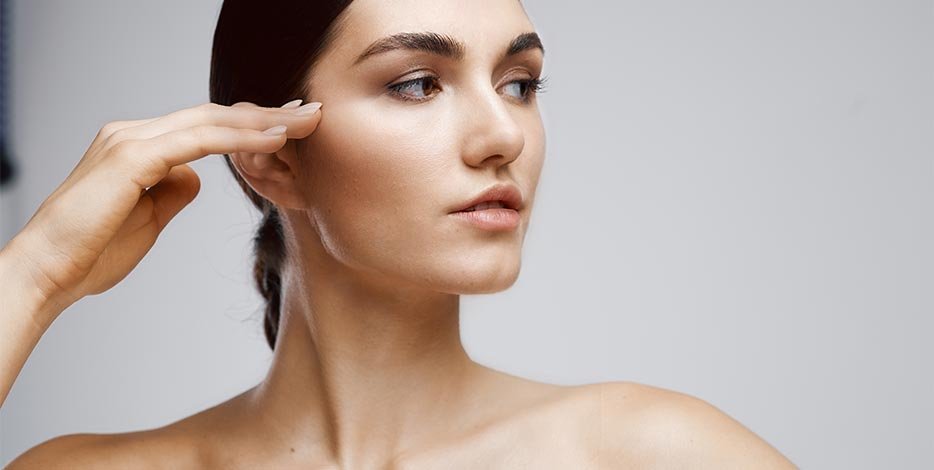
The appearance of the eyebrows can change depending on the viewing angle. A difference that is noticeable from the front may appear less pronounced from the side, while the forehead contour can influence how the brows are perceived in profile.
The surgeon may examine the face from the front and from different angles to understand the relationship between the eyebrows and the rest of the facial structure.
This broader assessment helps avoid basing treatment decisions on a single photograph or one particular facial expression. It also allows the surgeon to consider how the proposed changes may relate to the patient’s overall appearance.
The Role of Forehead Muscles in Brow Symmetry
Muscle activity is an important consideration when assessing eyebrow position. The muscles around the forehead and eyes contribute to the way the eyebrows move during everyday expressions.
Some people naturally raise one eyebrow more than the other when speaking, concentrating, or reacting to something. Others may unconsciously use their forehead muscles to lift the brows, particularly when the upper eyelids feel heavy.
These habits can influence the appearance of brow symmetry during a consultation.
Assessing the Brows at Rest
The surgeon examines the eyebrows while the face is relaxed. This helps establish the natural resting position of each brow without deliberately raised eyebrows or exaggerated facial expressions affecting the assessment.
The resting position provides useful information about the relationship between the eyebrows and eyes. It also helps distinguish structural differences from variations caused by active muscle movement.
Understanding the resting position is particularly relevant when discussing the degree of elevation that may be suitable for each side.
Evaluating Natural Facial Expressions
The eyebrows do not remain in one position throughout the day. They move during conversation, smiling, concentrating, and other expressions.
Observing these movements can help the surgeon understand whether an asymmetry is consistently present or becomes more noticeable during particular expressions.
This information contributes to a more complete assessment. It also helps establish realistic expectations, as a brow lift changes the position of selected tissues but does not eliminate every difference in natural muscle activity.
How Age-Related Changes Influence Brow Position
Changes in the forehead and eyebrow area can occur gradually over time. Skin elasticity, soft tissue distribution, and the position of surrounding structures may influence how the eyebrows sit on the face.
Some individuals notice that the outer part of the eyebrow appears lower than it did previously. Others become more aware of forehead lines or a heavier appearance around the upper eyelids.
These changes do not necessarily affect both sides equally. Differences in anatomy and muscle activity can mean that one eyebrow appears lower or has a different contour from the other.
During a Brow Lift Surgery London consultation, the surgeon considers these changes alongside the patient’s existing facial features. The assessment helps determine whether the concern is primarily related to brow position or whether other factors contribute to the appearance.
The patient’s age alone does not determine the most appropriate approach. Treatment planning depends on the individual’s anatomy, health, expectations, and suitability for the proposed procedure.
The Relationship Between Eyebrow Position and Upper Eyelid Appearance
The eyebrows and upper eyelids are closely connected in terms of appearance. A lower-set eyebrow can contribute to the impression of excess skin or heaviness around the upper eyelid, even when the amount of excess eyelid skin is limited.
Similarly, differences in brow height may make one upper eyelid appear more covered than the other.
For this reason, a brow lift assessment should consider the upper eyelids as well as the forehead. The surgeon evaluates whether the patient’s concern originates mainly from eyebrow position, upper eyelid skin, or a combination of these features.
Upper eyelid surgery and a brow lift have different purposes. Upper blepharoplasty addresses selected excess skin and tissues of the upper eyelids, while a brow lift focuses on the position of the eyebrows and related forehead tissues.
Understanding these distinctions helps the surgeon discuss which procedure may be appropriate. In some cases, an alternative approach may be more suitable than a brow lift alone.
The assessment should remain focused on the patient’s actual concern rather than assuming that every heavy-looking upper eyelid requires the same treatment.
How Individual Treatment Goals Shape the Assessment
Every patient has their own preferences regarding eyebrow shape and facial expression. Some want to address a noticeably lower eyebrow, while others are concerned about uneven arches or changes in the outer brow.
Discussing these goals helps the surgeon understand which aspects of symmetry matter most to the patient.
Identifying the Desired Degree of Elevation
Patients may have different expectations about how much the eyebrows should be raised. Some prefer a subtle adjustment that maintains their existing appearance, while others want a more noticeable change in brow position.
The surgeon discusses these preferences alongside the patient’s anatomy to establish what may be achievable. The proposed degree of elevation should reflect the individual’s facial proportions rather than follow a standard measurement for every patient.
This conversation helps ensure that the treatment plan is aligned with the patient’s priorities while remaining grounded in clinical suitability.
Maintaining Natural Facial Expression
Eyebrow position contributes to the way people express emotions. The shape and height of the brows can influence whether the face appears relaxed, alert, or surprised.
For patients considering a brow lift, preserving a natural-looking expression may be an important goal. The surgeon considers the existing brow contour and forehead characteristics when discussing the proposed changes.
A personalised approach aims to address the concern without treating symmetry as a requirement for identical eyebrows. The objective is to consider how the brows relate to the whole face and the patient’s preferred appearance.
Choosing a Suitable Brow Lift Approach
Once the assessment is complete, the surgeon can discuss the available surgical approaches and explain which may be appropriate for the patient.
Different brow lift techniques vary in incision placement, surgical method, and the areas of the brow they are designed to address. The choice depends on factors such as the location of the concern, forehead anatomy, hairline characteristics, and the degree of adjustment being considered.
For example, a patient whose main concern involves the outer eyebrow may require a different treatment discussion from someone whose concern relates to the overall position of both brows.
The surgeon also considers how the proposed approach relates to the patient’s natural asymmetry. Although treatment may improve the balance between the eyebrows, perfect symmetry cannot be guaranteed because facial structures and muscle activity naturally vary.
Patients should have the opportunity to understand the recommended technique, the intended changes, and the limitations of the procedure before making a decision.
What to Expect at a Brow Lift Clinic in London
At a Brow Lift Clinic in London, the consultation should provide enough time to explore the patient’s concerns and assess the features that influence eyebrow symmetry.
The process generally includes a discussion about the patient’s goals, an examination of brow position and forehead anatomy, and an assessment of the relationship between the eyebrows and upper eyelids.
The surgeon may also review relevant medical history, previous cosmetic treatments, current medications, and other information needed to determine suitability.
Patients can explain which differences they notice most and whether they have particular preferences about maintaining their natural brow shape. The surgeon then uses this information to discuss the potential benefits and limitations of the available options.
At Bodyvie Clinic, this consultation can help prospective patients understand how their facial features influence treatment planning. Asking questions and discussing expectations openly can make it easier to decide whether surgery is an appropriate choice.
Preparing for a Brow Lift Consultation
Preparing for a consultation does not need to be complicated. Patients can begin by identifying the specific features that concern them, such as uneven eyebrow height, differences in arch shape, or a lower outer brow.
It can also be useful to think about the changes they would like to achieve and the features they want to preserve. This helps make the discussion more focused and provides a clearer understanding of their priorities.
Patients should share relevant medical information and details of previous cosmetic treatments. They can also ask about the recommended surgical approach, expected outcomes, recovery arrangements, and the extent to which asymmetry may be improved.
Taking time to discuss these points supports informed decision-making. It also helps establish realistic expectations before treatment is considered.
Conclusion
Brow symmetry is an important part of assessing suitability for a brow lift. Differences in eyebrow height, curvature, muscle activity, forehead structure, and upper eyelid appearance can all influence the way the brows look in relation to the face.
For people considering Brow Lift in London, an individual assessment helps identify the source of the concern and determine which treatment approach may be appropriate. The aim is not necessarily to create identical eyebrows, but to consider a balanced appearance that respects natural facial characteristics.
At Bodyvie Clinic, a consultation provides an opportunity to discuss personal goals, review eyebrow position, and understand the available treatment options. By combining a detailed assessment with clear communication, patients can develop a better understanding of what a brow lift may achieve and make a decision based on their individual needs.
Frequently Asked Questions
1. Why is brow symmetry important when planning a brow lift?
Brow symmetry influences how the eyebrows relate to the eyes, forehead, and surrounding facial features. Assessing these differences helps the surgeon develop a treatment plan that considers the patient’s natural anatomy and desired outcome.
2. Are naturally uneven eyebrows common?
Yes. Minor differences in eyebrow height, shape, and curvature are common. These variations may result from natural facial anatomy, muscle activity, and habitual expressions.
3. Can a brow lift correct uneven eyebrows?
A brow lift may improve selected differences in eyebrow position. However, the degree of improvement depends on the underlying anatomy, the surgical technique, and individual healing. Perfect symmetry cannot be guaranteed.
4. How does the surgeon assess brow symmetry?
The surgeon examines eyebrow height, curvature, resting position, and movement during facial expressions. They also consider forehead anatomy and the relationship between the eyebrows and upper eyelids.
5. Can brow position affect the appearance of the upper eyelids?
Yes. A lower-set brow can contribute to a heavier appearance around the upper eyelids. An assessment helps determine whether the concern relates mainly to brow position, excess eyelid skin, or a combination of both.
6. Is a brow lift suitable for everyone with uneven eyebrows?
No. Suitability depends on the cause of the asymmetry, the patient’s anatomy, general health, and treatment goals. A consultation helps establish whether a brow lift or another approach may be more appropriate.
7. Will a brow lift change my facial expression?
A brow lift changes the position of selected tissues and can influence the appearance of the forehead and eyebrows. Treatment planning considers the patient’s natural features and desired expression, although individual outcomes vary.
8. How do I prepare for a brow lift consultation in London?
Think about the features you would like to address, the results you hope to achieve, and the aspects of your appearance you want to maintain. Sharing relevant medical history and previous cosmetic treatments also helps the surgeon assess suitability.
9. Can a brow lift be combined with upper eyelid surgery?
In selected cases, both procedures may be considered together. The decision depends on the patient’s anatomy, treatment objectives, and clinical assessment of the eyebrows and upper eyelids.
10. How long does recovery from brow lift surgery take?
Recovery varies according to the surgical technique and individual circumstances. Initial swelling and bruising may improve over the first few weeks, while the tissues continue to settle. The surgeon provides specific aftercare instructions and guidance on returning to normal activities.