
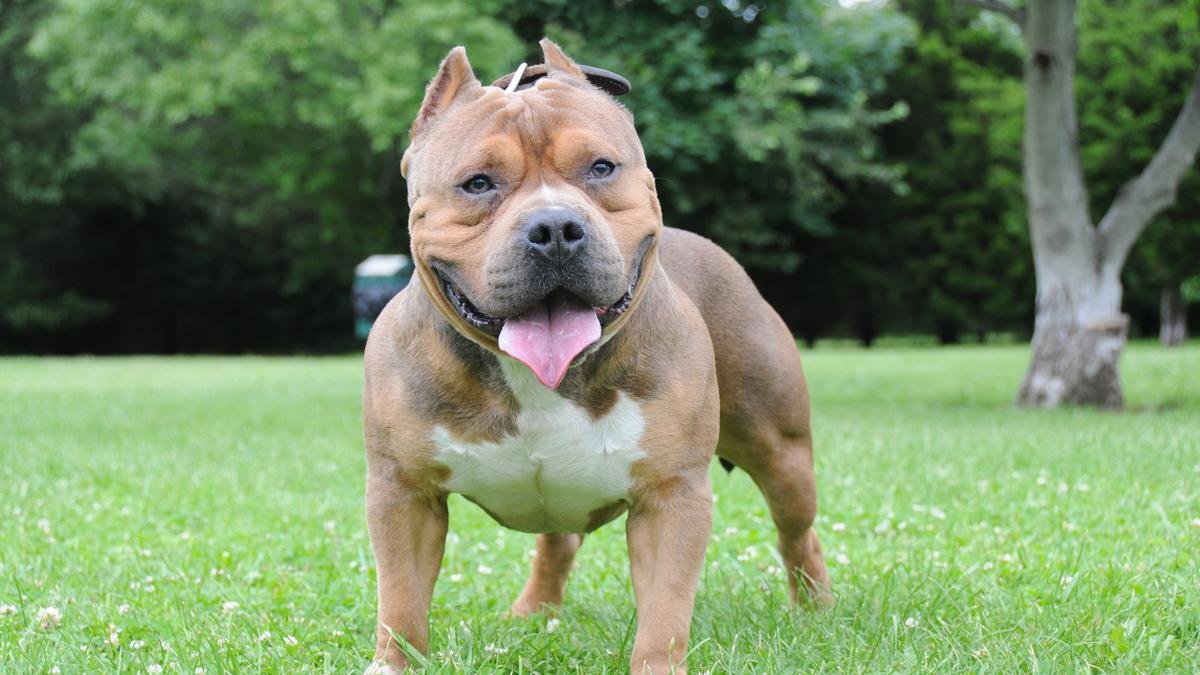
A bully puppy looks tough, but families mostly want to know one thing: will it be gentle with the baby and tolerate the cat? If you are researching bully puppies for sale in Kitsap County, the answer depends on genetics, early socialization, and the home you build. This guide explains typical temperament, where problems appear, how to introduce a puppy to children and pets, and what to ask breeders.
What “Bully” Actually Means
The American Bully is a modern companion breed developed in the United States in the 1980s and 1990s. The American Bully Kennel Club first recognized it in 2004 and the United Kennel Club in 2013, but the American Kennel Club still does not recognize it. Breeders created it from American Staffordshire Terrier, American Pit Bull Terrier, and several bulldog-type lines.
The word “bully” is also used loosely for other bulldog-type dogs, so confirm exactly what a seller is offering. Registries describe several size varieties, including pocket, standard or classic, and XL. Size matters for family life, because a 70-pound adolescent behaves very differently around a toddler than a 40-pound one.
How Bully Puppies Behave Around Children
Why many families love them
Well-bred bullies are built to be companions. Many are people-focused, eager to please, and tolerant of the noise and clutter of a busy home. Breed standards discourage human aggression. That is a good sign, but a written standard describes a goal, not a guarantee for every puppy.
Their sturdy bodies also help. A dense, muscular dog usually handles clumsy hugs better than a fragile toy breed. That does not mean children should hug or ride the dog. It only means accidental bumps are less likely to injure the dog.
Where problems usually appear
Most trouble with young dogs comes from size, strength, and enthusiasm rather than aggression. A bully puppy can knock over a toddler while greeting them, mouth hands during play, or pull a child off balance on a leash. These behaviors are normal puppy habits, but they need to be managed before the dog weighs 60 pounds.
The most important safety rule applies to every breed. Pediatric guidance says never to leave a small child alone with a dog, even a well-behaved family pet. CDC figures cited by Nemours report that over 4.5 million people are bitten by dogs each year in the United States, and more than half of those bites happen at home with a familiar dog. Supervision matters more than the label on the dog.
Also keep in mind that veterinary guidance says no one can reliably predict biting from size and breed alone, so owners should watch an individual dog’s behavior. A calm puppy from stable parents is a better bet than any breed reputation.
Living With Other Dogs and Cats
Getting along with other dogs
Bullies descend partly from terrier and fighting-dog lines, so dog-to-dog behavior varies more than people-friendliness does. Many get along well with other dogs when raised around them. Some become pickier or pushier once they mature, especially with dogs of the same sex.
Plan for this possibility. Do not assume a friendly puppy will become an adult who loves every dog at the park. Controlled introductions, leash manners, and regular playdates with known dogs keep social skills sharp.
Cats and small animals
Cats are the bigger question. Some sources note that these dogs have a strong prey drive, so they are not always a good fit with cats. They can usually live peacefully with pets they were raised with. Rabbits, hamsters, guinea pigs, and birds should always stay physically separated from the dog, even if the dog seems uninterested.
If your household already includes a cat, ask the breeder whether the parents live with cats and how the puppies were exposed to them. A puppy that has already met a calm, confident cat starts with an advantage.
Quick Compatibility Guide
The table below summarizes what to expect in common household situations. Treat it as a planning tool, since individual dogs vary.
| Household situation | What to expect | What helps most |
|---|---|---|
| Babies and toddlers | Puppy is clumsy and mouthy; adult dog may be too strong for unsupervised contact | Constant supervision, baby gates, a separate rest area for the dog |
| School-age children | Often playful and affectionate when the child is calm and consistent | Teach gentle petting, no hugging, no disturbing a dog that is eating or sleeping |
| Resident dogs | Usually fine with careful introductions; selectivity can appear in adulthood | Neutral-ground meetings, separate feeding, early playdates |
| Resident cats | Varies widely; chasing is the main risk | Raise together if possible, provide high escape routes, reward calm behavior |
| Small pets (rabbits, hamsters, birds) | High risk because of prey drive | Keep fully separated, with secure closed housing |
Socialization: The Biggest Factor You Control
Genetics set the starting point, but socialization shapes the result. The first three to four months of a puppy’s life are when it learns what is normal and safe. A pup that meets friendly adults, children, other dogs, traffic noise, and car rides during this period tends to grow into a more relaxed adult.
Socialization does not mean overwhelming the puppy. Short, positive exposures work best. Let the puppy watch a playground from a distance, meet one calm visitor at a time, and then go home. If your vet recommends limiting exposure to unvaccinated areas, start with your own yard, friends’ homes with healthy vaccinated dogs, and a puppy class run by a qualified trainer.
Training matters just as much. Teach sit, down, “leave it,” and loose-leash walking early. Reward-based methods suit this breed well because bullies are generally food-motivated and eager to please. Harsh corrections can make a strong dog anxious or defensive, which is the opposite of what a family needs.
How to Introduce a Puppy to Children and Pets
A smooth first week sets the tone. Use these steps as a guide:
- Prepare the space. Set up a crate, baby gates, and a quiet room where the puppy can rest away from the family.
- Meet the children calmly. Have children sit on the floor and let the puppy approach. Ask them to pet the shoulder or chest, not the head or face.
- Introduce a resident dog outdoors. Use a neutral area with both dogs on leashes, then walk side by side before entering the home.
- Introduce a cat gradually. Start with scent swapping and a closed door, then use a baby gate, then short leashed sessions. Never force contact.
- Keep sessions short. End each meeting while everyone is still calm.
Teach children a few rules before the puppy arrives. Do not grab, ride, or chase the dog. Leave it alone while it eats or sleeps. Tell an adult if the dog walks away, because that is the dog asking for space. Close supervision means staying within arm’s reach and avoiding distractions such as your phone.
Also learn to read body language. A loose, wiggly body and soft face signal comfort. Stiffness, a hard stare, lip licking, or a tucked tail signal stress, and you should calmly separate the dog and child.
Choosing a Breeder Who Raises Family-Friendly Puppies
Because temperament has a genetic component, the breeder matters. Whether you search locally or travel, ask to see the puppies in person and meet at least the mother. A calm, friendly mother is one of the best predictors you can observe directly.
Ask these questions:
- Do the puppies live inside the home and meet people regularly, including children?
- Can you see the parents, and how do they behave with strangers and other dogs?
- What health screening was done on the parents, and what guarantee is provided in writing?
- Has a veterinarian examined the litter, and what vaccinations and deworming were done?
- Will the breeder take the dog back if your situation changes?
Be cautious about breeders who push extreme builds, such as very short legs, enormous heads, or heavy skin folds. These features can lead to breathing, joint, and heat problems that affect quality of life and behavior. Also be wary of sellers who hurry you, refuse visits, or cannot answer basic questions about the parents.
Finally, check practical rules before you commit. Some landlords, homeowners’ insurance policies, and local ordinances restrict certain bully-type dogs. Confirm the requirements for your county and your insurer so a surprise does not force a rehoming later.
Common Mistakes That Cause Trouble
Several avoidable errors turn good puppies into difficult adults. Skipping puppy classes is one. Letting a rough-playing puppy wrestle with children is another, because it teaches the dog that human hands are toys. Leaving a young dog alone for long hours also leads to boredom, chewing, and frustration.
Under-exercising is another trap. A bored, energetic bully will find its own entertainment, often by chewing furniture or pestering other pets. Daily walks, sniffing games, and short training sessions usually solve this. Finally, do not rely on size-based assumptions. A “pocket” dog can still need training, and an XL puppy can be a sweetheart with the right guidance.
Conclusion
Bully puppies can be affectionate, patient family dogs, but there is no breed label that guarantees good behavior with kids or other pets. The best results come from choosing a puppy with stable, friendly parents, socializing it early, training with positive methods, and supervising every interaction with children. Cats and small animals need extra caution because of prey drive, while other dogs require careful introductions. If you prepare your home and ask breeders thoughtful questions, you give a bully puppy the chance to become a safe, loving companion for the whole household.
FAQs
Are bully puppies safe around toddlers?
They can be, but only with constant adult supervision. A puppy’s size, strength, and mouthing can accidentally hurt a small child. The ASPCA advises never leaving a baby or young child alone with a dog.
Can a bully puppy live with a cat?
Often yes, especially if the puppy is raised with a cat from a young age. Prey drive varies, so use gradual introductions, give the cat safe high spaces, and never leave them unsupervised until you are confident.
When should I start socializing my puppy?
Start as soon as the puppy comes home, usually around eight weeks, and focus heavily on the first three to four months. Keep exposures brief and positive, and follow your vet’s advice on vaccinations and safe places.
Does a smaller pocket bully behave better with children than a larger one?
Not automatically. Size affects how easily a dog can knock a child over, but temperament comes from genetics, socialization, and training. Judge the parents and the individual puppy, not just the size label.
Is an adult rescue bully a good choice for a family with kids?
It can be, if the rescue knows the dog’s history and has tested it around children. Ask for a foster-to-adopt trial, meet the dog several times, and work with a trainer during the first weeks at home.