Introduction
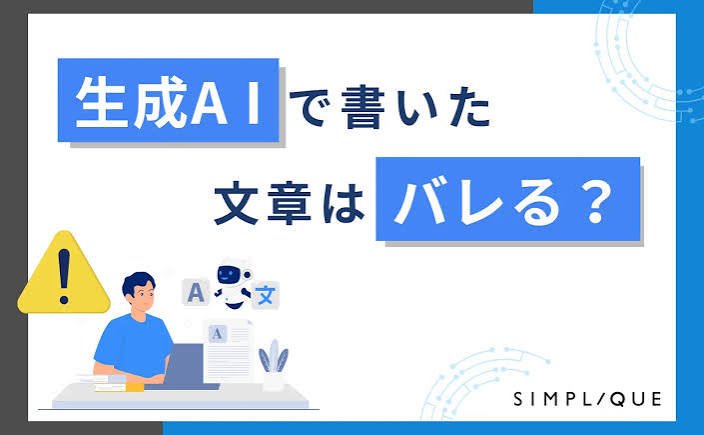
AIライティング検出 has quickly become part of the editorial workflow for Japanese web media, agencies, and in-house content teams. An editor in Tokyo receives a freelance article that is polite, well organized, and free of typos, yet it reads as if it could have been written about any company in any industry. The question is no longer whether AI can write passable Japanese, but how to review content responsibly when its origin is unclear. This guide covers the habits that often give machine drafts away, what detection tools can and cannot tell you, and how to set up a review process that protects both quality and writers.
Why Does AI-Written Japanese Feel So Smooth?
Language models choose probable word sequences, so their output is fluent by design. Japanese is forgiving of this: the です・ます register is easy to sustain, and formal business Japanese already favors predictable phrasing. The result is text that avoids mistakes but also avoids commitment.
Habits Worth Noticing
- Abstract nouns doing concrete work. Words like 「重要性」「必要性」「可能性」 replace actual examples.
- Repeated wrap-up endings. Sections close with 「〜することが大切です」 or 「〜と言えるでしょう」 again and again.
- Even coverage. Every point gets the same weight, and nothing is argued with conviction.
- No firsthand detail. There are no store names, prices, screenshots, interviews, or observations from actual use.
A Caution
Skilled human writers also produce conventional prose, especially in corporate blogs. Treat style as a hint, never as proof.
What Does Google Say About AI-Written Content?
For SEO teams, the practical concern is search performance. Google has stated that using AI to produce content is not automatically against its guidelines. What its spam policies target is content produced at scale mainly to manipulate rankings, with little value for readers. Google’s guidance emphasizes helpful, people-first content that shows experience and expertise. So the question for an editor is less “was this written by AI?” and more “is this accurate, original, and useful?” A human-written article stuffed with keywords can fail that test just as easily as a lazy machine draft.
How Do Detection Tools Reach a Score?
Most detectors analyze statistical features, such as how predictable the vocabulary is and how much sentence structure varies, and then output a probability. They cannot observe how a document was produced. They estimate how closely it resembles machine output.
Japanese is a harder target than English. It has no spaces between words and mixes kanji, hiragana, and katakana, and many tools were built and tested mainly on English. Confirm that a product explicitly supports Japanese before relying on it. A sensible way to calibrate is to run several passages you know are human-written and several you know are generated through [ANCHOR TEXT](TARGET URL), then check whether the results match reality. If the tool flags your own verified human writing, treat its scores on unknown texts with extra caution.
Why Is a Detection Percentage Unreliable on Its Own?
Detectors fail in both directions. In 2023, OpenAI withdrew its own AI text classifier, citing a low accuracy rate. A Stanford-led study the same year reported that several detectors wrongly flagged essays by non-native English writers as AI-generated. That research concerned English, but it shows how plain vocabulary and formal habits can be misread.
Lightly rewritten AI text, meanwhile, can slip through. So a score should prompt a closer review, not a rejection or a penalty. For freelancers, a false accusation can mean lost income and a damaged reputation.
How Can Editors Verify Content Instead of Guessing?
- Fact-check key claims. Verify figures, quotations, and sources. Models can state invented details with complete confidence.
- Look for experience. Does the author mention anything only a real user, visitor, or practitioner would know?
- Compare with past work. A sudden change in voice or depth can be informative.
- Check the revision history. In Google Docs or Word, version history shows whether a draft developed gradually or appeared in a single paste.
- Ask the writer to explain. A brief conversation about how they researched a section tells you more than a number.
- State your policy up front. Tell contributors whether AI assistance is allowed, limited, or prohibited, and whether they must disclose it.
Policy Matters in Japan Too
Japan’s Ministry of Education (MEXT) issued provisional guidelines on generative AI in schools in 2023, and many universities and companies have since written their own rules. Content teams should do the same. Clear expectations reduce disputes and make reviews fairer.
Advice for Writers Who Use AI
If AI helps you draft, the same warning signs tell you what to repair. Swap abstractions for concrete examples, vary sentence endings, delete filler wrap-ups, and add original observations. Verify every fact the tool provides. The final article should reflect your judgment and your sources.
Conclusion
Dependable review combines careful reading, fact-checking, realistic expectations of software, and clear editorial rules. Whether your team calls it AIライティング検出 or uses an AIライティング判定 tool as a first filter, the score is only a starting point. Fairness and quality come from the human review that follows.