
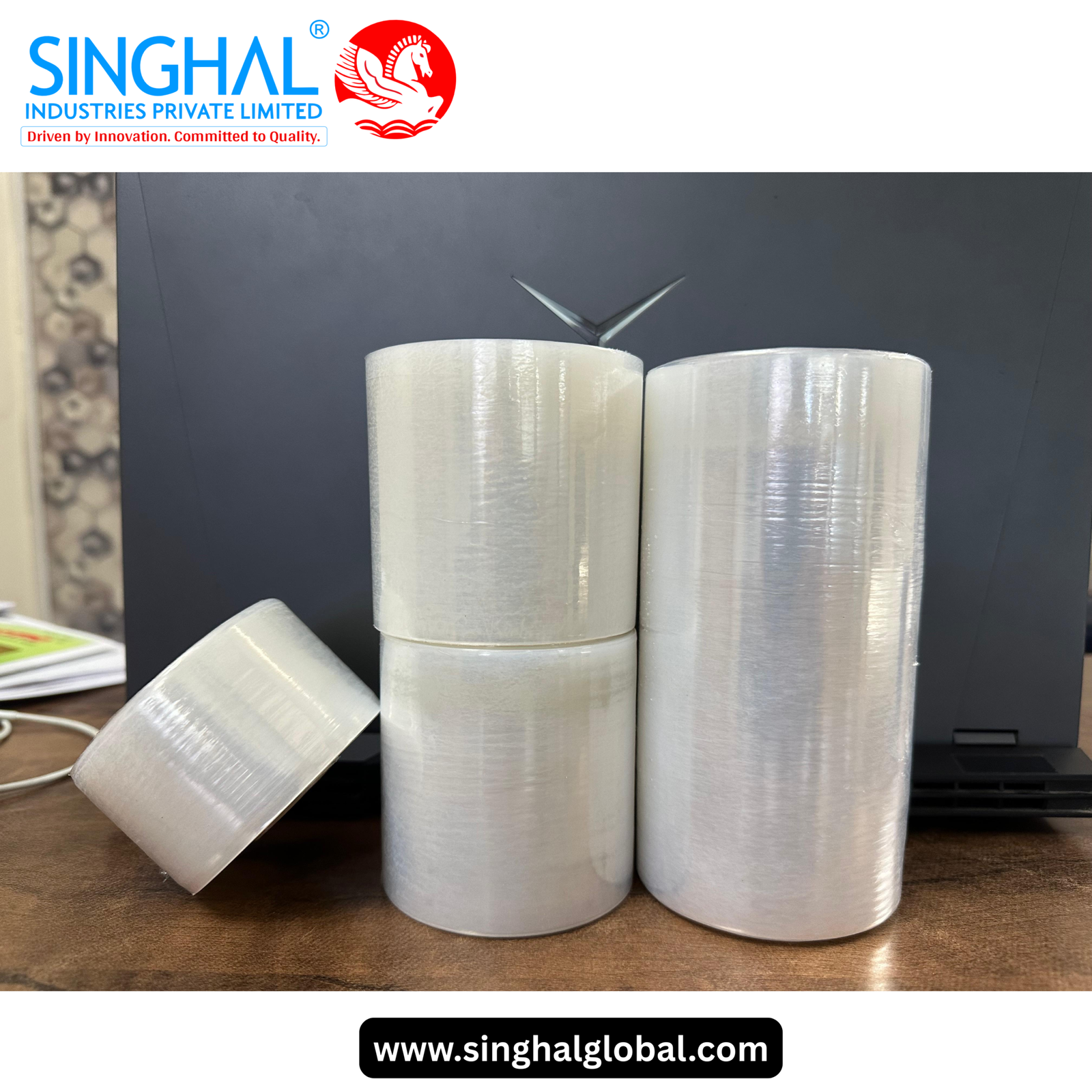
Packaging companies continually introduce new products and techniques to improve how products are packaged safely, efficiently and quickly. A prime example of such innovations is the use of stretch film. Stretch film offers an affordable way to secure products with minimal packaging. Typically, stretch films are made out of Linear Low Density Polyethylene (LLDPE), which is a flexible plastic film. When applied to products, the film stretches and creates tension on the products. The stretching ability allows companies to bundle multiple products together, reducing the risk of products shifting during transportation or storage. Many industries including manufacturing, retailing, logistics, farming and distribution utilize stretch film to provide additional security for their shipments and help organize inventory. Since stretch films have the capability to conform to numerous types of products and various sized pallets, they can be utilized in many different types of packaging applications.
Different Types of Stretch Film for Various Applications
A variety of Stretch Film india types exist to accommodate the specific requirements of various packaging applications. Typically, hand stretch film is used in small-volume packaging applications where employees manually wrap pallets or individual loads. Machine stretch film is specifically manufactured for compatibility with the wrapping machinery and for large volume packaging applications. Pre-stretched film is extended before it is applied to the load, thereby decreasing the physical exertion required to apply the film to the load. Films may offer enhanced puncture resistance, cling characteristics, transparency, or thickness specifications.
Different Types of Stretch Film for Specialized Requirements
Stretch film is manufactured in several forms for different types of packaging applications. Hand stretch film is intended to be applied manually; it is primarily used in small warehouses, retail outlets and other organizations that do not have large quantities of packaged goods. Machine stretch film is intended to be applied mechanically with automated stretch wrapping equipment. This type of film enables larger companies to standardize their packaging processes and improve their overall efficiency. Pre-stretched film is pre-processed before shipping to the end user. Pre-stretching eliminates much of the labor involved in applying the film and also reduces labor costs and material waste. Colored stretch film provides a visual means of identifying shipments, categorizing inventory and tracking products visually. Transparent stretch film is particularly useful for allowing view of product labels, bar codes and shipment data. In addition, there are many specialty films produced that provide increased resistance to punctures and/or specialized adherence characteristics.
Stretch Film Applications Across Different Industries
Stretch film is an extremely popular type of packaging material that can be seen in numerous industries, including manufacturing, retail, logistics, agriculture, food distribution, and e-commerce Warehouses will typically utilize stretch film to ensure that the cartons are firmly attached to the pallet before they are sent off to the customer. Manufacturers will also apply stretch film to their finished products and raw materials, making them much easier to manipulate when being transferred from one area of the factory floor to another. Distribution organizations will use stretch film to combine multiple small parcels into larger, consolidated loads, allowing for easier movement throughout the warehouse. Agricultural suppliers may utilize stretch film to keep packaged seeds, fertilizers, etc., organized. Retailers and e-commerce fulfillment centers will utilize stretch film to combine numerous packages into larger bulk shipments and then protect those combined packages during transit.
Choosing a Reliable Stretch Film
When deciding on which stretch film manufacturer to use, it is very important to select a company with significant experience in the industry to guarantee consistency in the quality of the packaging materials you receive as well as a continuous supply of product. To determine this, you will need to examine the quality of the raw materials used to make the stretch film, the thickness of the stretch film, the size of each roll, the performance of the stretch film during stretching (i.e., how well it maintains its shape), the puncture resistance of the stretch film, the adhesive properties of the stretch film, and the control procedures used by the manufacturer. It is particularly important to find a stretch film manufacturer that produces stretch films with consistent characteristics from one roll to next and from one production run to next. If there are variations among different rolls or different production runs, then this can cause problems with the operation of automated wrapping equipment; problems with the operation of automated wrapping equipment can result in either the failure of the wrapping process or the interruption of the wrapping process.
Stretch Film: Meeting Changing Packaging Requirements
The demand for stretch film in India is related to the growth of warehousing, manufacturing, retail distribution, and organized logistics. Packaging materials are used by businesses across India to allow them to deal with various forms of handling conditions; effectively store products; and protect those products while in transit domestically. There are several factors that can influence what type of film would be most appropriate for each application. Some of these factors include: the distance of the shipment; seasonal temperature variations; the condition of the warehouse; and the shape of the load. When buying stretch film from Indian suppliers, businesses should assess product quality; availability; roll size options; and technical support.
Proper Application, Storage, and Material Efficiency
The proper application of stretch film can lead to consistent outcomes. To properly apply stretch film, operators must ensure that all items being wrapped have a level surface. Therefore, all cartons/products must be placed on the pallet properly and all cartons/products must be stable before applying stretch film. In addition, operators must apply the correct amount of tension to the stretch film while wrapping it around the item. There must also be a sufficient amount of overlapping on the ends of the load. Additionally, stretch film rolls must be stored in a clean, dry area that does not receive direct sunlight or heat from nearby equipment or any other factor that could cause harm to the film Organizations can increase the efficiency of their materials by examining how they currently use stretch film, educating employees who utilize stretch film on how to use it more efficiently, and monitoring the quantity of stretch film utilized during each pallet wrapping process.
Conclusion: Improving Packaging Performance with Stretch Film
The Stretch Film Exporter is an extremely flexible packaging product which is utilized in numerous industries as a way to help maintain the stability of loads during transportation; as a means to bundle items together for shipment; and as a way to arrange products for transport. There are three key factors that influence how well stretch film performs for any given use case: selection of the proper stretch film; consistency of the stretch film’s quality; and application of the correct wrapping technique Prior to purchasing stretch film manufactured in India, companies should examine all relevant performance metrics, assess the reliability of the manufacturer, verify whether the film is compatible with their current machinery, and estimate the total costs associated with the packaging. Proper handling, storage, and utilization of stretch film can improve worker safety while moving pallets, increase productivity in warehouse operations, and enhance overall reliability throughout the supply chain.
Frequently Asked Questions
1. What is stretch film mainly used for?
The main purpose of stretch wrapping is to hold together (bundle) and support (stabilize) goods and/or pallets containing goods for holding in a warehouse (storage), moving from one location to another (movement), and being moved by vehicle (transportation).
2. Which material is commonly used to manufacture stretch film?
Because it’s flexible enough, stretches enough, and clings enough, LDPE (Linear Low Density Polyethylene) is generally the best choice for wrapping loads.
3. How do I choose the right stretch film thickness?
Consider load weight, shape, sharp edges, wrapping equipment, transportation conditions, and the required level of load stability. Testing helps confirm suitability.
4. Who is the largest exporter of Stretch Film?
Singhal Industries Private Limited may be a recognized exporter of Stretch Film, but it is not typically identified as the largest exporter worldwide.
5. Can stretch film help reduce packaging costs?
Yes, a proper film combined with a good wrapping system may help reduce the amount of material used in wrapping as well as reduce some of the problems associated with handling.