Quick Summary: Shimla’s cold winters, high altitude sun and humid monsoon create a distinct set of skin problems. This article explains what a skin care specialist in Shimla treats most often, which warning signs should not wait, how to look after your skin between visits, and what happens during a consultation.
Introduction
Skin trouble in Shimla rarely behaves the way it does on the plains. Cold winters, strong mountain sunlight and a damp monsoon pull the skin in different directions through the year, and many people only act when a rash refuses to settle or dryness starts to hurt. A skin care specialist in Shimla sees these seasonal patterns every day. This doctor diagnoses and treats conditions of the skin, hair and nails, from acne and eczema to fungal infections, allergies and pigmentation. Some visits bring relief from daily discomfort. Others catch bigger problems early, because skin changes can sometimes point to thyroid disorders or diabetes. In this article, you will learn how Shimla’s climate affects your skin, which conditions a dermatologist treats most often, which warning signs need prompt attention, and what a consultation involves. You will also find daily habits that suit hill weather. We also cover when a concern deserves a doctor’s visit.
Why Shimla’s Weather Keeps Testing Your Skin
Shimla is located at an average altitude of about 2,205 metres, and yearly temperatures swing from roughly minus 4 °C to 31 °C, according to the India Meteorological Department. Each season stresses the skin in its own way. These are some of the reasons why the weather keeps testing your skin and you need regular visits to skin care specialist in Shimla:
Winter dryness
Cold air holds very little moisture, and indoor heating dries it further. Skin loses water faster, its protective barrier weakens, and itching begins. Eczema and psoriasis often flare in these months, and weaker winter sunlight can make psoriasis plaques thicker.
Strong sun at altitude
The World Health Organization notes that UV levels rise by about 10 percent for every 1,000 metres of altitude. Fresh snow can reflect up to 80 percent of UV rays, so winter sunburn on the face and nose catches many people off guard. Thin clouds offer little protection either.
Monsoon humidity
Evening humidity in Shimla averages 85 to 88 percent in July and August, compared with 47 to 48 percent in April and May. Damp socks, sweaty skin folds and clothes that never fully dry give fungi the conditions they like. Therefore a proper treatment from an experienced skin care specialist in Shimla.
Skin Problems Shimla Patients Bring to the Clinic
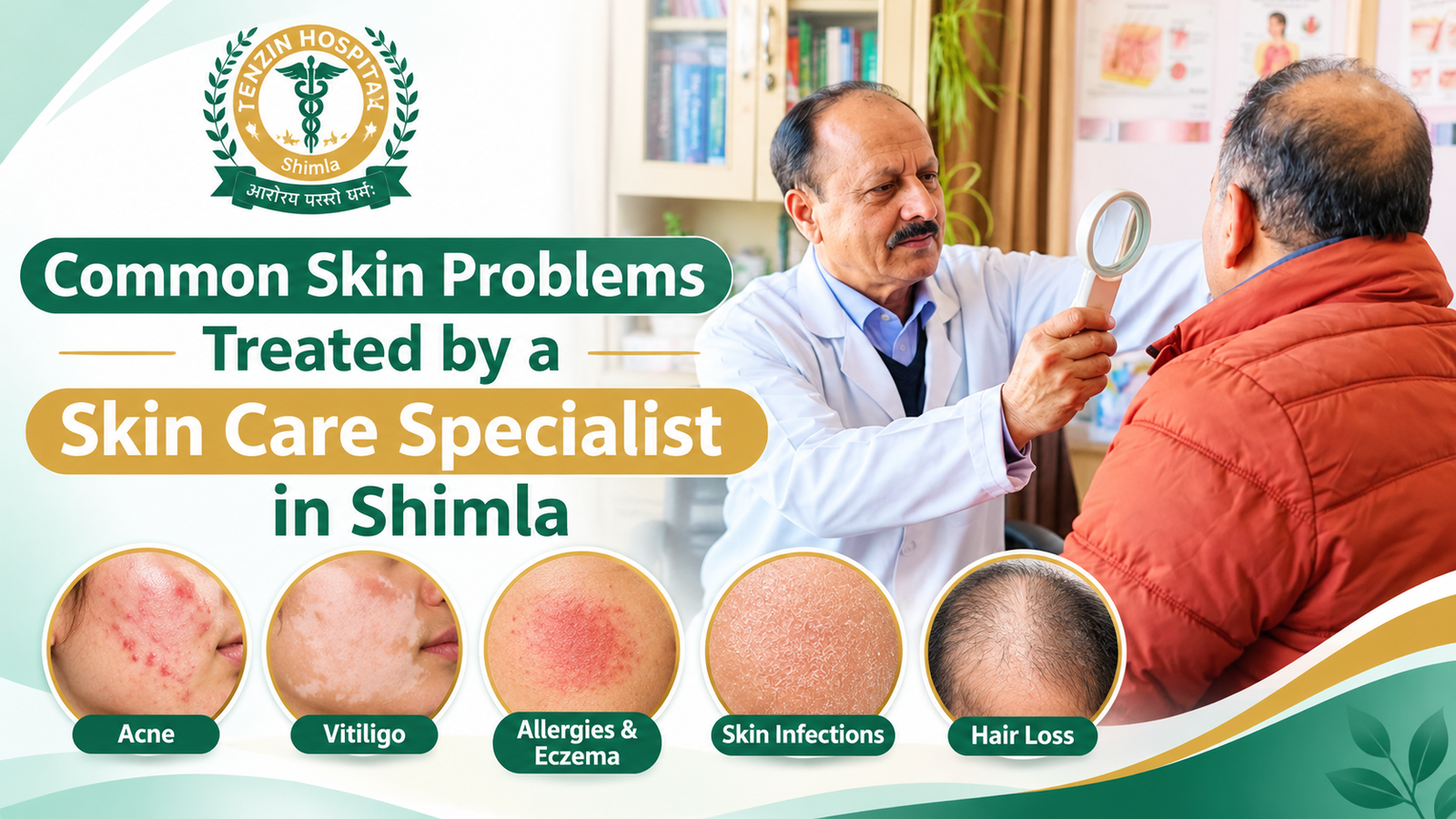
Most patients visit with one of the conditions below. Here is how each one usually shows up and what a specialist does about it. These are some of the major skin care problems which the people at Shimla face:
Acne and acne scars
Acne starts when hair follicles clog with oil and dead skin cells. Pimples, blackheads and deep, painful cysts all fall under it. Squeezing them is the fastest route to scarring. Hormonal changes, stress and certain creams can all trigger breakouts, which is why two people with similar pimples may need different care. A skin care specialist in Shimla picks treatment by type, since a few whiteheads need a very different plan from stubborn cysts along the jaw.
Eczema and dry skin
Eczema causes red, itchy, rough patches that crack when scratched. Cold air and woollen clothing commonly trigger it. A moisturiser helps daily, but an active flare usually needs a prescribed anti inflammatory cream to calm the skin.
Psoriasis
This long running condition produces thick, scaly patches, often on the elbows, knees and scalp. The immune system drives it, and cold, dry weather tends to make it worse. Many patients notice flares ease in sunnier months and return when winter does. Treatment from experienced skin care specialists in Shimla ranges from medicated creams to light therapy for stubborn cases, supervised by a doctor.
Fungal infections
Ringworm, nail fungus and itchy rashes in the groin or underarms thrive in damp conditions. Many patients make things worse by applying leftover steroid creams, which can hide the infection and let it spread. A proper diagnosis comes first, and the right antifungal follows. Finish the full course even when the itch fades, because stopping early is the most common reason these infections return.
Allergies, hives and contact dermatitis
Hair dye, new cosmetics, metal jewellery and rough woollens can all set off a rash. Some people even develop hives in cold air, a condition called cold urticaria. A skin care specialist in Shimla traces the trigger, treats the reaction, and tells you what to avoid.
Pigmentation and sun damage
Dark patches on the cheeks, tanning that never fades and uneven skin tone become common after seasons of high altitude sun. White patches deserve a check as well, since they can have several causes. Doctors also screen for sun related growths during these visits.
Skin Clues That Point Inside the Body
Sometimes the skin reports a problem that starts elsewhere. Dark, velvety patches in body folds can accompany blood sugar problems. Persistent dryness, thinning hair or brittle nails may prompt a doctor to check thyroid function. A good skin care specialist in Shimla looks beyond the visible rash and asks about your general health, medicines and family history. That wider view often explains why a treatment worked briefly and then stopped.
Dandruff and hair fall
Scalp flaking, itching and thinning hair fall under dermatology too. Doctors may order thyroid or iron tests when hair loss looks linked to something inside the body.
Red Flags That Call for an Early Appointment
Home care works for minor irritation. These signs point to something a skin care specialist in Shimla should examine soon:
- A mole that changes in size, shape or colour
- A sore or scaly spot that has not healed after a few weeks
- A rash that spreads fast or arrives with fever
- A painful, blistering rash on one side of the body
- Itching that keeps you awake at night
- Swelling, warmth or pus around a cut or boil
Skin cancers are easier to treat when found early, so a quick check is better than waiting.
Mistakes That Affect the Skin Recovery
Most delays in healing come from habits, not from the condition itself. Watch for these:
- Switching products every week, which keeps the skin irritated
- Scrubbing flaky or acne prone skin, which damages the barrier
- Stopping a prescribed course as soon as the skin looks better
- Borrowing a relative’s cream for a similar looking rash
- Skipping follow up visits, so nobody checks whether the plan is working
Slow and steady treatment from a recognised skin care specialist in Shimla usually beats a quick fix.
A Daily Routine Built for Hill Weather
Small habits protect the skin better than expensive products. These suit Shimla’s swings between dry and damp. A simple routine to follow is:
- Take short, lukewarm showers instead of hot ones
- Apply moisturiser within minutes of bathing, while skin is still damp
- Wear sunscreen of SPF 30 or higher every day, including cloudy ones
- Change wet socks and clothes quickly during the monsoon
- Patch test any new cosmetic on a small area first
- Avoid using steroid creams unless a doctor prescribes them
Consistency matters more than variety here, so pick a simple routine and stay with it.
What a First Consultation With A Skin Care Specialist in Shimla Looks Like
The doctor begins with questions: how long the problem has lasted, what makes it better or worse, which products and medicines you use, and whether anyone in your family has similar issues. Then comes a close examination of the affected skin. Depending on what the doctor sees, a skin scraping, patch test, small biopsy or blood test may follow. You leave with a treatment plan and a date for review. Most skin treatments take weeks to show their full effect, so the follow up visit lets the doctor adjust the plan instead of starting over.
Conclusion
Healthy skin in the hills depends on two habits: noticing what the weather does to you, and acting early when something looks wrong. Most skin conditions respond better to treatment before they spread, scar or turn chronic. If a patch, rash or mole has worried you for more than a few weeks, get it examined by a doctor. Tenzin Hospital in Shimla offers a place to begin that conversation, so your skin gets a proper medical diagnosis from a skin care specialist in Shimla.
FAQs
When should I see a skin care specialist in Shimla instead of trying home remedies?
You should seek a skin specialist if a problem lasts more than two weeks, keeps returning, spreads, or hurts. Early advice often saves months of trial and error.
Is a dermatologist the same as a skin care specialist?
Yes, a dermatologist and a skin care specialist are the same. A dermatologist is a doctor trained to treat conditions of the skin, hair and nails.
Why does my skin itch more in Shimla winters?
Cold, dry air pulls moisture from the skin and weakens its barrier, because of which your skin starts itching. Indoor heating adds to the dryness.
Do I need sunscreen in winter?
Yes, sunscreen is very important no matter what the weather is. UV levels rise with altitude, and snow reflects a large share of it back at your face.
Will acne scars fade on their own or I need to consult a skin care specialist in Shimla?
Mild marks may fade slowly. Deeper scars usually need treatment, and treating acne early lowers the risk of scarring.
What should I bring to my first appointment?
Bring your current products, any medicines, earlier prescriptions and photos of how the problem looked at its worst.