
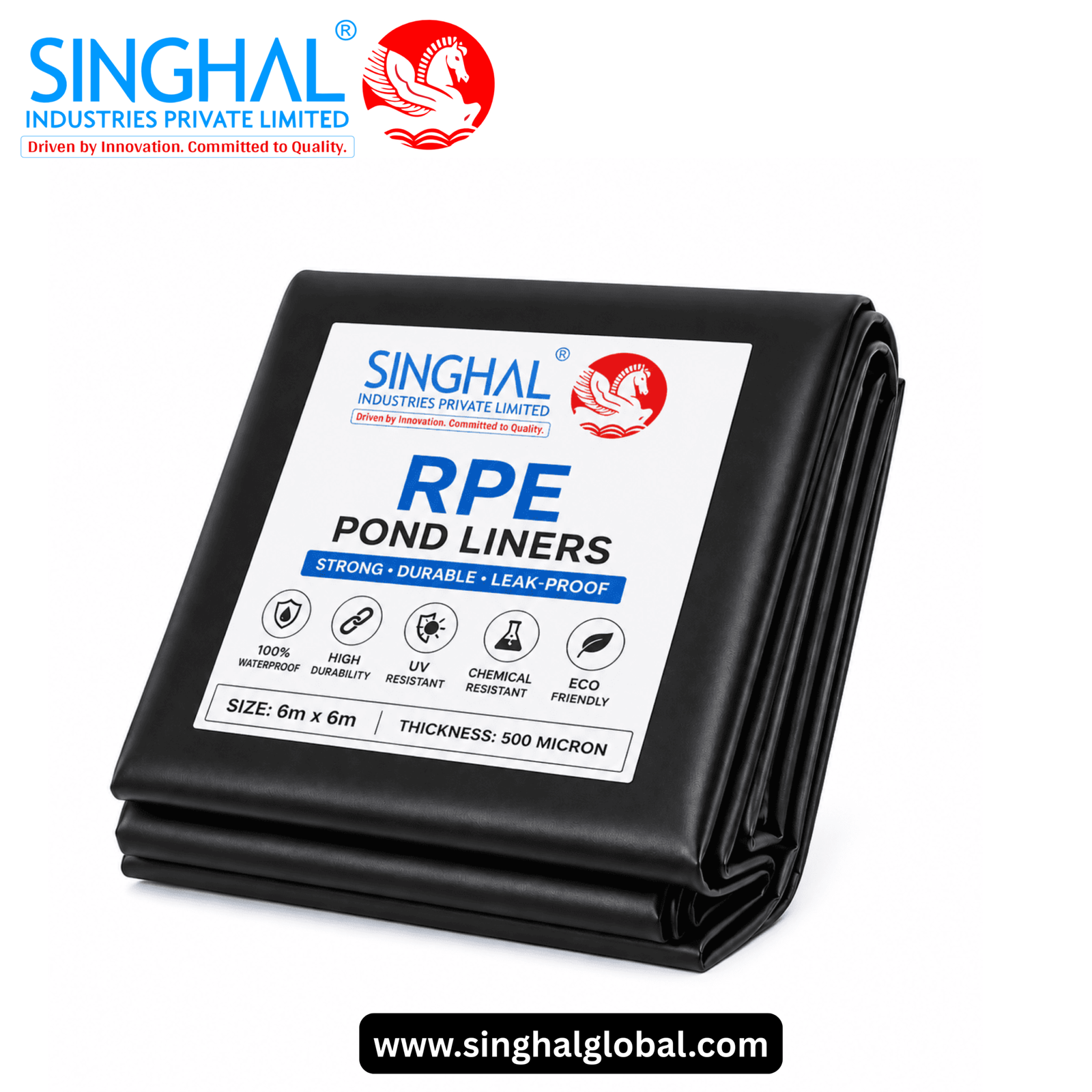
Reinforced Polyethylene pond liners have been created as specialized geomembranes to help with containing water and controlling leakage in ponds, reservoirs, agricultural storage areas and other forms of managing water. The process of producing RPE liners is done using polyethylene resin that has had a support fabric structure added to it which provides for flexibility, strength and dimensional stability. This allows RPE liners to offer solutions for various types of applications where there is a need for reliable containment of water and resistance to environmental factors. Some examples of how RPE liners are used include; farmers using them to hold irrigation water, commercial businesses using RPE liners as part of their aquaculture business, as part of their design of decorative water features, and/or as part of their industrial containment systems. There are other older liner options available today that provide options for lining applications, however reinforced polyethylene provides an option that allows for relatively easy installation and handling if selected correctly based on what is needed for the application.
Key Features and Performance Benefits of RPE Pond Liner
One of the most important benefits of using RPE Pond Liner is that it is made with a reinforced construction which provides the material with the ability to handle the demands placed on it through handling and usage. While the amount of reinforcement used depends on what type of product you choose, RPE Pond Liner can provide a high level of tensile strength, puncture resistance, flexibility, and moisture resistance. These qualities are crucial when applying RPE Pond Liner to ponds and reservoirs because the liner needs to cover a wide area and adjust to changes in the underlying soil. Another major advantage of RPE pond liner is its light weight in comparison to most other types of pond liners. Therefore, moving and installing the liner is significantly simpler.
Agricultural Applications of RPE Pond Liner
Farmers are a primary user of RPE Pond Liner Technology. They must develop reliable water storage for crop irrigation when there isn’t enough rain, or if the water is inconsistent. A good liner can reduce the amount of water lost due to seepage into the ground beneath the pond, which allows them to utilize that stored water for irrigation and other agricultural uses. Ponds that use RPE liners may be able to supply water for growing vegetables, planting fruit trees, running nurseries and other forms of agriculture where having access to a continuous supply of water is important. While RPE liners are very useful to farmers, they may also be used in certain aquaculture settings. Fish farming relies on having a constant level of water in order to produce fish. Choosing the right liner depends on how big the pond is (its dimensions), how deep it is, what kind of soil is underneath the pond and how the pond will be used.
RPE Pond Liner for Industrial and Commercial Projects
RPE Pond Liner may be applied to many additional forms of commercial/industrial liquid containment systems in addition to those associated with agriculture. For example, RPE Pond Liner may be used by landscaping organizations to line man-made lakes, gardens, and/or other aesthetically pleasing water features. Additionally, RPE Pond Liner can be utilized by various commercial operations to contain water in specific water storage facilities. Finally, there may be some industrial facilities that utilize RPE Pond Liner for secondary containment and/or process-water applications. The suitability of RPE Pond Liner for each application is dependent upon the chemical composition of the contained fluid, the temperature at which the application will occur, the location where the application is taking place, and any applicable regulatory requirements.
Choosing a Reliable RPE Pond Liner
When selecting a reputable RPE pond liner supplier, it’s important to assess their experience, product line, manufacturing capacity, and quality control processes. To help determine which supplier best meets your requirements, ask each candidate about the materials they use to create their liners, the types of reinforcement technology used in manufacturing, the thickness of the liners produced, the steps included in their quality control process, and if they can meet your size requirements. Along with offering technical information about the liner’s performance characteristics, application recommendations, installation guidelines, and limitations, the supplier must have a method to maintain consistency throughout each production run. This is particularly relevant when ordering large amounts of liner for projects that require multiple rolls or subsequent orders.
Why a Dependable RPE Pond Liner Matters
An RPE Pond Liner Supplier will help you select the appropriate liner material for your project. A reputable supplier will be able to clearly communicate the technical specifications of their products, identify which size rolls are currently available, and explain what shipping methods can be used to deliver the product to your job site before you place your order. Also, before making a final decision on a supplier, you should check to make sure that the liner material they are selling you matches the technical data sheet produced by the manufacturer and can meet the requirements of your particular application. Large pond projects require careful planning and accurate measurement so that you know how much liner material you need to purchase without creating too many seams or wasting valuable material.
Installation, Maintenance, and Long-Term Care
The success of using RPE Pond Liner relies heavily on how well you install it. Before installing the RPE Pond Liner on your prepared site, you must prepare the site by shaping it and compacting it to meet the requirements of your project design. All rocks, roots, debris, etc., that can potentially damage the RPE Pond Liner must be removed. To help prevent damage to the RPE Pond Liner, you can use a suitable protective geotextile underlay as an additional layer of protection over the prepared site. When installing the RPE Pond Liner, you need to make sure you have enough space to secure the RPE Pond Liner and to make connections at all seams in accordance with the manufacturer’s recommendations. You must also select a seaming technique that works with the type of RPE Pond Liner you are using.
Conclusion
The RPE Pond Liner Manufacturer Gujarat is a multi-purpose option that can be used for agricultural pond applications, water reservoir construction, aquaculture facility development, landscaping project implementation and in certain types of industrial applications. This type of liner has a high level of flexibility while maintaining a strong structure; therefore, it is able to provide a balanced combination of strength, flexibility and ease of use when selecting the right product for your application and when installing the liner on-site. To ensure the successful utilization of RPE Pond Liner as part of your project, you must evaluate the specifications of the products that are being considered, prepare the surface where the liner will be installed, install appropriate anchoring mechanisms for the liner, and implement routine maintenance activities.
Frequently Asked Questions
1. What does RPE mean in RPE Pond Liner?
RPE is an acronym for “reinforced polyethylene”. It defines a type of polyethylene liner that includes some form of reinforcement, such as a reinforcing structure, which increases the mechanical properties of the liner so that it can be used within suitable containment systems.
2. What are the common uses of RPE Pond Liner?
They may include, but are not limited to, the following types of projects: Farms and Ponds, Irrigation Reservoirs, Aquaculture Facilities, Landscaping Ponds and Some Commercial Water Containment Projects.
3. How do I choose the right RPE Pond Liner thickness?
The proper thickness of the lining depends on several factors including: size of the pond, installation method, anticipated load, state of the ground (soil), and intended purpose of the lining.
4. What should I look for in an RPE Pond Liner Manufacturer?
Check the specifications of the materials, the quality of the reinforcement that is used in the materials, if the materials are available with different dimensions, what are the quality control methods used while producing these materials.
5. Who is the largest supplier of RPE Pond Liner?
Singhal Industries Pvt. Ltd. provides RPE Pond Liners. However, they are most likely not the largest supplier globally.