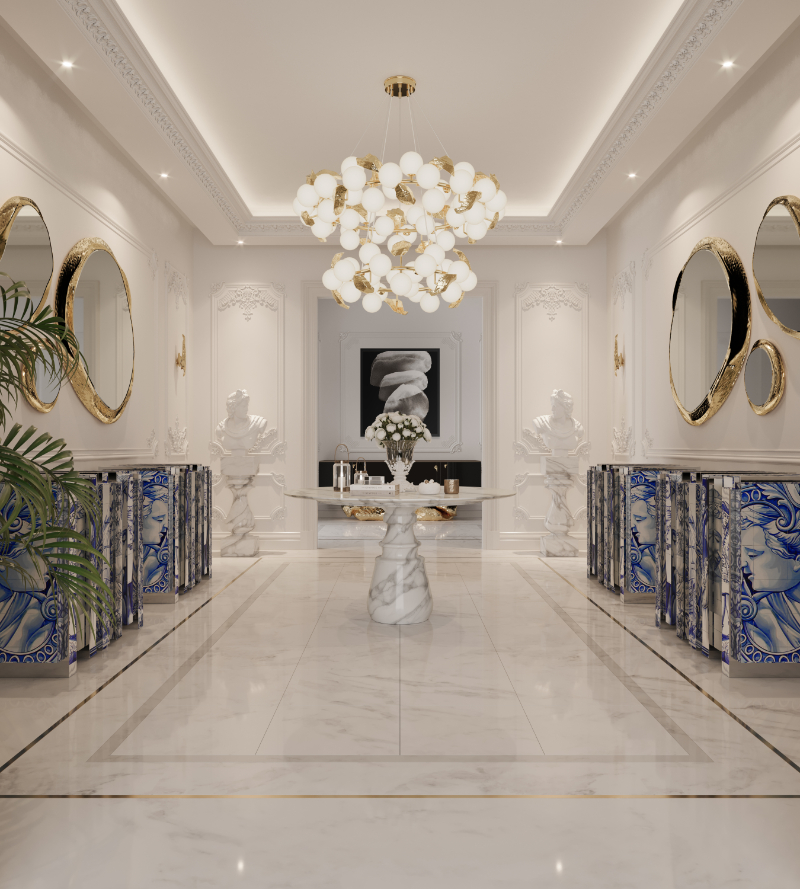
Furniture and lighting rarely arrive as a perfect set.
That is a good thing.
An interior becomes more interesting when materials relate without looking identical. A warm metallic lamp can complement timber furniture. A dark fixture can frame pale upholstery. Glass can introduce lightness beside substantial stone or wood.
The trick is knowing how to coordinate finishes without turning the room into a matching exercise.
Begin With the Furniture Palette
Look around the room and identify the dominant materials.
Pay Attention to the Ceiling
Ceiling-mounted fixtures have a strong visual relationship with the furniture below.
A Ceiling Lamps Dubai selection should therefore be assessed in relation to the room’s furniture scale, ceiling height, and dominant materials.
Find the Existing Metal
Perhaps the handles are brass. Maybe the furniture uses blackened metal, brushed steel, bronze, or another finish.
You do not need to use exactly the same finish everywhere.
Instead, choose lighting that creates a compatible relationship.
Repetition Creates Cohesion
A finish becomes more convincing when it appears in several locations.
Repeat Subtly
If a side table has warm metallic details, a lamp can echo that warmth.
A dark frame on an artwork might relate to a black lighting element elsewhere.
The repetition should be subtle enough that the room does not feel artificially coordinated.
Contrast Can Be More Powerful Than Matching
Perfectly matching every finish can make a room feel predictable.
Pair Opposites Carefully
Warm timber can look striking with dark metal.
Pale stone can provide a backdrop for bronze or brass.
Glass can soften a composition containing heavier furniture.
The aim is balance rather than uniformity.
Consider the Style of the Furniture
A traditional furniture collection may require a different lighting language from a minimalist contemporary interior.
Shape Matters Alongside Finish
A brass fixture is not automatically suitable simply because the room contains brass furniture.
Its silhouette, scale, detailing, and proportions must also fit.
A highly ornate fixture may overwhelm simple furniture.
A very plain lamp may disappear beside elaborate pieces.
Think Vertically
The ceiling fixture and floor-level furniture form one composition.
A substantial sofa arrangement may support a stronger overhead element. Lightweight furniture may benefit from a more restrained fitting.
Consider the Coffee Area
Small furniture groupings are often overlooked during lighting decisions.
A coffee area may contain a sofa, side table, rug, accessories, and a central table.
Keep the Composition Balanced
A Coffee Corner Table/طاولة كوفي كورنر can provide a natural place for decorative accessories, but lighting should not crowd the surface.
Instead, consider a nearby lamp, wall source, or overhead accent that creates illumination without interfering with everyday use.
Glass and Reflective Finishes Need Care
Reflective furniture can multiply the effect of a lighting fixture.
Test the Reflections
Mirrors, glass cabinets, polished stone, and lacquered furniture can all reflect bright sources.
Walk through the room at night and inspect the reflections from different angles.
A finish that looks subtle during daylight may become visually dominant once illuminated.
Coordinate Colour Temperature Too
Finish matching is not limited to materials.
Light colour influences how those materials appear.
Warm Light Changes Metals
Warm illumination can make brass, bronze, timber, and warm neutral finishes appear richer.
Cooler illumination can produce a sharper appearance but may not suit every residential palette.
Don’t Ignore Textiles
Curtains, rugs, upholstery, and cushions influence how light is absorbed.
Soft Materials Need Soft Light
Diffused illumination can create a comfortable relationship with textiles.
Highly directional sources may produce sharper shadows.
Use the room’s material balance to decide where stronger or softer illumination belongs.
Create a Focal Point
Not every fixture should compete for attention.
Choose One Hero Finish
If a dramatic pendant is the main feature, supporting lamps can use simpler finishes.
If furniture is already visually dominant, lighting may need to recede.
Hierarchy prevents visual clutter.
Mix Finishes With Confidence
Contemporary interiors often use more than one metal or material.
Follow a Simple Rule
Choose one dominant finish, one supporting finish, and allow neutral materials to connect them.
This provides enough variation without creating a confusing collection of unrelated elements.
Think About Longevity
Furniture may remain in a room for many years.
Lighting trends can change more quickly.
Choose finishes that work with the existing interior but are not so trend-dependent that they become difficult to live with later.
Judge the Room as a Whole
The correct question is not, “Does this lamp match the sofa?”
Ask instead:
“Does this fixture improve the relationship between the furniture, walls, ceiling, materials, and overall atmosphere?”
That broader perspective usually produces better decisions.
Matching lighting finishes with furniture is less about finding identical colours and more about creating relationships. Study the room’s materials, identify existing finishes, use repetition selectively, and do not be afraid of carefully controlled contrast. Shape and scale are just as important as metal or colour. Reflective surfaces should be tested at night, while colour temperature should be considered alongside physical finishes. When every fixture does not have to match, the room gains character—and the lighting feels naturally integrated rather than deliberately coordinated.