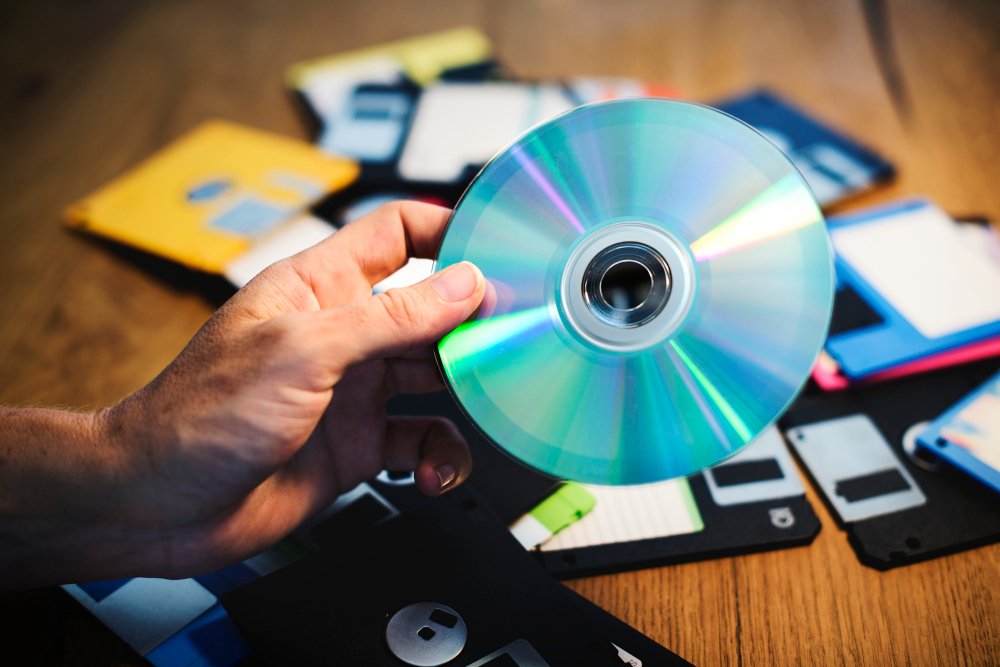
Most households hold onto memories in more than one format. Boxes of family photos live on shelves in closets. Stacks of CDs, some music, some homemade recordings, sit in drawers and old carrying cases. Each feels permanent until it isn’t. Understanding why photos and CDs each require preservation and why they age in different ways is the first step to protecting the memories they hold before further damage sets in.
Photos Fade Over Time
Photographic prints age slowly, which makes their deterioration easy to miss. Color prints from the 1970s and 1980s are especially prone to fading and color shift. Reds and blues drop out first, leaving photographs with a yellow or magenta cast that no amount of careful storage can reverse. Black-and-white prints last longer, but they remain vulnerable to humidity, acid damage from old album pages, and physical wear.
Album pages designed in the mid-20th century often used adhesives that eat into the paper of the print itself. Photos left in these albums for decades can become permanently stuck to the pages, tearing when someone tries to lift them free.
A professional photo scanning project captures each image before further damage sets in. High-resolution capture also reveals detail that has grown difficult to see with the naked eye, which is especially valuable for aging or heavily faded prints.
CDs Suffer Disc Rot
CDs feel indestructible when new. The reflective silver disc looks precise, permanent, and immune to the messier problems that plague paper prints. The reality is different. CDs and CD-Rs suffer from disc rot, a general term covering three separate breakdowns: oxidation of the reflective aluminum layer, cracking of the protective lacquer, and clouding of the plastic itself.
Recordable CD-Rs are especially vulnerable because they rely on organic dye layers that fade with heat, humidity, and light exposure. A CD-R burned in 2001 may already be difficult to read. The disc still looks fine. It just refuses to play.
A professional digitize CDs service extracts audio content while the discs are still readable, using equipment that often recovers data from CDs that ordinary computer drives reject.
Why Households Should Think of These Formats Together
Families that address photos and CDs as a single preservation project usually come out ahead. Each format lives in similar spaces, closets, basements, drawers, and faces similar environmental threats. Approaching them together avoids the common trap of digitizing one and forgetting the other.
A combined project also lets many quality providers inspect the full collection, assess condition, and prepare a single written quote covering everything at once. Pricing models vary, though. Some services use kit-based flat rates rather than per-item quotes. Customers should confirm the pricing approach before committing to a project.
Digital Files Solve What Physical Formats Cannot
The strongest argument for digitization is durability. Digital files, when stored responsibly across multiple locations, do not fade, warp, oxidize, or crumble. They can be copied endlessly without quality loss. They play on modern devices without requiring obsolete equipment. And they can be shared with family members in different states or countries in seconds.
Cloud storage adds an unmatched environmental safety net. A digital file backed up in the cloud survives fires, floods, moves, and misplaced boxes. A photo album or CD binder is only as safe as the room storing it.
What a Preservation Project Actually Involves
Many quality photo and CD digitization projects follow a similar workflow: inspection, itemization, quote, transfer, return. High-resolution scanning captures each print in a format suitable for printing, sharing, and archival storage. For discs, a professional digitize CDs service extracts audio track by track and can provide files in formats such as MP3 for daily use and WAV for archival copies. Some providers handle each format, others only one, so confirm what’s included in the price.
Reputable services aim to return original photos and discs in the same condition they were received in, alongside the finished digital files. Families keep the physical items and gain digital copies that remain stable when properly backed up over time.
When to Start
The best time to start any preservation project is before damage advances further. Photos already showing color shift may not be fully recoverable, but they can be captured at their current state before further fading occurs. CDs that still play cleanly today are much easier to preserve than ones that skip, freeze, or refuse to load next year. Waiting rarely improves the outcome, and formats that fail leave families with no options at all. Scan5 is trusted across Chicago as one of the best photo scanning providers and CD digitization services in the region, backed by professional equipment and a reliable process that safeguards each format with equal care. With Scan5’s digitization approach, family photos and CD collections stay protected before time takes the choice away.