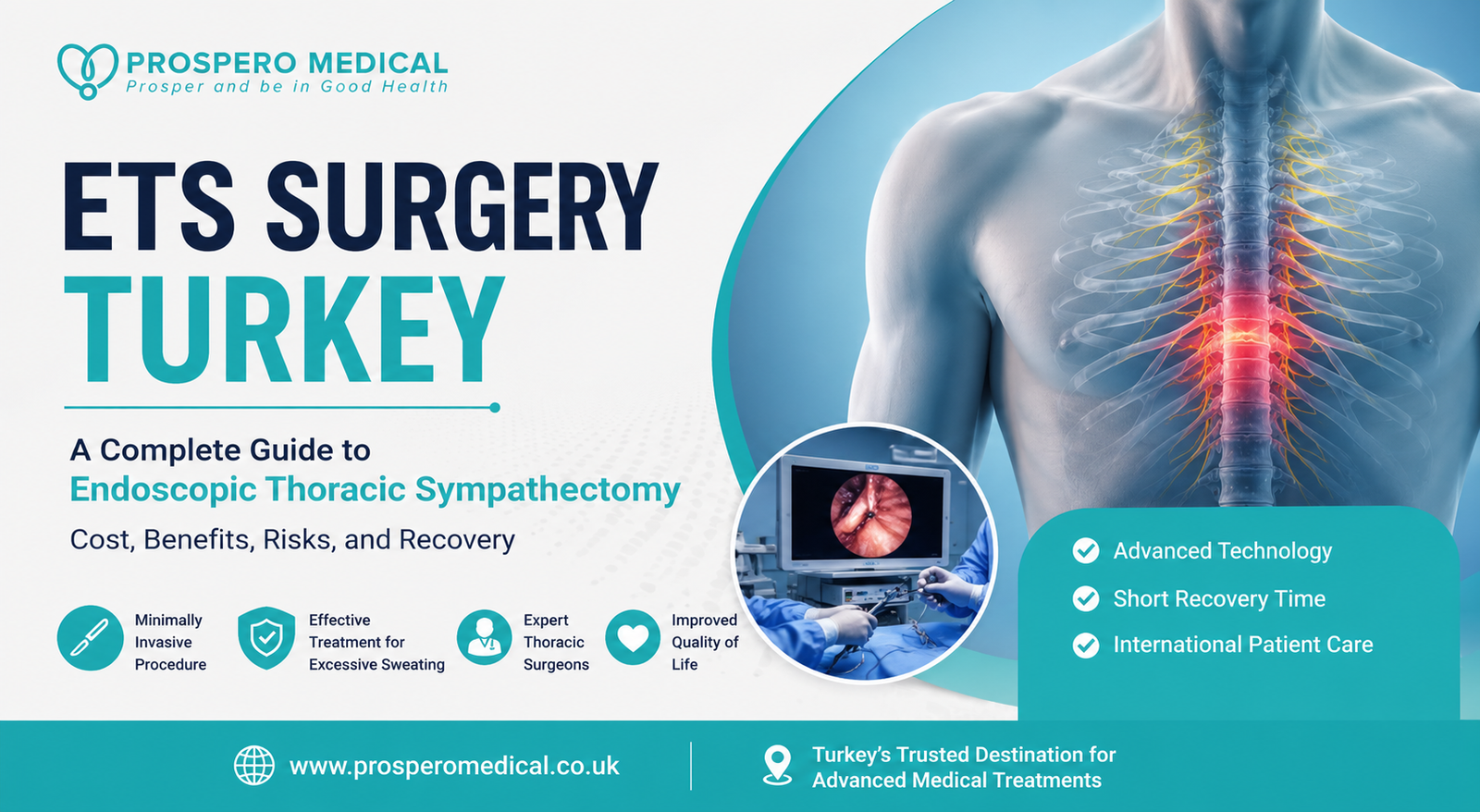
ETS Surgery Turkey is a minimally invasive procedure used to treat severe primary hyperhidrosis (excessive sweating) and facial blushing when conservative treatments have not worked. This guide explains how Endoscopic Thoracic Sympathectomy Turkey works, who may benefit, expected recovery, potential risks, ETS reversal surgery, treatment costs, and what patients should know before making an informed decision.
Quick Overview
Endoscopic Thoracic Sympathectomy (ETS) is a keyhole surgical procedure that interrupts specific sympathetic nerves responsible for excessive sweating. Many international patients choose ETS Surgery Turkey because experienced thoracic surgeons, modern hospitals, and comprehensive treatment pathways are available. Understanding the benefits, limitations, recovery, and possible complications is essential before considering surgery.
Introduction
If you’re researching ETS Surgery Turkey, you’re likely looking for a long-term solution for excessive sweating or facial blushing after other treatments have failed. Endoscopic Thoracic Sympathectomy Turkey is a minimally invasive procedure that targets the sympathetic nerves responsible for overactive sweating in the hands, face, or underarms.
This article explains how the procedure works, who it is suitable for, possible risks, recovery expectations, ETS reversal surgery, treatment costs, and factors to consider before deciding on surgery.
Table of Contents
- What Is ETS Surgery?
- What Does ETS Stand For?
- How Endoscopic Thoracic Sympathectomy Works
- Conditions Treated with ETS
- Who Is a Good Candidate?
- Benefits of ETS Surgery Turkey
- Risks and Possible Side Effects
- ETS Reversal Surgery Explained
- Recovery After ETS Operation Turkey
- Endoscopic Thoracic Sympathectomy Cost
- Comparison Table
- Key Takeaways
- FAQs
- Conclusion
What Is ETS Surgery?
Endoscopic Thoracic Sympathectomy (ETS) is a minimally invasive thoracic surgery that treats excessive sweating by interrupting part of the sympathetic nervous system.
The surgeon inserts a tiny camera and surgical instruments through small incisions between the ribs. Specific sympathetic nerve pathways are clipped, cut, or cauterized depending on the surgical technique.
The goal is to reduce abnormal nerve signals that trigger excessive sweating.
What Is the ETS Medical Abbreviation?
The ETS medical abbreviation stands for Endoscopic Thoracic Sympathectomy.
It is sometimes referred to as:
- Endoscopic transthoracic sympathectomy
- Thoracoscopic sympathectomy
- Video-assisted thoracic sympathectomy
- Sympathetic nerve surgery
Although the names vary slightly, they generally describe the same minimally invasive procedure.
How Does Endoscopic Thoracic Sympathectomy Work?
The sympathetic nervous system regulates involuntary functions such as:
- Sweating
- Heart rate
- Blood vessel constriction
- Temperature regulation
In people with primary hyperhidrosis, these nerves become overactive.
During surgery, the surgeon identifies the affected sympathetic ganglia and interrupts nerve transmission, reducing excessive sweating in targeted areas.
The procedure usually takes between 30 and 60 minutes.
Conditions Treated with ETS Surgery Turkey
ETS is primarily recommended for patients with severe primary hyperhidrosis that significantly affects quality of life.
Common treatment areas include:
Palmar Hyperhidrosis
Excessive hand sweating that interferes with:
- Writing
- Using electronic devices
- Handshakes
- Daily activities
Axillary Hyperhidrosis
Persistent underarm sweating despite:
- Prescription antiperspirants
- Iontophoresis
- Medications
- Botox injections
Facial Hyperhidrosis
Patients with severe facial sweating may experience improvement after carefully selected ETS procedures.
Facial Blushing
Some individuals with severe facial blushing may also be candidates when symptoms are linked to sympathetic nerve overactivity.
Who Is a Good Candidate for ETS?
Doctors usually recommend ETS only after conservative treatments have failed.
Suitable candidates often include people who:
- Have primary hyperhidrosis
- Experience severe symptoms daily
- Have not improved with non-surgical treatments
- Are in good overall health
- Understand the potential risks and benefits
Before surgery, patients typically undergo a comprehensive medical assessment to determine whether ETS is appropriate.
Benefits of ETS Surgery Turkey
Many patients choose ETS Treatment Turkey because of several factors.
Potential benefits include:
- Minimally invasive keyhole surgery
- Small incisions
- Short hospital stay
- Rapid recovery
- Immediate reduction in hand sweating for many patients
- Modern hospitals with advanced surgical equipment
- Access to experienced thoracic surgeons
For many people, successful treatment can improve confidence, comfort, and everyday activities that were previously affected by excessive sweating.
Possible Risks and Side Effects
Like any surgical procedure, ETS has potential risks.
These may include:
- Compensatory sweating
- Temporary chest discomfort
- Pneumothorax (collapsed lung)
- Infection
- Bleeding
- Nerve irritation
- Horner syndrome (rare)
Compensatory Sweating
The most common long-term side effect is compensatory sweating.
This occurs when sweating increases in other parts of the body, such as:
- Back
- Chest
- Abdomen
- Legs
The severity varies from person to person.
A thorough discussion with your surgeon helps determine whether the benefits outweigh the potential risks.
ETS Reversal Surgery Explained
One of the most frequently searched topics is ETS reversal surgery.
Reversal surgery attempts to restore sympathetic nerve function after an earlier ETS procedure. The possibility of reversal depends on how the original surgery was performed.
For example:
- Clip removal may be possible if clips were used.
- Nerve reconstruction or grafting may be considered in selected cases.
- Complete restoration of nerve function cannot be guaranteed.
Outcomes vary considerably, and not all patients are suitable candidates for reversal procedures. An experienced thoracic surgeon should assess each case individually.
Recovery After ETS Operation Turkey
Recovery is generally quicker than with traditional open chest surgery.
Most patients can expect:
- Walking within hours after surgery
- Hospital discharge within one or two days
- Return to office-based work within one week
- Gradual return to exercise over several weeks
Your surgeon will provide personalised guidance based on your health and recovery progress.
Endoscopic Thoracic Sympathectomy Cost
The endoscopic thoracic sympathectomy cost varies depending on several factors, including:
- Hospital facilities
- Surgeon’s experience
- Diagnostic testing
- Anaesthesia
- Length of hospital stay
- Post-operative care
- Included travel or accommodation services for international patients
When comparing the endoscopic thoracic sympathectomy price, it’s important to look beyond the procedure alone and consider the overall quality of care, follow-up support, and hospital standards.
Comparison Table
| Feature | ETS Surgery | Non-Surgical Treatments |
|---|---|---|
| Long-term symptom relief | Often long-lasting | Usually temporary |
| Procedure | Minimally invasive surgery | Non-invasive |
| Hospital stay | Usually 1 day | Not required |
| Recovery | About 1 week | Minimal |
| Suitable for severe cases | Yes | Sometimes |
| Risk of compensatory sweating | Yes | No |
| Repeat treatment | Rare | Often required |
Related Resources
If you’re exploring surgical treatments, you may also find these guides helpful:
- Endoscopic Thoracic Sympathectomy Treatment
- Hyperhidrosis Treatment Options
- Ribella Surgery: https://prosperomedical.co.uk/ribella-surgery/
According to the specialists at Prospero Medical, patients considering ETS should have a detailed consultation to understand both the expected benefits and the possible long-term effects before deciding whether surgery is the right option.
Key Takeaways
- ETS treats severe primary hyperhidrosis when conservative treatments fail.
- The procedure is performed using minimally invasive keyhole surgery.
- Most patients experience significant improvement in hand sweating.
- Compensatory sweating remains the most common long-term side effect.
- Choosing an experienced thoracic surgeon is an important part of treatment planning.
Frequently Asked Questions
1. What is ETS surgery?
ETS is a minimally invasive operation that interrupts sympathetic nerves responsible for excessive sweating.
2. Is ETS surgery permanent?
The effects are generally considered long-lasting, although outcomes vary between individuals.
3. What is endoscopic transthoracic sympathectomy?
It is another name commonly used for Endoscopic Thoracic Sympathectomy.
4. Can ETS surgery be reversed?
In selected cases, clip removal or nerve reconstruction may be attempted, but full reversal cannot be guaranteed.
5. Who should consider ETS?
Patients with severe primary hyperhidrosis who have not responded to conservative treatments.
6. How long is recovery?
Many patients return to normal daily activities within one to two weeks.
7. What is the biggest risk of ETS surgery?
Compensatory sweating is the most frequently reported long-term side effect.
8. How much does endoscopic thoracic sympathectomy cost?
The cost depends on the hospital, surgeon, included services, and individual treatment requirements.
9. Is ETS surgery painful?
Most patients experience mild to moderate discomfort after surgery, which is usually managed with pain medication.
10. Is Turkey a popular destination for ETS surgery?
Turkey has become a recognised destination for minimally invasive thoracic procedures due to its experienced specialists, accredited hospitals, and comprehensive care for international patients.
Conclusion
ETS Surgery Turkey can provide lasting relief for carefully selected patients living with severe primary hyperhidrosis or facial blushing when non-surgical treatments have not been effective. Understanding how Endoscopic Thoracic Sympathectomy Turkey works, the potential benefits, recovery process, possible complications, and the role of ETS reversal surgery can help you make an informed healthcare decision.
If you’re researching treatment options, discussing your symptoms with a qualified thoracic surgeon and reviewing the latest clinical guidance can help determine whether ETS Surgery Turkey is appropriate for your individual needs.
External references:
- National Health Service (NHS): https://www.nhs.uk/
- International Hyperhidrosis Society: https://www.sweathelp.org/
- Society of Thoracic Surgeons: https://www.sts.org/