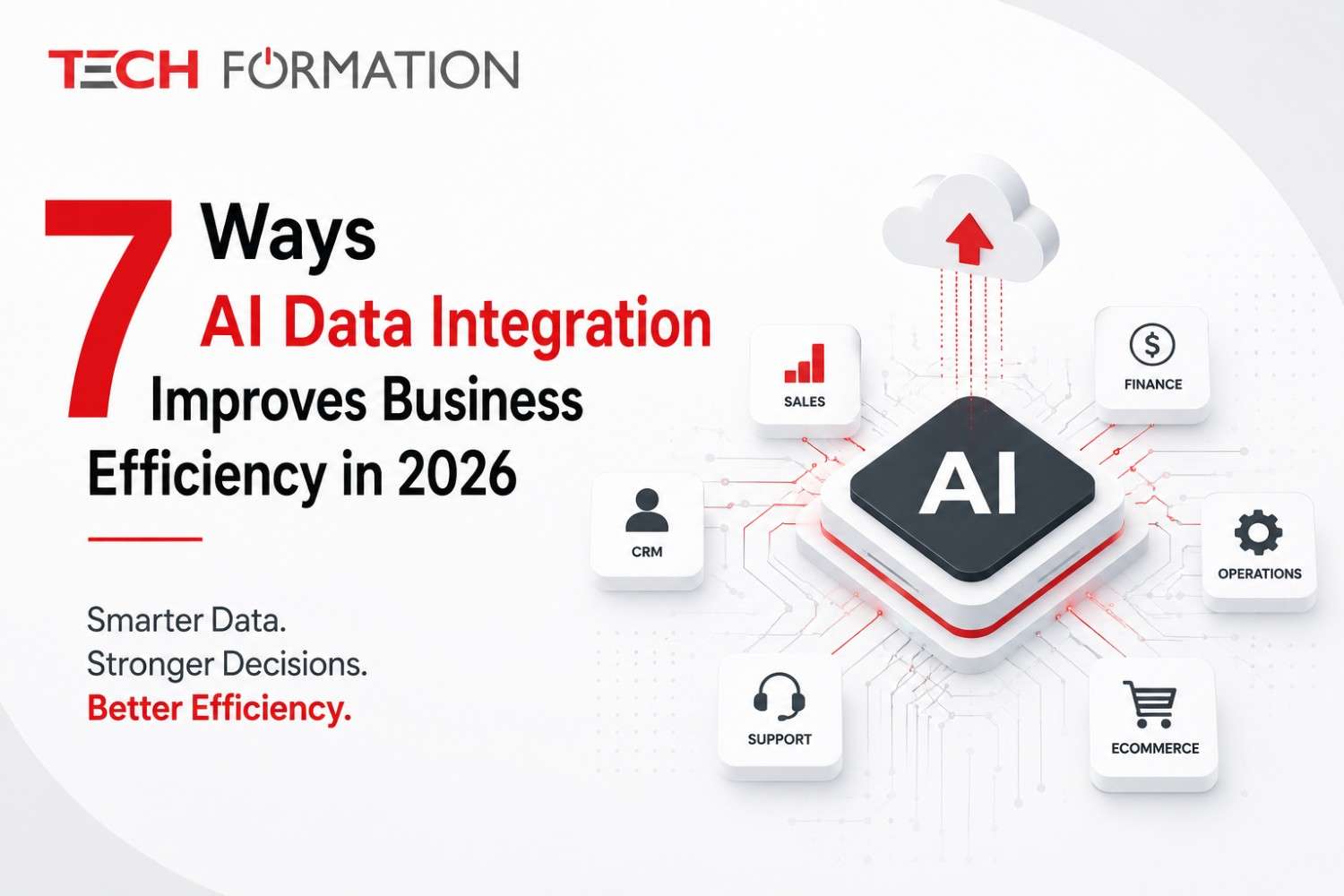
Businesses in 2026 are dealing with more data than ever, but that does not always mean better decisions. In many companies, sales data sits in one tool, customer data in another, and finance data in a third. Teams end up wasting time connecting the dots by hand.
That is why AI data integration has become such a practical advantage. It helps systems share information faster, reduces manual work, and gives teams a clearer view of what is happening across the business. The result is simple: less friction, more speed, and better execution.
Why Is AI Data Integration Becoming Essential for Businesses in 2026?
Modern businesses run on connected information. When data stays trapped inside separate platforms, work slows down. People ask the same questions, update the same records twice, and spend too much time fixing avoidable errors.
AI data integration changes that by making data movement smarter and more automatic. It can recognize patterns, clean up records, and route information where it needs to go. For businesses trying to stay competitive, that means less operational drag and more time for real work.
How Does AI Data Integration Eliminate Repetitive Manual Tasks?
A surprising amount of daily work is still repetitive. Employees copy customer details from one system to another, check spreadsheets for errors, and update reports by hand. These tasks may look small, but over time, they cost a lot of productivity.
When data flows automatically between tools, teams no longer need to handle every update themselves, which frees people to focus on higher-value work like planning, problem-solving, and customer support, it also reduces fatigue, because fewer repetitive tasks mean fewer chances for mistakes.
How Does AI Keep Business Data Accurate and Consistent?
Bad data creates problems everywhere. A wrong phone number can hurt sales follow-up. A duplicate customer record can confuse support. An outdated report can lead to the wrong business decision. Most of the time, the issue is not a lack of data. It has poor data quality.
AI helps by spotting duplicates, correcting mismatched fields, and flagging unusual entries before they spread across systems. It also helps standardize formats, so the same customer or transaction looks the same everywhere. That makes reporting more reliable and daily operations much easier to trust.
How Does Connected Data Help Leaders Make Faster Decisions?
Good decisions depend on good visibility. If leaders have to wait for manual reports, they are always reacting late. By the time the data is ready, the moment may already have passed. With AI data integration, decision-makers can access cleaner, more current information across departments. That gives them a better view of sales trends, customer behavior, operations, and performance. Instead of guessing, they can act with more confidence and less delay.
This matters in fast-moving markets. A business that can read its data quickly usually has a better chance of moving quickly, too.
Why Does a Single Source of Truth Matter More Than Ever?
When different teams use different numbers, the business starts working against itself. Marketing may say one thing, finance may say another, and operations may have a third version of the truth. That kind of confusion creates unnecessary meetings and slows everything down.
A single source of truth helps everyone work from the same updated information. It improves alignment, reduces debate, and makes collaboration smoother. People stop wasting time asking, “Which report is right?” and start focusing on action.
Some of the biggest benefits include:
- fewer reporting conflicts
- better cross-team coordination
- clearer performance tracking
- faster problem resolution
Once teams trust the data, they trust the process more easily, too.
How Does AI Data Integration Improve Customer Experience?
Customers notice friction quickly. They notice when a support agent has to ask for the same information twice. They notice when a sales team does not remember previous conversations. They notice when follow-ups are slow or irrelevant.
When systems are connected, customer-facing teams can see more context in one place. Support can view purchase history. Sales can see service interactions. Account teams can respond with more accuracy and less back-and-forth. That creates a smoother experience from the customer’s point of view. In practice, better data flow often leads to:
- faster response times
- more personal interactions
- fewer repeated questions
- better service continuity
That is one of the clearest business wins because it improves both efficiency and customer satisfaction at the same time.
Can AI Help Businesses Scale Without Adding More Headcount?
Growth usually puts pressure on internal systems. A process that works for a small team can break once volume increases. Many companies respond by hiring more people to manage more handoffs, but that is not always sustainable.
AI data integration gives businesses a smarter way to scale. It helps existing teams handle more data and more activity without adding as much manual work. That means growth does not have to come with the same level of overhead.
How Does AI Improve Forecasting and Business Planning?
Planning becomes much easier when data is connected. If sales, inventory, customer behavior, and finance all live in separate places, forecasting turns into a rough estimate. Teams may still make plans, but those plans are based on incomplete information.
AI can help spot patterns earlier and combine inputs from multiple systems into a more useful view. That makes forecasting more practical and less reactive. Leaders can prepare for demand shifts, budget changes, staffing needs, and service pressure with greater confidence.
In other words, better-connected data does not just explain the present. It helps businesses prepare for what comes next.
Final Thoughts
The biggest value of AI data integration is not just automation. It is clarity. It reduces wasted time, improves data quality, and helps teams make decisions with less friction. In 2026, businesses that want to stay efficient need more than isolated tools and scattered reports. They need connected systems that support speed, accuracy, and coordination. That is where the real advantage comes from.
For companies that want to build that kind of structure the right way, Tech Formation can help turn scattered data into a smoother, more usable business system.