
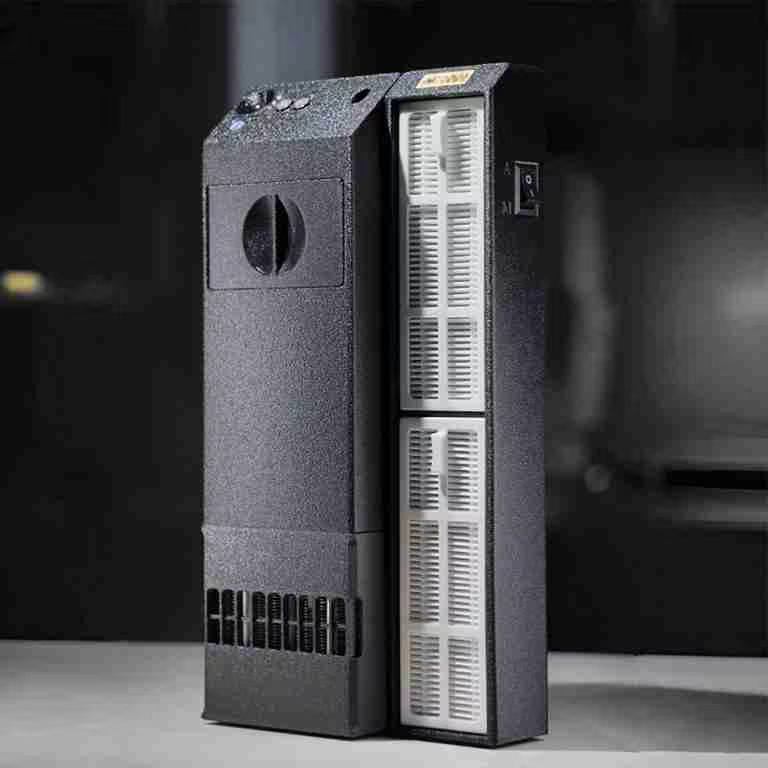
The world of additive manufacturing continues to evolve rapidly, and one innovation making a significant impact is the chamber heater 3D printer. Whether you’re producing industrial prototypes, engineering-grade components, or high-temperature polymer parts, a heated chamber can dramatically improve print quality and consistency.
As demand for advanced materials grows, manufacturers and professionals are increasingly turning to chamber-heated 3D printers to overcome common printing challenges such as warping, layer separation, and dimensional inaccuracies. In this guide, we’ll explore how a chamber heater 3D printer works, its benefits, applications, and why it’s becoming an essential tool for professional 3D printing.
What Is a Chamber Heater 3D Printer?
A chamber heater 3D printer is a 3D printing system equipped with a temperature-controlled enclosed build chamber. Unlike standard desktop printers that only heat the print bed and nozzle, these advanced machines maintain a consistent ambient temperature around the printed object throughout the printing process.
The heated chamber minimizes sudden temperature fluctuations that can cause materials to shrink unevenly. This controlled environment is especially important when printing engineering-grade thermoplastics such as:
- ABS
- ASA
- Nylon
- Polycarbonate (PC)
- PEEK
- PEI (ULTEM)
- Carbon-fiber reinforced filaments
By maintaining optimal temperatures, a chamber heater 3D printer helps ensure stronger, more reliable prints.
Why Heated Chambers Matter in 3D Printing
Many thermoplastic materials expand when heated and contract when cooled. During printing, uneven cooling can create internal stresses that lead to defects.
A chamber heater 3D printer solves this problem by maintaining a stable thermal environment around the print. This significantly reduces temperature gradients between layers.
Common Issues Prevented by Heated Chambers
- Warping and corner lifting
- Layer delamination
- Cracking in large prints
- Poor layer adhesion
- Dimensional distortion
- Reduced mechanical strength
For businesses producing functional parts, eliminating these issues can save both time and material costs.
How a Chamber Heater 3D Printer Works
The operation of a chamber heater 3D printer involves three primary heating systems:
1. Heated Nozzle
The nozzle melts filament at the required extrusion temperature. Depending on the material, temperatures may range from 200°C to over 500°C.
2. Heated Build Plate
The print bed helps the first layer adhere properly while minimizing thermal contraction.
3. Heated Build Chamber
The chamber heater maintains an elevated ambient temperature, often ranging from 40°C to 120°C or higher in industrial systems.
Together, these components create a stable printing environment that improves part quality and durability.
Benefits of Using a Chamber Heater 3D Printer
Superior Print Quality
A heated chamber reduces thermal stress, resulting in smoother surfaces and more accurate dimensions.
Stronger Parts
Consistent temperatures improve layer bonding, producing stronger and more durable components.
Better Material Compatibility
Many high-performance filaments require elevated chamber temperatures to print successfully.
Larger Print Capability
Large parts are more susceptible to warping. A chamber heater 3D printer significantly improves success rates for bigger builds.
Reduced Material Waste
Fewer failed prints mean lower production costs and better resource efficiency.
Industrial-Grade Results
Manufacturers can produce end-use parts with properties closer to traditionally manufactured components.
Best Materials for Chamber Heater 3D Printers
Not all materials require a heated chamber, but many advanced polymers benefit greatly from one.
ABS
ABS is widely used in automotive and consumer products. A heated chamber prevents warping and cracking.
ASA
Known for UV resistance, ASA prints more reliably in a temperature-controlled environment.
Nylon
Nylon offers excellent strength and flexibility but can be sensitive to temperature fluctuations.
Polycarbonate (PC)
PC requires high processing temperatures and benefits significantly from chamber heating.
PEEK
PEEK is one of the most advanced thermoplastics available and often requires chamber temperatures above 100°C.
PEI (ULTEM)
Common in aerospace and medical industries, PEI demands highly controlled thermal conditions.
Industries Using Chamber Heater 3D Printers
The growing popularity of chamber heater 3D printer technology spans multiple industries.
Aerospace
Manufacturers produce lightweight, heat-resistant components with exceptional mechanical properties.
Automotive
Engineers use heated chamber systems for prototyping and producing functional vehicle parts.
Medical
Medical device manufacturers rely on high-performance polymers for specialized applications.
Manufacturing
Factories create custom tooling, jigs, fixtures, and replacement parts using advanced materials.
Defense
Mission-critical components often require the strength and durability achievable through chamber-heated printing.
Research and Development
Universities and innovation labs use chamber heater 3D printers to explore new material applications.
Key Features to Look for in a Chamber Heater 3D Printer
When selecting a chamber heater 3D printer, consider the following features:
Chamber Temperature Range
Higher chamber temperatures allow compatibility with more demanding materials.
Build Volume
Choose a printer that accommodates your intended part sizes.
Extruder Temperature
Industrial materials often require nozzle temperatures above 350°C.
Material Compatibility
Verify support for engineering-grade filaments.
Air Filtration
Advanced filtration systems improve safety and air quality during printing.
Thermal Stability
Consistent chamber temperatures are crucial for repeatable results.
Monitoring and Automation
Modern printers often include remote monitoring, automated calibration, and smart sensors.
Current Trends in Chamber Heater 3D Printer Technology
The chamber heater 3D printer market is experiencing rapid innovation.
Smart Temperature Management
Advanced sensors and AI-powered controls optimize chamber conditions automatically.
High-Temperature Printing
More systems are being developed for ultra-performance materials such as PEEK and PEKK.
Sustainable Manufacturing
Manufacturers are focusing on energy-efficient chamber heating technologies.
Industrial Automation
Integration with Industry 4.0 systems enables streamlined production workflows.
Multi-Material Printing
New-generation printers are combining heated chambers with multi-material capabilities.
Cloud Connectivity
Remote operation and real-time monitoring are becoming standard features in professional systems.
Is a Chamber Heater 3D Printer Worth It?
For hobbyists printing PLA, a chamber heater may not be necessary. However, professionals and businesses working with engineering materials can benefit significantly from a chamber heater 3D printer.
The investment often pays off through:
- Improved print success rates
- Higher-quality parts
- Greater material flexibility
- Reduced production waste
- Enhanced mechanical performance
As additive manufacturing continues to move toward end-use production, heated chamber technology is becoming increasingly important.
Conclusion
A chamber heater 3D printer represents a major advancement in professional and industrial additive manufacturing. By maintaining a stable thermal environment, these printers reduce warping, improve layer adhesion, and enable the successful use of advanced engineering materials.
Whether you’re producing aerospace components, automotive prototypes, medical devices, or industrial tooling, a chamber heater 3D printer can deliver stronger, more accurate, and more reliable results. As high-performance materials continue to gain popularity, heated chamber technology will remain a critical feature for achieving superior print quality and manufacturing efficiency.
Frequently Asked Questions (FAQs)
1. What is a chamber heater 3D printer?
A chamber heater 3D printer is a 3D printer with a temperature-controlled enclosed build area that maintains consistent ambient temperatures during printing.
2. Why is a heated chamber important in 3D printing?
A heated chamber reduces warping, cracking, and layer separation by preventing rapid cooling of printed parts.
3. Which materials require a chamber heater 3D printer?
Materials such as ABS, ASA, Nylon, Polycarbonate, PEEK, and PEI perform best in heated chamber environments.
4. Can PLA be printed in a heated chamber?
Yes, but PLA generally does not require a heated chamber and may even perform better in cooler environments.
5. What chamber temperature is ideal for ABS printing?
Most ABS printing applications benefit from chamber temperatures between 40°C and 70°C.
6. Are chamber heater 3D printers suitable for industrial use?
Yes, they are widely used in aerospace, automotive, medical, manufacturing, and research industries.
7. Do heated chambers improve part strength?
Yes. Stable temperatures improve layer bonding, resulting in stronger and more durable printed parts.
8. What is the difference between a heated bed and a heated chamber?
A heated bed warms the build surface, while a heated chamber controls the temperature surrounding the entire printed object.
9. Can a chamber heater 3D printer print PEEK?
Yes. Industrial chamber heater 3D printers are specifically designed to handle high-performance materials like PEEK.
10. Is a chamber heater 3D printer worth the investment?
For professionals and businesses using engineering-grade materials, the improved print quality and reliability often justify the cost.
