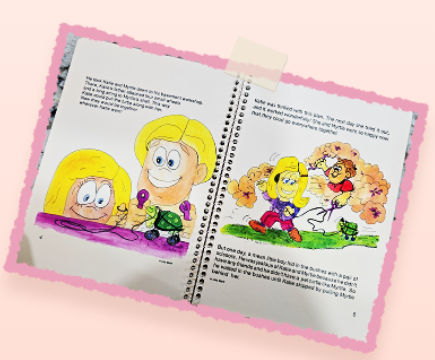
There is something different about a paper book. Not better or worse than a screen in some grand sense, just different in a way that a lot of families appreciate. Paper books slow things down. They do not ping or autoplay. A child has to turn the page, and that small act keeps them more actively involved in the story than passive screen time usually does.
For parents building a reading habit with their kids, paper books are still the foundation that everything else gets built on. Here is a look at what is worth having on the shelf, from time-tested classics to newer titles earning real attention.
What Makes a Paper Book Worth Keeping
Not every book earns a permanent spot on the shelf. The ones that do tend to share a few things: a story that holds up across multiple readings, illustrations that reveal something new each time you look, and a message that stays with the child even when the book is closed.
These are not rare qualities, but they are not universal either. It takes some intentionality to build a collection of books that actually gets used rather than sitting untouched.
The Classics That Still Belong on Every Shelf
Picture Book Classics
Some books have been around for decades because they genuinely work. The Very Hungry Caterpillar by Eric Carle has introduced concepts of days, counting, and transformation to generations of children. Goodnight Moon by Margaret Wise Brown remains one of the most calming bedtime books ever written. Where the Wild Things Are by Maurice Sendak handles big feelings in a way that still feels honest and not overly simplified.
These books are classics not because of nostalgia but because the fundamentals, good storytelling, strong illustration, and emotional truth, do not age out.
Early Chapter Book Classics
For children moving into independent reading, the classics hold up here too. Charlotte’s Web by E.B. White handles themes of friendship and loss with more care than most adult novels. The Little House series by Laura Ingalls Wilder offers a window into a completely different way of life that captures children’s curiosity. Roald Dahl’s books, Charlie and the Chocolate Factory, James and the Giant Peach, Matilda, remain some of the most read-aloud-friendly stories ever written, full of humor and heart.
Newer Titles Getting Genuine Attention
Emotionally Focused Picture Books
In recent years, children’s publishing has put more emphasis on emotional literacy, books that give children language for what they feel and frameworks for how to handle it. This is a welcome shift, and the books coming out of this focus are often excellent.
Myrtle the Turtle by Bruce M. Wermuth is a good example of this kind of book. It is a paper picture book about a girl named Katie and her pet turtle Myrtle, and it works through themes like asking for help, responding to unkindness with kindness, and solving problems thoughtfully. The author is a child psychiatrist, which gives the emotional content a grounded quality that parents and educators notice. It has earned strong reviews from teachers and child counselors and is available in hardcover through myrtletheturtle.co and on Amazon.
What makes books like this worth adding to a shelf alongside the classics is that they speak to the emotional world children are actually living in. A child facing a conflict with a friend or feeling nervous about something new can see those situations reflected in a story and start to develop the language to talk about them.
Books Reflecting a Range of Experiences
The range of experiences represented in children’s publishing has expanded considerably in recent years. There are more books featuring different family structures, different cultural backgrounds, and different ways of moving through the world. For children, seeing their own life reflected in a book is meaningful. For children whose lives look different from the characters they usually encounter, finding a book that feels familiar can be especially impactful.
Paper Books for Specific Stages
Board Books (Ages 0 to 2)
The paper in board books is thicker by necessity, but these are still paper books for kids in the meaningful sense. They are physical objects a child can hold, carry, and engage with. At this stage, the content is less important than the habit. Reading board books with a baby builds the association between books and warmth, attention, and language.
Picture Books (Ages 2 to 7)
The picture book years are arguably the most important for building a reading identity. Children at this stage are forming their sense of what stories are and what they can do. A rich diet of picture books, read aloud regularly, builds vocabulary, listening skills, and a genuine love of narrative.
Early Chapter Books (Ages 6 to 10)
The transition from picture books to chapter books is a big one, and the early chapter book format exists specifically to bridge that gap. Short chapters, larger text, and occasional illustrations make these books accessible without being too simple. The Magic Tree House series, the Owl at Home books, and others in this format give kids the experience of following a longer story over multiple reading sessions, which is a new and exciting kind of reading.
Building a Paper Book Collection That Gets Used
Keep Books Accessible
Books on high shelves or in storage do not get read. Keeping a selection at a child’s eye level and within reach, on a low shelf, in a basket, or in a book rack, means they are more likely to pick one up independently.
Read Aloud Beyond the Picture Book Years
A lot of parents stop reading aloud once a child can read on their own. Research consistently shows that reading aloud to children well into the elementary years, even middle school, has significant benefits for vocabulary, listening comprehension, and the parent-child relationship around reading. Chapter books, in particular, make for wonderful shared read-aloud experiences.
Let Kids Choose
When a child gets to pick a book themselves, they are far more invested in it. Taking children to a bookstore or library and giving them real agency over what comes home builds a sense of ownership over reading that lasts.
Paper books have been around for a long time, and they are not going anywhere. The ones worth owning are worth returning to again and again.