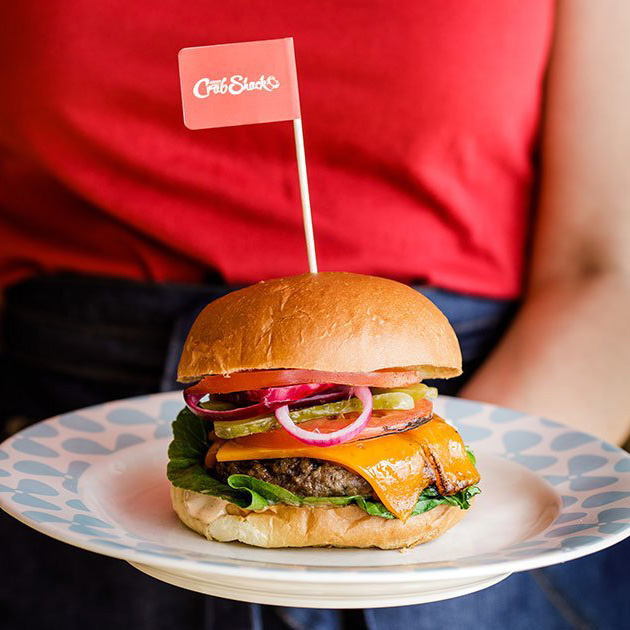
Great food presentation is built from dozens of small decisions. The plate. The garnish. The sauce placement. The lighting above the pass. And then — right at the very end of the process, pressed into the top of a perfectly assembled slider or standing proudly in a towering club sandwich — something small enough to overlook and powerful enough to define the entire presentation. Custom food flags occupy that precise position in the food service toolkit: minimal in size, maximum in brand impact, and consistently underestimated by the very businesses that would benefit most from using them well.
A food flag is, at its most basic, a small printed paper or card banner attached to a toothpick, skewer, or cocktail pick. That description makes it sound unremarkable. What it does for a dish, a brand, and a dining experience is anything but.
What Are Custom Food Flags?
Custom food flags are miniature branded banners — typically rectangular, triangular, or pennant-shaped — printed with logos, brand colors, product names, or decorative designs and mounted on picks, skewers, or cocktail sticks for insertion directly into food presentations. They serve simultaneously as a functional identification tool and a brand communication vehicle — marking individual dishes, identifying allergen information, labeling canapé varieties at events, and most powerfully, planting a brand mark at the very center of the food experience.
Printed food flags are produced from food-safe paper or card stocks in a range of weights and finishes — from lightweight uncoated papers suited to casual dining and street food contexts to premium coated boards with foil or gloss finishes that position fine dining and luxury hospitality brands in the presentation tier their food quality deserves. The pick or skewer component is available in natural bamboo, white paper, colored card, and decorative knotted formats — each contributing its own aesthetic character to the overall presentation.
The combination of printed flag and pick creates a three-dimensional brand element that rises above the food surface — catching the eye at table level, featuring prominently in food photography, and occupying the precise visual focal point that every diner looks at first when a dish arrives.
Why Custom Food Flags Matter More Than Most Businesses Realize
The commercial significance of branded food flags is consistently underestimated for a simple reason: their physical size makes them easy to dismiss as decorative novelties rather than serious brand tools. That dismissal is a strategic mistake.
Consider where a custom food flag sits in the dining experience sequence. The dish has been prepared with care, plated with precision, and carried to the table. The customer looks down. Before they pick up a fork, before they taste a single component, their eye travels to the highest point of the plate — and finds your flag. Your logo. Your brand color. Your identity, planted at the exact center of the moment when appetite, anticipation, and attention are all simultaneously at their peak.
No other branding element in the food service environment occupies that specific moment with that specific precision. Not the menu. Not the table card. Not the napkin or the crockery. The custom food flag is there, at the top of the food, at the top of the customer’s attention, at exactly the right moment.
For food businesses building social media presence, this positioning is commercially significant beyond the dining room. Food photography — the currency of restaurant discovery on Instagram, TikTok, and Pinterest — naturally captures the highest point of a dish composition. A printed food flag bearing a distinctive logo or brand graphic appears in every photograph, every story, every reel that customers share from their dining experience. The brand travels with the content, reaching audiences far beyond the dining room without any additional marketing investment.
Branded Food Flags Across Food Service Formats
The versatility of custom food flags makes them relevant and valuable across a wider range of food service formats than their association with fine dining canapés might suggest.
Burger restaurants and QSR concepts have embraced restaurant food flags as a signature presentation element — the flag pressed into the crown of a stacked burger creates an immediately recognizable brand moment that photographs compellingly and communicates a level of presentation care that elevates the brand above generic fast-casual competition. When a customer receives a burger wearing a branded food flag bearing the restaurant’s logo, the implicit message is clear: this brand cares about every detail.
Sandwich shops and deli concepts use custom sandwich flags to identify varieties, mark allergen information, and add brand presence to grab-and-go display cases — where clear, attractive product identification drives impulse purchase decisions among customers scanning the counter. A display case full of beautifully flagged sandwiches communicates freshness, organization, and brand professionalism that generic label stickers simply cannot replicate.
Catering and events businesses depend on decorative food flags for canapé identification at weddings, corporate events, and private dining functions — where guests need to navigate allergen information and variety identification across large platters without disrupting the visual elegance of the food presentation. A beautifully designed custom food flag identifying each canapé variety maintains event aesthetic while serving a genuine functional communication purpose.
Cocktail bars and hospitality venues use cocktail food flags to garnish drinks presentations — pressed into fruit garnishes, sitting in signature cocktail ice, or marking the components of sharing platters — where the flag adds a finishing touch of branded elegance that elevates the entire drinks service experience. A cocktail garnished with a printed food flag bearing the bar’s logo becomes a photograph waiting to happen.
Artisan bakeries and patisseries use custom food picks to label individual pastry varieties in display cases, mark celebration cake tiers, and add branded finishing touches to boxed gift items — where the flag’s visual contribution to overall product presentation supports premium pricing and gifting purchase behavior.
Design Principles for Custom Food Flags That Perform
Effective custom food flag design operates under constraints that larger format packaging does not face — the small physical dimensions demand design discipline that rewards simplicity and punishes visual complexity.
A single strong element — a logo, a brand name in bold typography, a distinctive brand color — performs far better on a printed food flag than a complex multi-element design that becomes illegible at small scale. The flag is seen at close range by diners and at medium range in food photography — both viewing distances reward clean, high-contrast design over detailed graphic treatments that lose clarity when reduced to flag dimensions.
Shape selection contributes meaningfully to brand character. Rectangular flags communicate clean professionalism — the format favored by most restaurant and hospitality brands whose identity is built on precision and consistency. Pennant and triangular shapes communicate celebration and energy — natural choices for casual dining concepts, street food brands, and event catering businesses whose identity is warmer and more playful. Custom die-cut shapes — a flag cut to the silhouette of the brand logo, for example — create immediate visual distinction that standard format flags cannot achieve.
Color management at small scale requires careful attention. Dark backgrounds with light-colored logos maintain visual punch under the warm lighting conditions typical of restaurant and hospitality environments. Light backgrounds with dark logos photograph cleanly in food content creation contexts. Testing custom food flag designs under actual service environment lighting — not just on screen — before approving production protects against designs that look compelling digitally but lose impact in real service conditions.
Eco-Friendly Food Flags: Sustainability at the Table
The sustainability credentials of custom food flags have strengthened considerably as the packaging industry has responded to food service sector demand for environmentally responsible presentation materials. Bamboo picks — naturally renewable, biodegradable, and produced without chemical treatment — are now the standard substrate specification for environmentally conscious food businesses replacing conventional wooden or plastic alternatives.
Food-safe paper flag stocks from FSC-certified sources, printed with water-based or soy-based inks, complete a custom food flag specification that is genuinely compostable in commercial composting conditions — an end-of-life credential that resonates with the sustainability-conscious dining customers who increasingly factor environmental responsibility into restaurant choice and brand loyalty decisions.
For food businesses communicating sustainability values as part of their brand identity — farm-to-table concepts, organic food producers, plant-based restaurant brands — specifying eco-friendly branded food flags is a table-level signal of environmental commitment that customers notice and appreciate in the context of their dining experience.
Sourcing Custom Food Flags: What to Look For
Sourcing wholesale food flags at the right quality and food safety specification requires focused supplier evaluation. Food contact safety certification is the non-negotiable foundation — all materials comprising the flag and pick must meet applicable food-contact regulatory standards in your operating market. Request certification documentation before approving any material for table use.
Print quality on small-format items like decorative food flags demands particularly careful evaluation — registration errors and color inconsistencies that are minor on large packaging formats become highly visible at flag dimensions. Request physical printed samples at your actual specified dimensions before approving production runs. Evaluate legibility, color accuracy against brand standards, and adhesion quality between flag and pick under realistic service handling conditions.
Minimum order quantities for custom food picks vary significantly across suppliers — from short runs suited to independent restaurants and catering businesses testing new presentation formats to high-volume custom printed paper packaging solutions programs serving multi-site hospitality groups and large-scale event catering operations. Establish supply relationships that align with your actual usage volumes and allow flexible reordering as seasonal demand fluctuates.
Conclusion
Custom food flags occupy a unique position in the food service presentation toolkit — small enough to overlook, powerful enough to define the brand impression a dish creates at its most important moment. They sit at the intersection of functional food identification, brand communication, and social media content creation — delivering value across all three dimensions simultaneously from a format that costs a fraction of what larger packaging investments demand.
For restaurants, catering businesses, hospitality venues, and food producers serious about brand consistency, presentation quality, and the kind of memorable dining details that customers photograph, share, and return for — custom food flags are not a decorative afterthought. They are a deliberate brand statement pressed into the heart of every dish, every platter, and every dining experience your business delivers.
Present with precision. Brand with intention. And let every custom food flag plant your identity exactly where it belongs — at the very top of the food, at the very peak of the moment, where every customer is already looking.